Table of Contents
Why PCB Testing Matters in Today’s Manufacturing Landscape
Picture this: you’ve poured weeks into designing a high-speed, multi-layer PCB for a cutting-edge medical device. The prototypes are done, the assembly line is humming, and you’re ready to ship—only to discover that a tiny impedance mismatch has rendered half the batch unusable. The cost? Thousands in scrapped boards, delayed timelines, and frustrated clients. At PCBELEC, we’ve seen how small oversights can spiral into big problems, which is why we’re obsessed with getting quality right the first time. That’s where the humble PCB Test Coupon comes in—a tool that’s saved countless projects from disaster.
In PCB manufacturing, testing isn’t just a box to check; it’s the backbone of reliability. Whether you’re crafting single-sided prototypes, double-sided boards, or complex rigid-flex designs, ensuring every trace, via, and layer performs as intended is non-negotiable. At PCBELEC, our services—from PCB fabrication to turnkey assembly with SMT, THT, and component sourcing—rely on rigorous testing to meet standards like IPC Class 2 and 3. A PCB Test Coupon is a key player here: it’s a small, purpose-built strip on your PCB panel, designed to mirror your board’s critical features for quality verification without risking the main production run.
So, what is a PCB Test Coupon used for in manufacturing? Think of it as your board’s stunt double—taking the hit during destructive tests like cross-sectioning or impedance checks, so your actual PCBs stay pristine. In this guide, we’ll walk you through what a PCB Test Coupon is, why it’s a must-have for quality control, how to design one effectively, and the tests that make it indispensable. Whether you’re a seasoned engineer or new to PCB prototyping, this post will equip you with practical insights to elevate your manufacturing process. Let’s get started with the basics of what makes PCB Test Coupons so essential.
What Exactly is a PCB Test Coupon? Breaking Down the Fundamentals
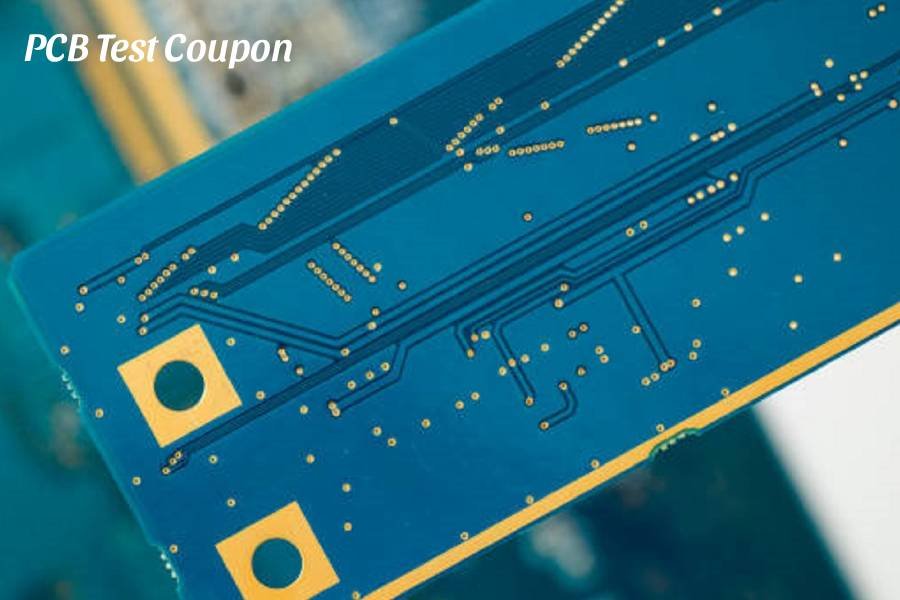
Alright, now that we’ve set the stage on why testing is your best friend in PCB manufacturing, let’s zoom in on the star of the show: the PCB Test Coupon. If you’ve ever wondered, “What is a PCB Test Coupon?” or “How does a PCB Test Coupon fit into PCB fabrication?”, you’re in the right spot. At its core, a PCB Test Coupon—sometimes called a test strip or quality conformance coupon—is that unassuming little section of your PCB panel that’s built like a mini-version of your main board. It’s not just extra real estate; it’s a smart, sacrificial piece designed to take the brunt of rigorouschecks so your production PCBs can shine without a scratch.
Think about it like this: when you’re running a panel of, say, 10 rigid multi-layer boards for an automotive control unit, you don’t want to slice one open to inspect the copper plating or drill into another to measure via reliability. That’s where the PCB Test Coupon steps up. Typically sized around 200mm by 30mm (though we can tweak that based on your design at PCBELEC), it’s fabricated right alongside your main boards using the exact same materials, processes, and specs—same FR-4 substrate, copper thickness, solder mask, and layer stackup. This ensures it’s a true representative, catching any quirks in the manufacturing run before they hit your deliverables.
Placement is key here, too. The coupon lives on the panel’s periphery, often along the edges or in a dedicated rail area, connected by tiny tabs or v-scores for easy separation after fab. Once the panel’s etched, drilled, and plated, you snap it off and put it through the wringer—whether that’s non-destructive electrical probing or a full destructive teardown. In our PCBELEC shop, we’ve got panels rolling off the line daily for everything from single-sided prototypes to intricate 20-layer rigid-flex hybrids, and these coupons are non-negotiable. They let us verify things like trace integrity on flexible sections or impedance control in high-speed traces without touching your actual boards.
Of course, not all PCB Test Coupons are one-size-fits-all. The industry leans heavily on standards from the IPC (Association Connecting Electronics Industries), particularly the IPC-TM-650 test methods. You’ll often see a few flavors:
- Type A Coupon: Your go-to for basic electrical testing, like continuity and shorts. It’s straightforward—parallel traces that mimic your board’s routing density.
- Type B Coupon: Beefed up for plating thickness and adhesion checks, with wider features to make cross-sectioning a breeze.
- Type D Coupon: A beast for more advanced stuff, like solderability or thermal stress, especially useful in our turnkey assembly lines where SMT and THT components meet.
We’ve customized these at PCBELEC for clients tackling everything from consumer gadgets to aerospace gear. For instance, on a recent flexible PCB run for wearable tech, we added bend-specific traces to our coupons to simulate real-world flexing—ensuring no cracks under strain. It’s these little tweaks that turn a standard coupon into a powerhouse for PCB Test Coupon in PCB fabrication.
To make this crystal clear, here’s a quick visual breakdown of a typical setup:
| Feature | Purpose in PCB Test Coupon | Why It Matters for Your Boards |
|---|---|---|
| Trace Widths & Spacing | Matches production specs (e.g., 0.1mm min) | Verifies etching accuracy—critical for signal integrity in multi-layer designs. |
| Vias & Pads | Includes blind/buried vias like your board | Tests drill registration and plating uniformity, avoiding opens in assembly. |
| Layer Stackup | Exact dielectric and copper layers | Ensures impedance and alignment hold up, especially in rigid-flex transitions. |
| Solder Mask Areas | Exposed and covered zones | Checks for defects in masking and legend printing during SMT stencil prep. |
In short, a well-placed PCB Test Coupon is your early warning system, bridging the gap between design files and shipped products. It’s why, when you send us Gerber files for prototyping or full production, we always flag the need for one—tailored to your single-face, double-sided, or complex multi-layer needs. No guesswork, just guaranteed quality that aligns with IPC Class 3 standards for those mission-critical apps.
Up next, we’ll dive into why these coupons aren’t just nice-to-have—they’re essential for dodging expensive headaches and keeping your projects on track.
The Importance of PCB Test Coupons in Ensuring Quality and Reliability
Imagine you’re halfway through assembling a batch of high-density multi-layer PCBs for a client’s new IoT device. The SMT line is running smoothly, components are sourced, and everything looks good—until a random sample fails a signal integrity test due to an impedance mismatch. Suddenly, you’re staring at a pile of unusable boards and a tight deadline. At PCBELEC, we’ve seen this scenario play out, and it’s why we lean hard on PCB Test Coupons to catch issues before they derail a project. These small strips are more than just a manufacturing add-on—they’re your insurance policy for quality, reliability, and peace of mind.
So, why are PCB Test Coupons a big deal in PCB manufacturing? First and foremost, they’re your early detection system. By replicating the critical features of your production boards—like trace widths, via structures, and layer stackups—they let you test for defects without sacrificing a single functional PCB. For example, we recently worked on a 12-layer rigid-flex board for an automotive client. The PCB Test Coupon revealed a slight over-etching issue in the inner layers before assembly began, saving thousands in rework costs. That’s the kind of real-world impact we’re talking about—catching flaws early so you don’t pay later.
One of the biggest wins with PCB Test Coupons is ensuring compliance with industry standards, like IPC Class 2 or 3, which are non-negotiable for sectors like medical, aerospace, or automotive. These standards demand precision—think consistent copper plating thickness or flawless solder joints for SMT and THT assembly. Coupons let you verify these without invasive testing on your main boards. At PCBELEC, we use coupons to run checks like cross-sectioning for plating adhesion or TDR (Time-Domain Reflectometry) for controlled impedance, ensuring every board meets the mark. This is especially critical for high-speed designs where even a 5% impedance deviation can throw off performance.
Cost savings are another huge perk. Scrapping an entire panel because of a manufacturing hiccup—like poor via plating or solder mask defects—can sting, especially for small runs or prototypes. By testing a coupon instead, you isolate the issue without touching your deliverable boards. We’ve had clients come to us after learning this lesson the hard way, and our PCB Test Coupon process has turned skeptics into believers. For instance, during a recent turnkey assembly project, our coupons caught a solderability issue tied to surface finish before it hit the SMT stencil stage—saving the client from re-running 500 boards.
Then there’s reliability, which ties directly to your product’s reputation. Whether you’re building flexible PCBs for wearables or rigid boards for industrial controls, a single failure in the field can erode trust. PCB Test Coupons help you validate real-world performance, like how a flex circuit holds up under repeated bending or how a rigid-flex transition handles thermal stress. This is where long-tail concerns like “the importance of PCB Test Coupons for controlled impedance testing” come into play—especially for high-frequency applications where precision is everything.
At PCBELEC, we’ve made PCB Test Coupons a cornerstone of our workflow, from prototyping single-sided boards to scaling up multi-layer production with full component sourcing. They’re not just about catching mistakes; they’re about building confidence that your boards will perform as designed, every time. Next up, we’ll break down how to design these coupons to maximize their impact—because a well-crafted coupon is worth its weight in gold.
How to Design an Effective PCB Test Coupon: Step-by-Step Tips
Step 1: Match Your Board’s Exact Specifications
The golden rule of a PCB Test Coupon is simple: it must mirror your production board’s DNA. That means using the same materials (e.g., FR-4, Rogers, or polyimide for flex), copper weight (like 1 oz or 2 oz), dielectric layers, and surface finish (ENIG, HASL, etc.). If your board has a 10-layer stackup with 0.1mm traces, your coupon needs to reflect that precisely. Why? Because any deviation could mask manufacturing flaws. For example, on a recent PCBELEC project for a 5G module, we matched the coupon’s dielectric constant to the board’s to ensure accurate impedance testing. Pro tip: Work with your PCB fabricator early to align on specs—our team at PCBELEC often reviews Gerber files to flag mismatches before production starts.Step 2: Include Key Features for Comprehensive Testing
Your coupon should be a greatest-hits collection of your board’s critical elements. Think of it as a testing playground. Include:- Traces and spacing: Replicate the smallest trace widths and gaps (e.g., 4 mil) to check etching precision, vital for high-density interconnect (HDI) boards.
- Vias: Add through-hole, blind, or buried vias to verify drilling and plating quality—crucial for multi-layer or rigid-flex designs.
- Pads: Incorporate pads for solderability tests, especially if you’re planning THT or SMT assembly with stencils.
- Impedance structures: For high-speed boards, include controlled impedance traces (e.g., 50-ohm single-ended or 100-ohm differential pairs).
Step 3: Position the Coupon Strategically on the Panel
Placement matters—a lot. Put your PCB Test Coupon in a low-stress area of the panel, typically along the outer rails or between boards, connected by v-scores or mouse bites for easy snap-off. Avoid panel edges prone to warping or handling damage, as this can skew test results. For example, during a high-volume run of double-sided PCBs, we placed coupons in the center rail to avoid edge effects, ensuring accurate solder mask adhesion tests. A good rule of thumb: include at least two coupons per panel for redundancy, especially for complex multi-layer or rigid-flex boards.
Step 4: Follow Industry Standards and Customize as Needed
Lean on IPC-TM-650 standards for guidance—Type A for electrical, Type B for plating, Type D for solderability or thermal stress. But don’t be afraid to customize. For instance, if you’re building a rigid-flex PCB, add features to test transition zones between rigid and flex areas. We recently tailored a coupon for an aerospace client to include extra microvias for HDI reliability testing, which caught a plating defect early. Check with your fabricator (like us at sales@pcbelec.com) to balance standard designs with project-specific needs.
Common Pitfalls to Avoid
- Mismatch with production: Using different materials or layer counts throws off results.
- Overcrowding features: Too many test structures can make the coupon hard to fabricate or test.
- Ignoring via density: Skimp on vias, and you might miss drilling issues in HDI boards.
- Poor placement: Edge coupons can warp, skewing thermal or mechanical tests.
Here’s a quick comparison to guide your design:
Aspect | Standard PCB Test Coupon | Custom for High-Density Boards |
|---|---|---|
Size | 200x30mm | Tailored to 150x25mm for space efficiency |
Key Tests | Impedance, plating | Plus via reliability for HDI |
Layers | Matches production (e.g., 4-8) | Up to 20+ for multi-layer |
Features | Basic traces, vias | Microvias, flex bend traces |
PCBELEC’s Take
In our facility, we treat PCB Test Coupon design like a science and an art. For every project—whether a quick prototype or a turnkey assembly with component sourcing—we collaborate with clients to ensure coupons cover all bases, from impedance control to solder joint integrity. It’s not just about meeting IPC standards; it’s about delivering boards you can trust. Next, we’ll explore the specific tests you can run with these coupons to bulletproof your PCBs.
What Can You Test with a PCB Test Coupon? Key Methods and Standards
By now, you’re sold on why PCB Test Coupons are a must-have for catching manufacturing hiccups before they snowball into costly failures. But what exactly can you test with these little powerhouses? At PCBELEC, we use PCB Test Coupons daily to ensure everything from single-sided prototypes to intricate rigid-flex boards meets the mark—whether for our SMT and THT assembly lines or high-stakes applications like aerospace and medical devices. From electrical performance to physical durability, these coupons are your window into the quality of your entire production run. Let’s break down the key testing methods and standards you can apply, making “PCB Test Coupon testing methods for quality conformance in manufacturing” crystal clear.
Core Testing Categories
A PCB Test Coupon is like a Swiss Army knife for quality control, covering three main areas:
- Electrical Tests: Checking signal integrity, continuity, and impedance to ensure your board’s performance.
- Physical Tests: Inspecting structural integrity, like plating thickness or layer alignment, often via destructive methods.
- Environmental Tests: Simulating real-world stresses, such as thermal cycling or bending for flexible PCBs.
Each test leverages the coupon’s design—mirroring your board’s traces, vias, and stackup—to catch issues without touching the production PCBs. Here’s how we do it at PCBELEC, with insights you can apply to your next project.
1. Electrical Testing: Ensuring Signal and Power Integrity
Electrical tests are the bread and butter of PCB Test Coupons, especially for high-speed or high-density designs. Common checks include:
- Continuity and Shorts: Using a Type A coupon, we test for open circuits or unintended connections. Daisy-chain via patterns are a go-to here, ensuring every layer connects as intended.
- Controlled Impedance: For high-frequency boards (think 5G or automotive radar), we use Time-Domain Reflectometry (TDR) on coupons to verify impedance matches design specs, like 50-ohm single-ended traces. A recent PCBELEC project caught a 3% impedance deviation on a multi-layer board, saving the client from signal loss in production.
- Dielectric Breakdown: Ensures the insulation between layers holds up under voltage stress, critical for IPC Class 3 applications.
Pro Tip: Always specify impedance requirements in your Gerber files. We cross-check coupons against these to guarantee performance, especially for turnkey assemblies with SMT stencils.
2. Physical Testing: Verifying Build Quality
Physical tests often involve slicing and dicing the coupon (destructive testing) to peek inside your board’s construction. Key methods include:
- Cross-Sectioning: Using a Type B coupon, we cut and polish to inspect layer alignment, via plating thickness, and copper adhesion. For a recent rigid-flex project, cross-sectioning revealed a plating void that could’ve caused failures during flexing.
- Solderability Testing: Tests pads on Type D coupons to ensure solder wets properly—vital for SMT and THT assembly. We caught a surface finish issue on an ENIG board this way, tweaking the process before assembly began.
- Microsection Analysis: Zooms in on via fill quality or solder mask adhesion, especially for HDI boards with microvias.
These tests align with IPC-TM-650 standards, ensuring your boards meet industry benchmarks for durability and manufacturability.
3. Environmental Testing: Simulating Real-World Stress
For PCBs destined for tough environments—like automotive or wearables—environmental tests are critical. Coupons help simulate:
- Thermal Cycling: Exposes the coupon to temperature swings (e.g., -40°C to 125°C) to check for delamination or cracking. We used this for a flexible PCB in a fitness tracker, confirming bend reliability.
- Bend Testing: For flex and rigid-flex designs, coupons with dedicated bend traces verify how traces hold up under repeated flexing. A PCBELEC client avoided field failures in a foldable device thanks to this.
- Humidity Resistance: Ensures the coupon (and thus your board) resists moisture-induced failures, key for outdoor electronics.
Standards to Know
Most PCB Test Coupon tests follow IPC-TM-650 guidelines, the gold standard for PCB quality. Key methods include:
- IPC-TM-650 2.4.22: For solderability, ensuring pads accept solder without defects.
- IPC-TM-650 2.6.8: For thermal stress, simulating reflow conditions in SMT assembly.
- IPC-TM-650 2.5.33: For impedance, critical for high-speed designs.
At PCBELEC, we document every test result for traceability, building trust with clients whether they’re prototyping or scaling up to full production with component sourcing.
Why This Matters
These tests aren’t just checkboxes—they’re your safety net. A PCB Test Coupon lets you validate everything from solder joint integrity in THT assembly to via reliability in 20-layer boards, all without risking your deliverable PCBs. For example, during a recent turnkey project, our coupons confirmed solder mask alignment for a high-density SMT board, avoiding costly rework. Whether you’re building for consumer gadgets or mission-critical systems, these tests ensure your boards perform in the real world.
PCBELEC Insight: We tailor coupons to your needs—adding extra vias for HDI or bend traces for flex—because one-size-fits-all doesn’t cut it. Reach out at sales@pcbelec.com to discuss how we can optimize your testing. Next, we’ll wrap up with why PCB Test Coupons are your secret weapon for flawless manufacturing.
Elevate Your PCB Manufacturing with Smart Testing
If there’s one thing we’ve learned at PCBELEC after years of crafting PCBs—from single-sided prototypes to complex rigid-flex boards—it’s that quality isn’t an accident. It’s built, tested, and proven. That’s where PCB Test Coupons shine. These small but mighty strips are your frontline defense against manufacturing mishaps, ensuring your boards perform flawlessly whether they’re destined for a consumer gadget or a mission-critical aerospace system. In this guide, we’ve walked through what a PCB Test Coupon is, why it’s a cornerstone of quality control, how to design one effectively, and the key tests—like impedance checks and solderability—that make it indispensable for reliable PCB fabrication and assembly.
At PCBELEC, we’ve seen firsthand how PCB Test Coupons save time, money, and headaches. They let us catch issues like plating voids or impedance mismatches before they derail a project, whether we’re prototyping a double-sided board or running a full turnkey assembly with SMT, THT, and component sourcing. By mirroring your board’s specs and undergoing rigorous tests, these coupons ensure compliance with IPC standards and build trust in every layer, trace, and via. As PCB designs grow more complex—think high-density interconnects or flexible wearables—tools like these will only become more critical to staying ahead.
Ready to make PCB Test Coupons part of your next project? Whether you’re iterating on a prototype or scaling up production, our team at PCBELEC is here to help you design and test with precision. Reach out at sales@pcbelec.com to discuss how we can tailor coupons to your needs, from rigid to flex to multi-layer boards. Let’s build PCBs that don’t just meet expectations but exceed them—every single time.