Table of Contents
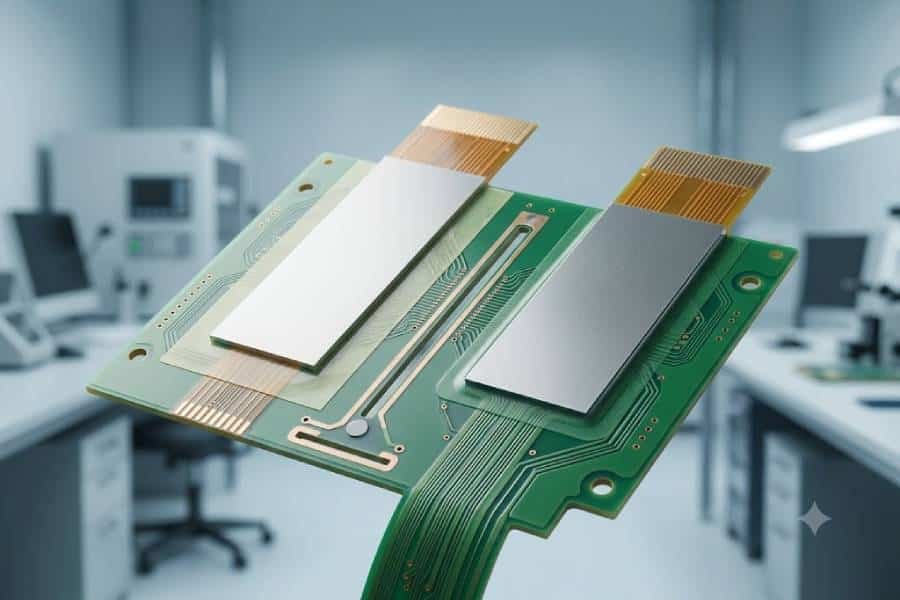
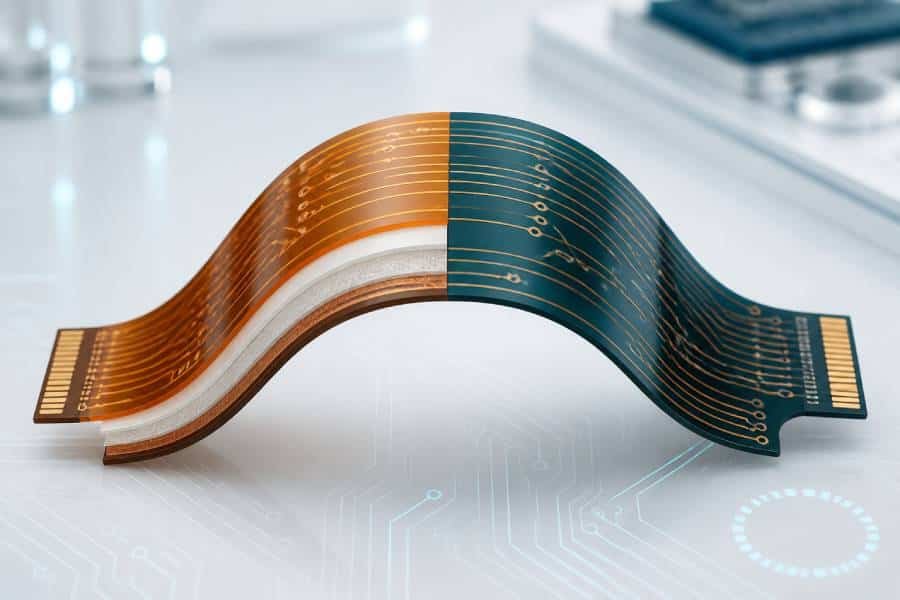
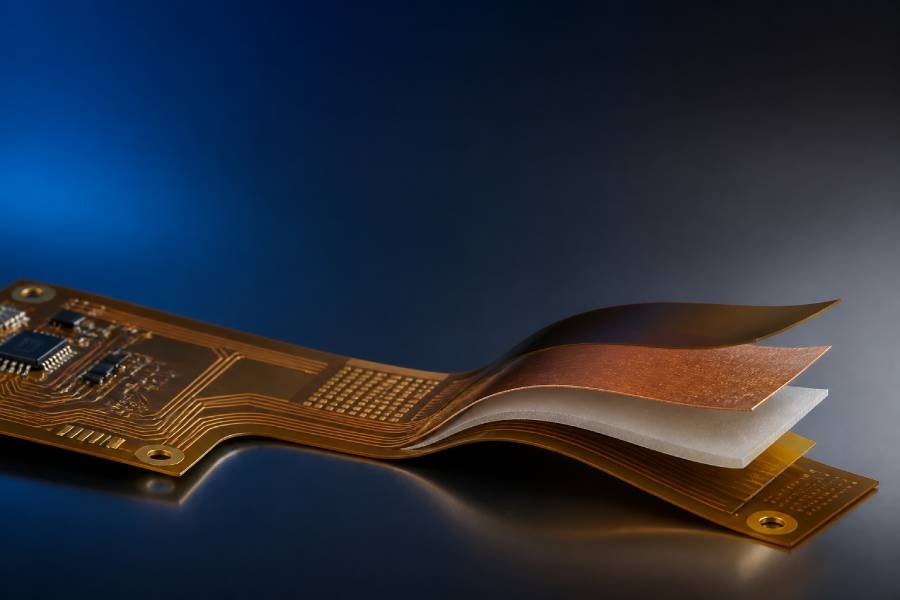
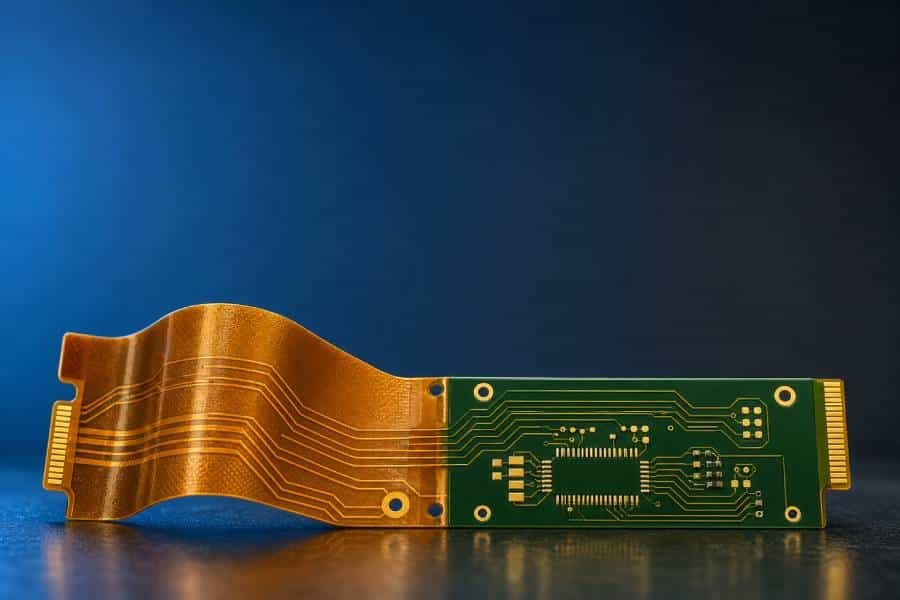
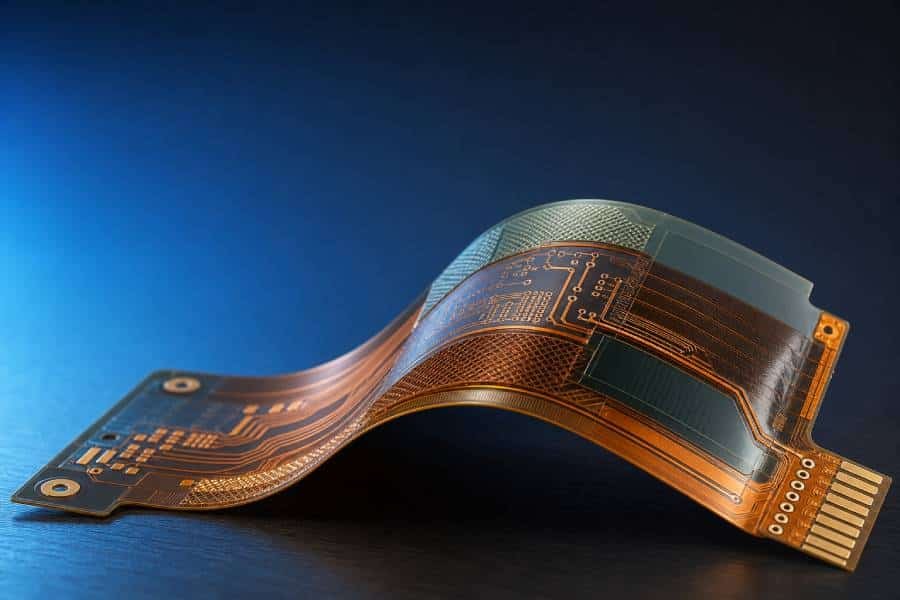
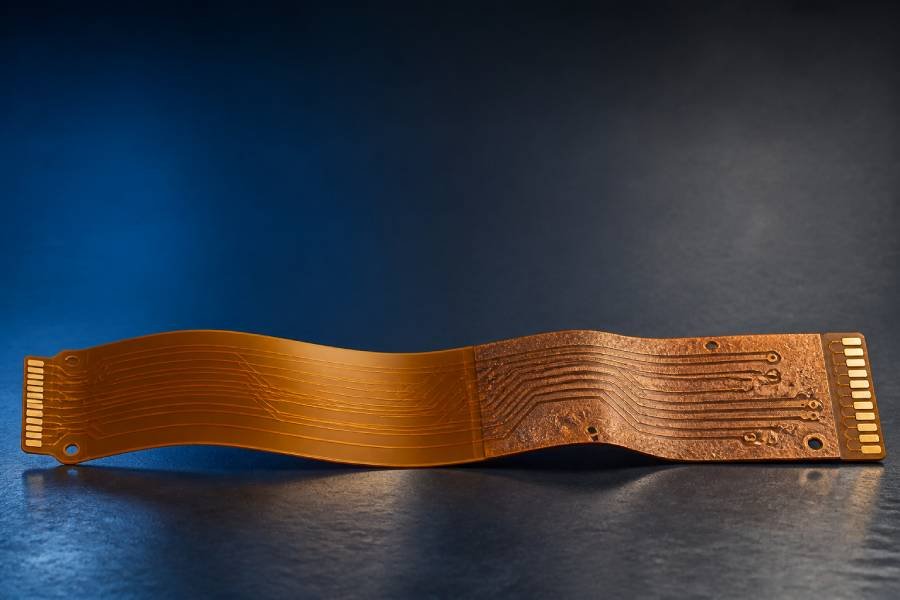
RA copper and ED copper are the two most common copper foil options used in flexible PCBs, and the choice between them can strongly affect bend performance, reliability, and cost. RA copper is typically favored for dynamic flex applications because it offers better ductility and fatigue resistance, while ED copper is often used in static flex designs where cost and manufacturability are more important.
Understanding the difference between these two copper types is essential when designing flex or rigid-flex circuits. The copper foil does not just carry current; it also plays a major role in how well the circuit survives repeated bending, assembly stress, and long-term use.
In this guide, we will compare RA copper and ED copper in flexible PCBs, explain how they are made, highlight their key performance differences, and help you choose the right copper for your application.
What Are RA Copper and ED Copper?
RA copper and ED copper are the two most common copper foil types used in flexible PCB construction. RA stands for rolled annealed copper, while ED stands for electro-deposited copper.
RA copper
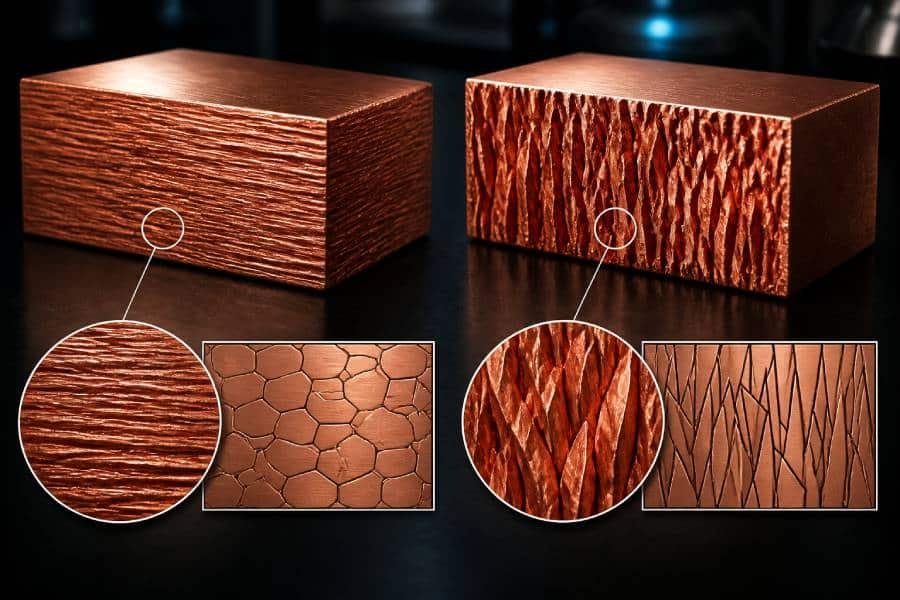
RA copper is made by mechanically rolling copper foil and then annealing it to improve ductility. This process gives it a smoother surface and a grain structure that is better suited for repeated bending and dynamic flex applications.
Because of its mechanical behavior, RA copper is often the preferred choice for flexible circuits that must survive repeated movement, flex-to-install use, or other demanding bend conditions. It is widely used in dynamic flex and many rigid-flex designs where reliability is critical.
ED copper
ED copper is produced through an electrochemical deposition process, where copper is formed onto a rotating drum and then stripped into foil. This creates a more columnar grain structure and typically a rougher surface than RA copper.
ED copper is common in PCB manufacturing because it is cost-effective and easy to produce at scale. In flexible circuits, it is often used in static flex designs or other applications where repeated bending is not the main requirement.
Why the difference matters
Although both materials conduct electricity, their mechanical behavior is not the same. RA copper is generally more ductile and better suited to repeated bending, while ED copper is usually less flexible but more economical and widely used in standard PCB structures.
This difference is why copper type should be selected based on the actual flex profile of the circuit, not just on cost or familiarity. For dynamic applications, the copper foil can have a major impact on crack resistance, bend life, and long-term reliability.
How RA Copper and ED Copper Are Made
RA copper and ED copper are produced through very different manufacturing processes, and those differences are the main reason their flex performance is not the same. The production method affects grain structure, surface profile, ductility, and ultimately how the foil behaves when the circuit bends.
RA copper manufacturing
RA copper is made by mechanically rolling a thick copper strip or ingot through successive rollers until it reaches the target thickness. After rolling, the foil is annealed, which relieves internal stress and improves ductility.
This rolling-and-annealing process produces a smoother foil with a grain structure that is more favorable for repeated bending. That is one reason RA copper is often preferred in dynamic flex applications and other designs where mechanical fatigue is a concern.
ED copper manufacturing
ED copper is made by depositing copper ions from a chemical solution onto a rotating drum or cathode surface. The foil grows electrochemically and is then stripped from the drum, creating a foil that is typically more economical to produce at volume.
Because of this process, ED copper tends to have a more columnar grain structure and a rougher surface profile than RA copper. That structure is acceptable for many PCB applications, but it is generally less favorable for repeated flexing.
Why the process matters
The manufacturing method directly affects how the copper foil responds to mechanical stress. RA copper’s rolled structure gives it better elongation and fatigue resistance, while ED copper’s plated structure is usually stiffer and more prone to cracking under dynamic movement.
This is why copper choice in flexible circuits is not just a materials question; it is also a reliability question. If the foil is expected to flex repeatedly, its internal structure matters as much as its conductivity.
Key Performance Differences
RA copper and ED copper conduct electricity very well, but their mechanical and surface characteristics are not the same. In flexible PCBs, those differences matter because the copper foil must survive bending, support signal quality, and still fit the manufacturing and cost targets of the design.
1. Flexibility and bend endurance
RA copper is generally the better choice for repeated bending because its rolled and annealed structure gives it higher ductility and better fatigue resistance. ED copper is less forgiving under repeated flexing and is usually better suited to static or limited-bend applications.
In practical terms, RA copper is the safer option when the circuit will bend many times over its lifetime. ED copper can still work in flexible designs, but only when the bend cycle is low and the mechanical stress is well controlled.
2. Surface roughness and adhesion
ED copper typically has a rougher surface than RA copper, which can improve adhesion to the surrounding dielectric in some constructions. That can be useful in manufacturing, but the rough surface is not always ideal for high-frequency signal behavior or for designs that need smoother mechanical transitions.
RA copper usually has a smoother surface, which is one reason it performs well in dynamic flex and in applications where lower surface roughness is desirable. The smoother profile can also be beneficial for certain high-speed or high-frequency designs.
3. Signal integrity
Both copper types carry current effectively, but surface roughness can influence high-frequency performance. A smoother copper surface generally helps reduce insertion loss, so RA copper is often viewed more favorably in RF or high-speed flex applications.
ED copper can still be used successfully in many designs, but when signal integrity is critical, the copper foil’s surface profile becomes part of the decision. In that case, the mechanical advantage of RA copper and its smoother finish can be an important advantage.
4. Cost and manufacturability
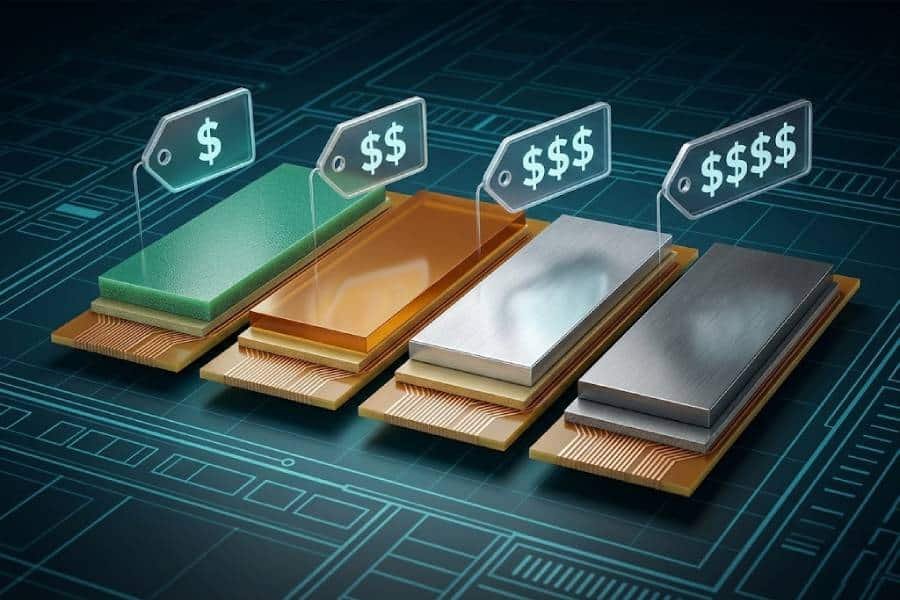
ED copper is usually more economical and easier to produce at scale, which makes it attractive for cost-sensitive products. RA copper costs more, but the extra price is often justified when bend life and long-term reliability matter more than initial material cost.
From a manufacturing perspective, ED copper is widely available and often simpler to integrate into standard PCB processes. RA copper can require more attention to design and fabrication details, but it offers better mechanical performance in the applications that need it.
What this means for designers
If the circuit is dynamic, heavily flexed, or reliability-critical, RA copper is usually the stronger choice. If the circuit is mostly static, cost-sensitive, and does not need repeated movement, ED copper can be the more practical option.
That is why the best copper choice is not about which foil is universally better. It is about matching the foil to the actual bend profile, signal requirement, and production target of the flex PCB.
When to Use RA Copper
RA copper is the better choice when the flexible PCB must survive repeated bending, folding, or motion over its lifetime. Its rolled and annealed structure gives it higher ductility and better fatigue resistance, which makes it much more suitable for dynamic flex applications.
1.Dynamic flex applications
If the circuit bends again and again during product use, RA copper is usually the safe and preferred option. This includes designs such as moving hinges, foldable interfaces, wearable electronics, and other assemblies where the flex section is part of the product’s active motion.
In these cases, the copper foil is not only carrying current but also repeatedly stretching and compressing. RA copper handles that kind of mechanical stress much better than ED copper.
2. Reliability-critical designs
RA copper is also a strong choice when long-term reliability matters more than initial material cost. Automotive electronics, medical devices, and other demanding products often benefit from the extra bend life and lower crack risk that RA copper provides.
Even if the flex circuit does not move constantly, RA copper can still be justified when the application cannot afford field failures or maintenance issues. In those designs, the material premium is often offset by the reduced risk of fatigue-related defects.
3. Rigid-flex and repeated handling
RA copper is commonly used in rigid-flex constructions where the flexible section must transition cleanly between rigid areas. It is also useful when the board will be bent during assembly, installation, or service, even if it is not continuously moving in operation.
That makes RA copper a good fit for flex-to-install designs, where the circuit may be folded into position once but still needs strong mechanical durability. In this type of application, the material must tolerate the installation process as well as the finished product environment.
4. When the signal path is important
RA copper can also be attractive in high-frequency or high-speed flex applications because its smoother surface may help reduce insertion loss compared with rougher copper surfaces. If signal integrity matters alongside mechanical reliability, RA copper can offer a useful balance of both.
This does not mean RA copper is always necessary for signal reasons alone, but it can be a strong option when electrical performance and flex durability are both part of the design target.
5. The simplest rule
If the circuit will move repeatedly, twist, fold, or flex during its life, RA copper is usually the right starting point. If the flex section is mostly static and cost is a bigger concern, ED copper may be enough.
That is why RA copper is best thought of as the performance choice for flex designs that need durability, not as a universal default for every flexible PCB.
When to Use ED Copper
ED copper is a practical choice when the flex PCB is mainly used in a static or low-movement condition. It is generally more economical than RA copper and is widely used in designs where cost, availability, and standard manufacturing efficiency matter more than maximum bend life.
1. Static flex applications
ED copper is most suitable for static flex circuits, where the board is bent during assembly or installation and then stays in place during normal use. In these applications, the circuit does not experience repeated motion, so the lower fatigue resistance of ED copper is usually acceptable.
This makes ED copper a common choice for flex tails, internal interconnects, connector jumpers, and other circuits that need flexibility during installation but not continuous bending afterward.
2. Cost-sensitive products
When the design is cost-driven and the flex section is not mechanically demanding, ED copper is often the more practical option. Its electro-deposition process is efficient at scale, which helps reduce material cost and makes it attractive for high-volume consumer electronics and other price-sensitive products.
In large production runs, even a small material cost difference can matter. If the application does not need the superior bend endurance of RA copper, ED copper can be the better business decision.
3. Thin and standard flex constructions
ED copper is also commonly used in standard flex constructions where the design target is thin, simple, and manufacturable at scale. In some cases, it is preferred when the flex PCB does not require extremely high bend cycles or very tight bend radii.
That means ED copper is often appropriate for mainstream flex designs rather than premium or reliability-critical ones. It supports many everyday flexible PCB applications as long as the mechanical demands remain limited.
4. When adhesion and process efficiency matter
Because ED copper usually has a rougher surface, it can offer strong adhesion to surrounding dielectric materials in some constructions. This can be helpful in applications where bonding strength and standard processing behavior are important.
That rougher surface does not make ED copper better overall, but it does help explain why it remains widely used despite its lower flex durability. In many static designs, it offers a useful balance of cost, manufacturability, and acceptable performance.
5. The simplest rule
If the flexible PCB is bent once and then stays fixed, ED copper is often enough. If the circuit will bend repeatedly over time, RA copper is usually the safer option.
This is why ED copper should be viewed as the right material for many static flex products, not as an inferior material in every case. The key is matching the copper foil to the real movement profile of the design.
RA Copper vs. ED Copper Comparison Table
The easiest way to understand the difference between RA copper and ED copper is to compare them across the performance factors that matter most in flexible PCB design. In most cases, the decision comes down to bend life, surface profile, manufacturing preference, and cost.
| Factor | RA Copper | ED Copper |
|---|---|---|
| Manufacturing method | Rolled and annealed foil. | Electro-deposited on a drum. |
| Grain structure | Fine or horizontal grain structure that supports repeated bending. | Columnar or vertical grain structure, less suitable for dynamic flexing. |
| Flexibility | High flexibility and strong ductility. | Lower flexibility than RA copper. |
| Fatigue resistance | Better for repeated bend cycles and dynamic flex use. | Better suited to static flex or limited bend cycles. |
| Surface roughness | Smoother surface profile. | Rougher surface profile with stronger natural adhesion in some constructions. |
| Signal integrity | Often more favorable for high-speed or high-frequency flex due to smoother copper surface. | Can introduce more loss at higher frequencies because of rougher surface texture. |
| Cost | Higher material cost. | Lower cost and usually more economical for volume production. |
| Typical use | Dynamic flex, rigid-flex, high-reliability applications. | Static flex, cost-sensitive products, standard flex builds. |
This comparison shows why RA copper is usually treated as the performance-focused option, while ED copper is often the cost-efficient option. Neither material is universally better; the right choice depends on whether the circuit must survive repeated movement or simply hold its shape after installation.
For many engineers, the quickest rule is simple: RA copper for dynamic flex, ED copper for static flex. That rule is not complete by itself, but it is often the right place to start material selection.
How to Choose the Right Copper for Your Flex PCB
Choosing the right copper for a flex PCB starts with one core question: will the circuit move repeatedly, or will it only bend once and stay in place? In most cases, that single distinction is the fastest and most reliable way to narrow the choice between RA copper and ED copper.
1. Start with the bend profile
If the circuit is a dynamic flex design, RA copper is usually the correct starting point. If the circuit is a static flex design that will only be folded during installation or sees very limited movement afterward, ED copper is often enough.
This decision matters because copper fatigue is one of the main reliability risks in flexible circuits. Choosing the wrong foil for the bend profile can shorten product life even if the rest of the stack-up is well designed.
2. Check copper thickness and current needs
Copper type should not be selected independently from copper thickness. Thicker copper supports higher current, but it also reduces flexibility, while thinner copper improves bend performance and supports tighter flex designs.
That means the real selection is often a combination of foil type and foil thickness. A design with repeated movement may require both RA copper and a thinner copper weight to reach the desired bend life.
3. Consider signal integrity
If the flex PCB will carry high-speed or high-frequency signals, surface roughness becomes more important. RA copper’s smoother surface can help reduce insertion loss, which may make it more attractive in signal-sensitive applications.
This does not mean ED copper is unusable in those circuits, but electrical performance should be reviewed together with mechanical performance. In some cases, the copper decision affects both reliability and signal quality at the same time.
4. Balance cost against reliability
ED copper is usually the lower-cost option, which makes it attractive for volume production and less demanding products. RA copper costs more, but that premium is often justified when bend life, durability, and lower failure risk are important.
A practical way to think about it is this: if failure in the field would be expensive or difficult to correct, RA copper is often worth the additional cost. If the application is stable and budget-sensitive, ED copper may be the more efficient choice.
5. Involve the PCB manufacturer early
Copper selection is easier and safer when the PCB manufacturer is involved early in the design process. Fabricators can help confirm whether the chosen foil, thickness, bend radius, and stack-up are realistic for the intended application.
This is especially important in rigid-flex, dynamic bend, or thin-profile designs where material interactions are more sensitive. Early DFM discussion often prevents the wrong copper from being specified for the actual use case.
A practical rule of thumb
A simple rule works well in many projects: choose RA copper for dynamic flex and choose ED copper for static flex. Then refine that decision based on thickness, current, signal integrity, reliability target, and budget.
That approach keeps the material decision grounded in the real behavior of the final product, which is exactly what flex PCB material selection should do.
Common Mistakes to Avoid
Choosing between RA copper and ED copper seems straightforward on paper, but many flex PCB failures happen because the copper foil is selected without fully considering how the board will move in real use. The most common mistakes are not only material mistakes, but also application and design-context mistakes.
1.Using ED copper in dynamic flex designs
One of the most common and most serious errors is using ED copper in a circuit that must bend repeatedly. ED copper can work in static flex applications, but in dynamic flex it is more likely to crack because its grain structure is less tolerant of repeated mechanical stress.
This mistake often happens when designers focus too much on material cost and not enough on bend cycles. In high-cycle applications, saving money on foil can create much higher costs later through fatigue failures and field returns.
2. Assuming RA copper is always necessary
The opposite mistake is specifying RA copper for every flexible PCB, even when the circuit only bends once during installation and then stays fixed. RA copper offers better bend performance, but that advantage is not always needed in static, cost-sensitive products.
Over-specifying RA copper can increase cost without delivering a practical benefit. Good material selection should match the real movement profile of the product, not follow a single rule in every case.
3. Ignoring copper thickness
Copper type should never be chosen without also checking copper thickness. Even RA copper can become difficult to flex if the copper is too thick, while thinner copper often improves bend performance and reduces mechanical stress.
This is a common source of confusion in flex design. Designers sometimes choose the correct foil type but still create a poor bending structure because the copper weight is too high for the bend radius or flex cycle target.
4. Failing to match the copper to the bend profile
Another frequent mistake is treating all flex circuits as if they behave the same way. A static flex jumper, a fold-to-install circuit, and a dynamic hinge application may all use flexible materials, but they do not place the same demands on the copper foil.
If the copper is selected without separating static and dynamic use cases, the result can be either unnecessary cost or poor reliability. Copper choice should always follow the actual bend behavior of the product.
4. Overlooking layout and stress concentration
Even the right copper foil can fail if the overall flex design is poor. Tight bend radii, heavy copper in flex zones, vias in bend areas, and sharp trace geometry can all increase stress and shorten flex life.
This matters because RA copper improves bend durability, but it does not eliminate all mechanical risk. The copper choice has to work together with bend radius, trace routing, stack-up, and component placement.
5. Waiting too long to involve the manufacturer
A final mistake is deciding the copper type too late or without discussing the application with the PCB manufacturer. Early DFM input can help confirm whether the design is truly static or dynamic, whether the copper weight is realistic, and whether the selected foil matches the target reliability.
In flex PCB design, material choice and structural design are closely linked. The earlier those decisions are reviewed together, the lower the risk of late rework or field failure.
FAQ
No. RA copper is usually better for repeated bending and dynamic flex applications, but ED copper can be the more practical choice for static flex designs where the circuit bends once and then remains fixed.
RA copper is the preferred option for dynamic flex because it has better ductility and fatigue resistance than ED copper. In high-cycle bending applications, RA copper is generally required for long-term reliability.
Yes. ED copper is widely used in flexible circuits, especially in static flex applications, connector tails, and cost-sensitive designs with limited bending demands.
In general, yes. RA copper usually costs more because of its rolling and annealing process, while ED copper is more economical and easier to produce at scale.
It can be, especially in higher-frequency designs. RA copper usually has a smoother surface than ED copper, and smoother copper can help reduce insertion loss and support better signal integrity.
Yes. Copper thickness and copper type both affect flex performance. Thicker copper carries more current, but it also makes the circuit harder to bend, so material selection should consider both factors together.
No. Even when RA copper is used, bend radius still matters. Dynamic flex circuits need large enough bend radii and careful stack-up design to avoid overstressing the copper over repeated cycles.
Conclusion
RA copper and ED copper are both widely used in flexible PCB manufacturing, but they are not interchangeable in every design. RA copper is usually the better option for dynamic flex, higher reliability, and smoother-surface performance, while ED copper remains a cost-effective choice for static flex and less demanding applications.
The most important factor is not which copper foil looks better on paper, but which one matches the real bend profile of the product. Dynamic flex designs usually justify the extra cost of RA copper, while static flex designs can often use ED copper successfully without unnecessary material expense.
In practice, the best decision comes from evaluating movement, copper thickness, signal requirements, and reliability target together. When the application is clear and the manufacturer is involved early, copper foil selection becomes a design decision that improves both performance and cost control.