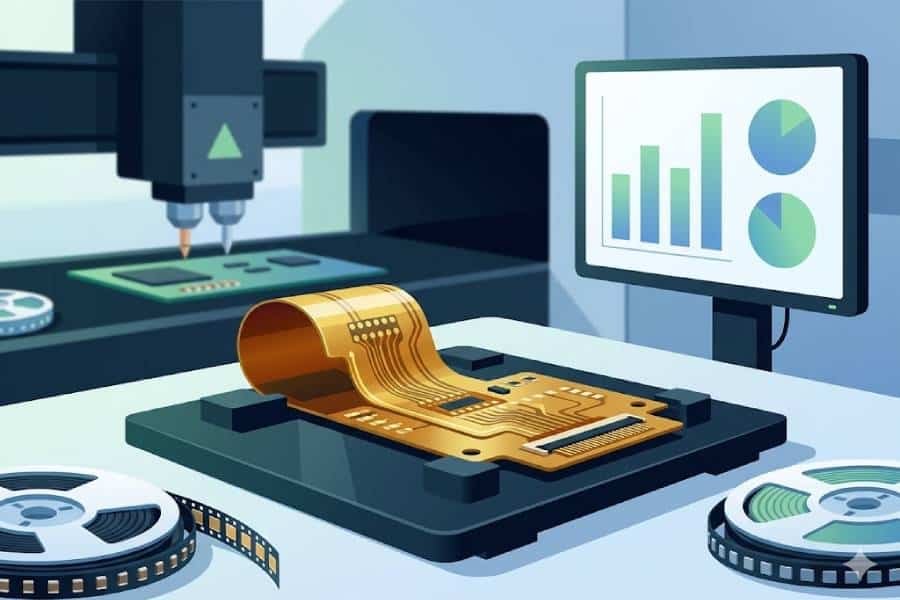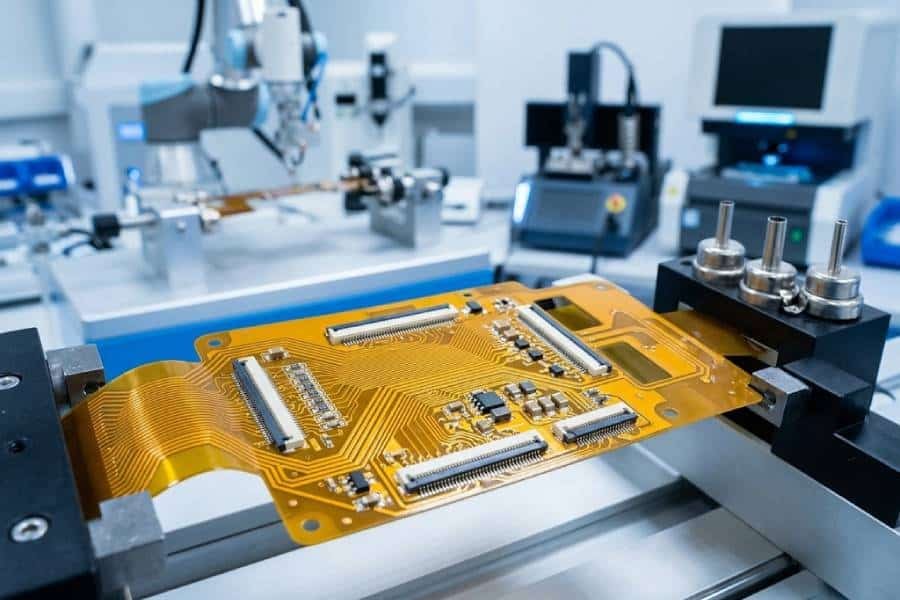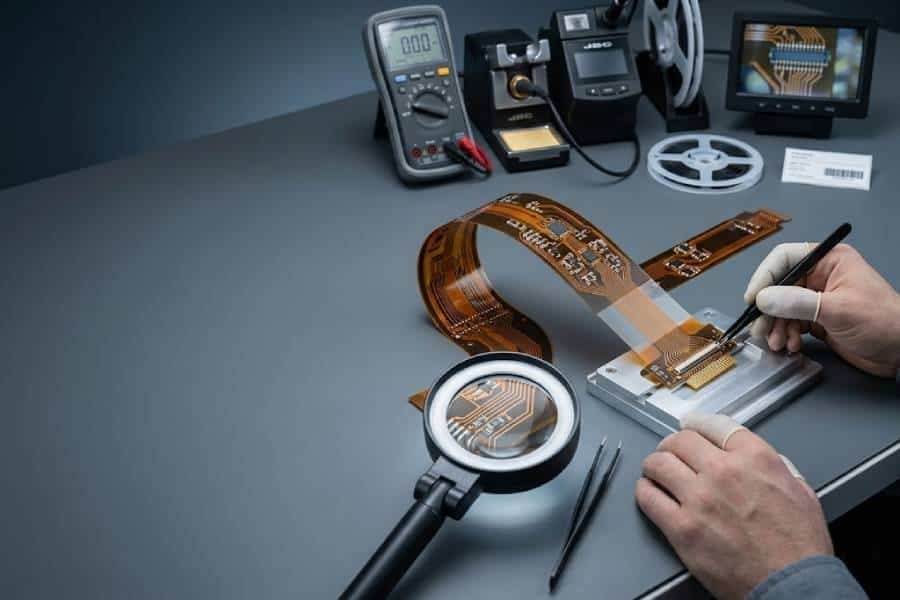
Single-Sided Flexible PCB Fabrication & Assembly Services
PCBELEC is a China-based flexible PCB manufacturer specializing in single-sided flexible PCBs for prototypes, small-batch and mass production. We offer polyimide flex circuits with fast lead time, stable quality and competitive pricing for wearable, medical, automotive and other electronic applications. Send your Gerber files for a free DFM review and quick quotation within 24 hours.
- Single-sided flex PCB prototype, small-batch and mass production.
- Polyimide PI base, fine traces and tight tolerances.
- No strict MOQ, suitable for startups and engineering projects.
- One-stop flexible PCB fabrication and assembly services.
Email Gerber Files to sales@pcbelec.com
What Is a Single-Sided Flexible PCB?
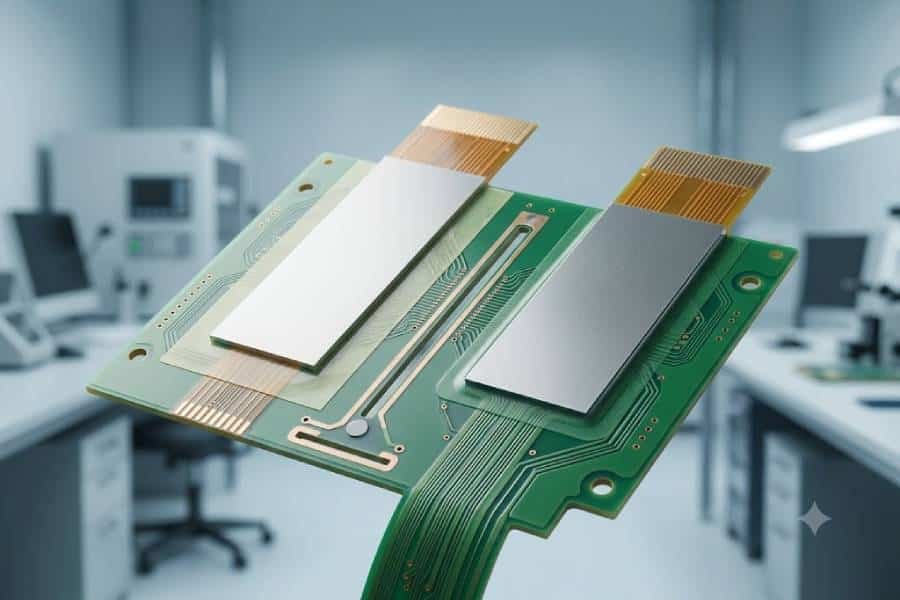
A single-sided flexible PCB is a flex circuit with copper traces on only one side of a flexible insulating film such as polyimide. It combines the electrical function of a printed circuit board with the bendability of a cable, allowing the circuit to be folded, twisted and routed in three-dimensional space.
Compared with rigid PCBs, single-sided flex circuits use flexible materials instead of FR-4 and are much thinner and lighter. They are ideal for connecting different functional modules inside compact electronic products where space is limited and repeated bending is required.
In many designs, a single-sided flexible PCB is the most cost-effective flex solution because the structure is simple and only one copper layer is needed. When the circuit can be routed on a single layer, choosing single-sided flex can reduce material usage, simplify manufacturing and shorten lead time.
Why us
Why Choose PCBELEC for Single-Sided Flex PCBs?
PCBELEC is an experienced flexible PCB manufacturer focusing on single-sided, double-sided and multilayer flex circuits for global customers. With advanced production equipment and strict quality control, we can deliver reliable single-sided flexible PCBs from rapid prototypes to mass production. Our engineering team works closely with you to optimize design, reduce cost and shorten time to market for your flex PCB projects.
Send your Gerber files and requirements to sales@pcbelec.com to get a free quotation and DFM review for your single-sided flex PCB project.
Experienced Single-Sided Flex PCB Manufacturer
PCBELEC has more than 10 years of experience in manufacturing flexible circuits, including simple single-sided flex PCBs and complex multilayer flex boards. We understand the characteristics of PI materials, copper foils and coverlays, and can recommend the right construction for your specific application.
Fast Prototypes and No Strict MOQ
PCBELEC supports fast single-sided flexible PCB prototype manufacturing, with prototypes available as fast as 24 hours for urgent projects. There is no strict minimum order quantity requirement, which is very friendly for startups, R&D teams and small-batch production.
One-Stop Fabrication and Assembly
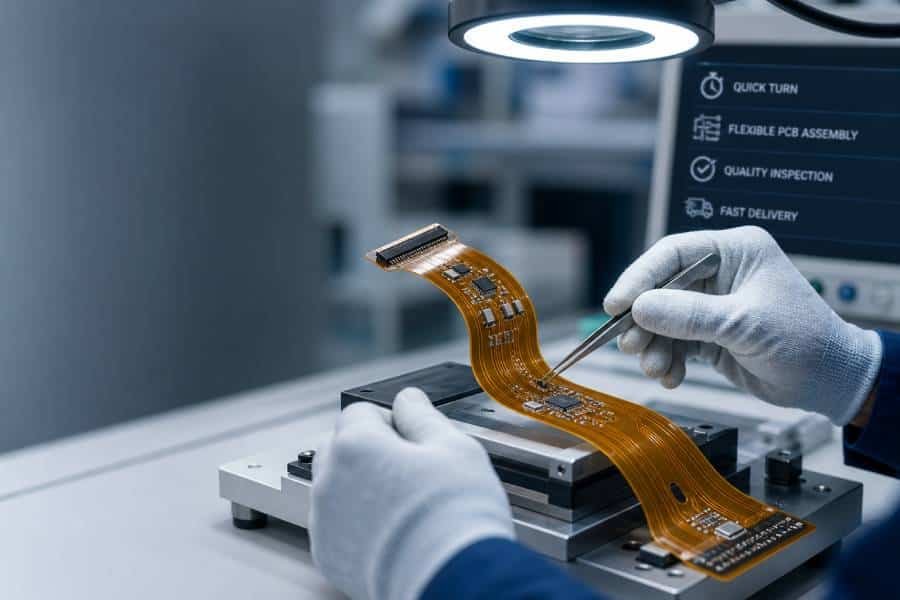
We provide one-stop single-sided flexible PCB services, covering fabrication, component sourcing, SMT and through-hole assembly, testing and final shipment. This integrated service helps you reduce supplier communication, save time and ensure consistent quality throughout the whole process.
Certified Quality and Reliable Performance
Our factory has obtained UL, ISO9001, ISO14001 and ISO/TS16949 certifications, and all boards are 100% inspected before shipment. We strictly follow RoHS and WEEE environmental standards to ensure reliable and stable performance of your single-sided flexible PCBs in end products.
Single-Sided Flexible PCB Capabilities at PCBELEC
PCBELEC provides comprehensive single-sided flexible PCB fabrication capabilities to support different product requirements from prototypes to mass production. With advanced flex PCB equipment and rich process experience, we can handle fine-line, thin-core and long-length single-sided flex circuits with stable quality.
Our engineering team can help you choose the right copper thickness, base film, coverlay and surface finish based on your application, bending conditions and budget. The following tables summarize our standard process capabilities and R&D capability ranges for single-layer flexible PCBs.
Single-Layer Flexible PCB Fabrication Capability
| Item | Standard Capability | R&D Capability |
|---|---|---|
| Layers | 1–16 | 18–22 |
| Max. panel size (mm) | 490 × 1800, 240 × 4000 | 490 × 4000 |
| Base copper thickness (oz) | 1/3 oz – 2 oz, 6 oz | 1/4 oz – 10 oz |
| Finished board thickness (mm) | 0.04 – 2.5 | 0.03 – 4 |
| Min. drilling hole diameter (mm) | 0.05 (±0.02) | 0.025 (±0.01) |
| Hole plating aspect ratio | 8:1 | 10:1 |
| Min. trace width / spacing (mm) | 0.035 / 0.035 | 0.02 / 0.02 |
| Min. solder mask bridge (mm) | 0.075 | 0.05 |
| Surface finish | ENIG, ENEPIG, hard gold, OSP, immersion tin | / |
| Min. pitch (mm) | 0.10 | 0.075 |
| Outline tolerance (mm) | ±0.03 | ±0.025 |
| Solder mask / coverlay color | Yellow, white, black, green, red | / |
Standard Technical Specifications (Thickness, Trace/Space, Hole Size)
For single-sided flexible PCBs, PCBELEC can provide a wide range of standard thickness and feature sizes to meet different design requirements. Typical finished board thickness is from 0.04 mm to 2.5 mm, and thinner constructions are available for special ultra-flexible applications.
Our standard minimum trace width and spacing is 0.035 mm / 0.035 mm, and the minimum mechanical drilling hole diameter is 0.05 mm with an aspect ratio of up to 8:1. For R&D projects and special designs, finer lines and smaller holes can be evaluated on a case-by-case basis.
- Finished flex thickness: typically 0.04–2.5 mm for single-sided flexible PCBs.
- Standard min. trace/space: 0.035/0.035 mm, R&D capability down to 0.02/0.02 mm.
- Standard min. hole size: 0.05 mm, with aspect ratio up to 8:1 for plated through holes.
Materials Options for Single-Sided Flex Circuits
Single-sided flexible PCBs from PCBELEC are mainly built on high-quality polyimide (PI) base films with different thickness options. Copper foils can be selected from rolled annealed (RA) or electro-deposited (ED) types according to bending requirements and cost targets.
Coverlay films and adhesive systems are chosen based on operating temperature, flexibility and reliability needs. We can also add FR4, PI, aluminum or stainless-steel stiffeners in specific areas to increase rigidity and provide better mechanical support for components.
- Polyimide base film with various thickness options for different flexibilities.
- RA or ED copper foil choices for single-sided flexible circuits.
- Multiple coverlay and adhesive systems to match temperature and reliability requirements.
- Optional FR4, PI, aluminum and stainless-steel stiffeners for local reinforcement.
Surface Finishes and Solder Mask / Coverlay
PCBELEC offers multiple surface finish options for single-sided flexible PCBs, including ENIG, ENEPIG, hard gold, OSP and immersion tin. The right surface finish can improve solderability, contact reliability and overall product lifetime depending on your application.
Instead of traditional solder mask used on rigid PCBs, single-sided flex circuits use coverlay films to protect copper traces. We provide yellow, white, black, green and red coverlay or flex solder mask options to meet both functional and aesthetic requirements.
- Surface finishes: ENIG, ENEPIG, hard gold, OSP and immersion tin for single-sided flex PCBs.
- Coverlay films used as insulation and protection instead of rigid PCB solder mask.
- Multiple coverlay / solder mask colors: yellow, white, black, green and red.
- Surface finish and coverlay combination optimized according to assembly process and application environment.
Single-Layer Flexible PCB Assembly Capability
| Item | Process Capability | Methods / Notes |
|---|---|---|
| Min. board size (mm) | 50 × 50 | / |
| Max. board size (mm) | 500 × 500 | / |
| Finished board thickness (mm) | 0.2 – 4 | / |
| SMT component size | 0201 (optional), up to 75 mm connectors | / |
| Min. component pitch (mm) | 0.15 | / |
| Placement repeatability (mm) | ±0.01 | / |
| AOI FOV (mm) | 610 × 450 | Online inspection |
| AOI testing speed (mm²/sec) | 9150 | / |
| 3D inspection angle (degrees) | 0–45 | Online 3D inspection |
| X-ray position repeatability | ±0.5 | Online X-ray inspection |
You can send your single-sided flexible PCB drawings and requirements to sales@pcbelec.com to confirm whether your design fits within our standard capabilities or needs customized process support.
Single-Sided Flexible PCB Stackup & Construction
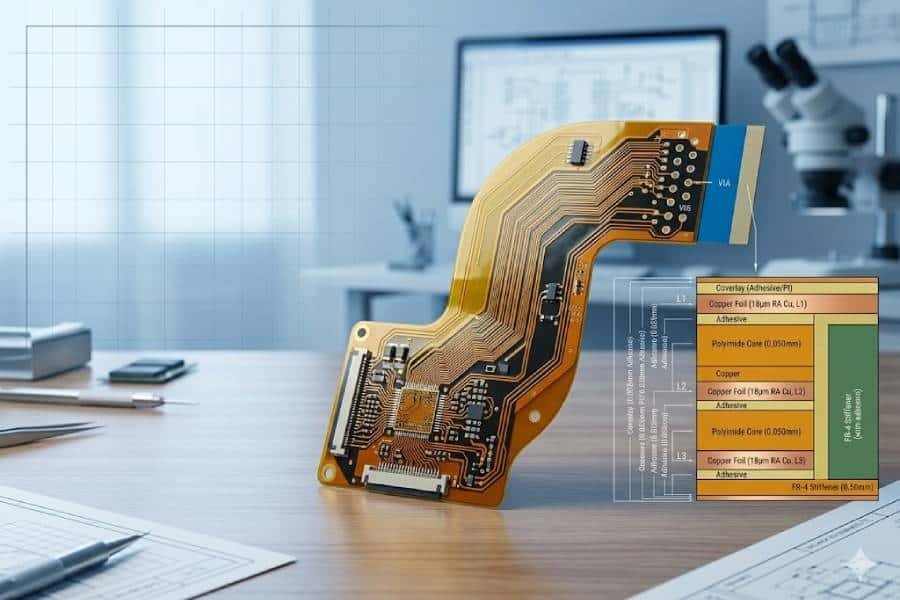
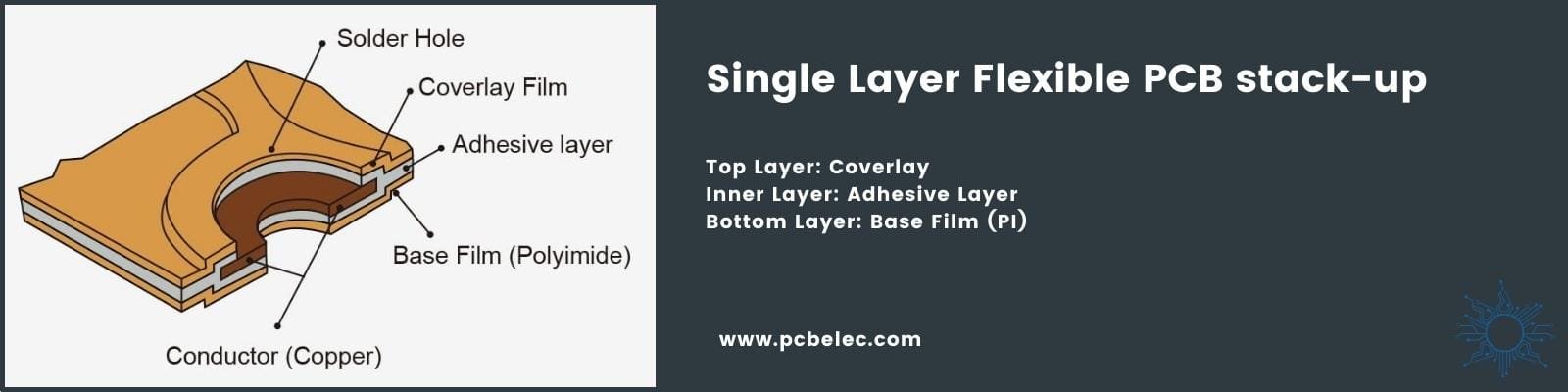
A single-sided flexible PCB is typically built on a polyimide base film with a single layer of copper foil laminated on one side. The copper is patterned to form the required circuit, and a protective coverlay is applied to protect the traces while still allowing the flex circuit to bend and twist.
The basic stackup of a single-sided flex circuit includes the polyimide substrate, adhesive (if used), copper layer and coverlay film. The coverlay replaces the solder mask used on rigid PCBs and provides insulation, mechanical protection and improved reliability in bending areas.
In areas that need extra mechanical strength or stable support for SMT and through-hole assembly, stiffeners can be added to the single-sided flex PCB. These stiffeners are usually made of FR4, polyimide, aluminum or stainless steel, and are bonded to the flex circuit to reinforce solder joints, reduce strain and improve heat dissipation.


Polyimide base film
Used as the flexible substrate and sometimes as the coverlay for single-sided flex circuits.
Single copper layer
Chemically etched to form the required conductive pattern on one side of the flex.
Adhesive bonding
Connects copper to the PI film depending on reliability and temperature requirements.
Coverlay and stiffeners
Coverlay protects the circuit, while local stiffeners create rigid areas for component assembly.
Design Guidelines for Single-Sided Flex PCBs
Good design is critical for achieving reliable performance and long service life in single-sided flexible PCBs. Proper control of bending radius, trace layout and via placement can significantly reduce mechanical stress and avoid failures in dynamic flex applications.
Bending Radius and Dynamic Flex Design Tips
When designing single-sided flexible PCBs, it is important to keep a sufficient bending radius to reduce stress on copper traces and the base film. As a general guideline, the minimum bending radius should be at least 10 times the overall thickness for dynamic flex areas, and 6–8 times for static bending.
Avoid placing critical traces and solder joints in areas that will experience repeated bending or twisting. If unavoidable, increase the bending radius, use thinner copper and consider adding strain relief structures to improve reliability.
- Keep minimum bending radius ≥ 10 × board thickness in dynamic flex areas.
- Use larger bending radius for thicker flex constructions or high-cycle applications.
- Avoid sharp corners and use smooth, gradual curves in bending regions.
Trace Routing and Via Placement in Flex Areas
For single-sided flex circuits, traces in bending areas should be routed perpendicular to the bending direction whenever possible to distribute stress more evenly. Avoid long parallel traces directly over the bend line and do not place large copper areas that can concentrate stress.
Try to keep vias, pads and plated holes away from the highest bending stress regions. If you must place vias near a flex area, move them slightly away from the bend line and use teardrop pads to reduce the risk of cracking.
- Route traces perpendicular or at an angle to the bending direction when possible.
- Avoid placing vias, pads and component leads directly in dynamic bending zones.
- Use teardrop connections at pads and vias to improve mechanical strength.
Pad and Component Layout Recommendations
When designing single-sided flexible PCBs for assembly, try to place components in relatively flat and reinforced areas rather than on the main bending regions. Local stiffeners can be added under component areas to provide mechanical stability and better coplanarity during SMT.
Use filleted or rounded pad shapes instead of sharp corners to reduce stress concentration. Maintain sufficient pad-to-pad spacing and solder mask clearance to avoid bridging and improve manufacturability.
- Place components on flat, reinforced areas away from main bending lines.
- Add FR4 or PI stiffeners under component areas for better support.
- Use rounded pads and adequate clearance to improve soldering reliability.
Applications of Single-Sided Flexible PCBs
Single-sided flexible PCBs are widely used in many electronic products where space is limited and reliable bending is required. They are ideal for connecting different modules, replacing traditional wires and harnesses, and simplifying assembly in compact devices.
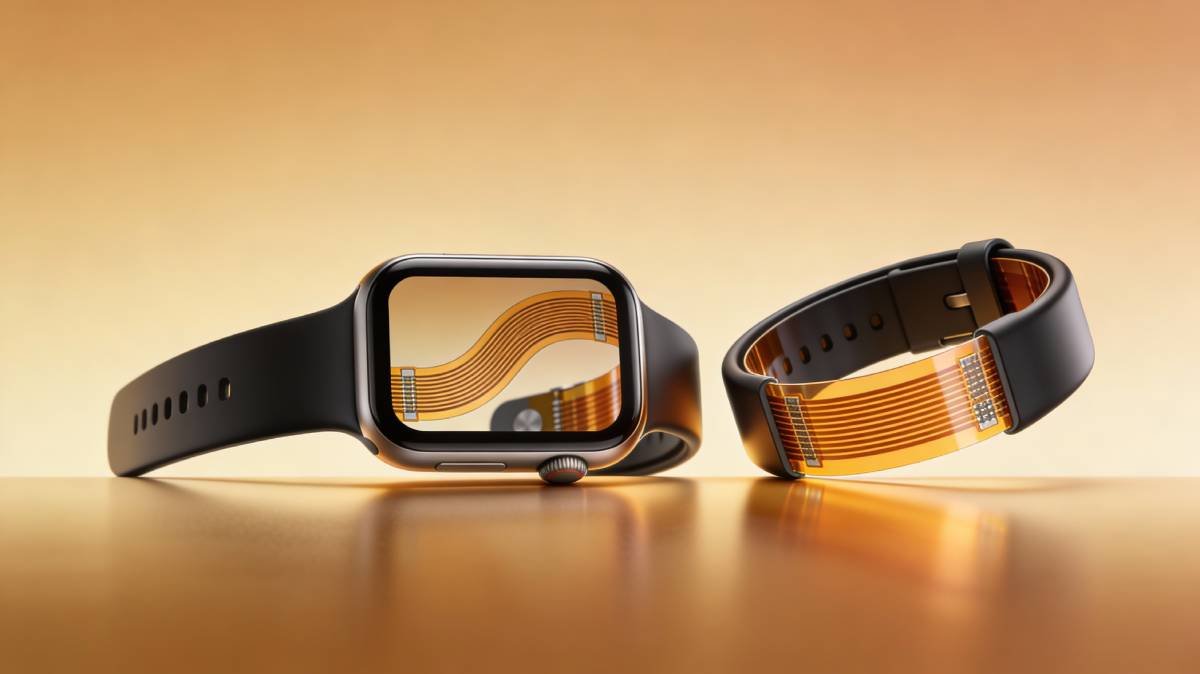
Wearable Devices and Consumer Electronics
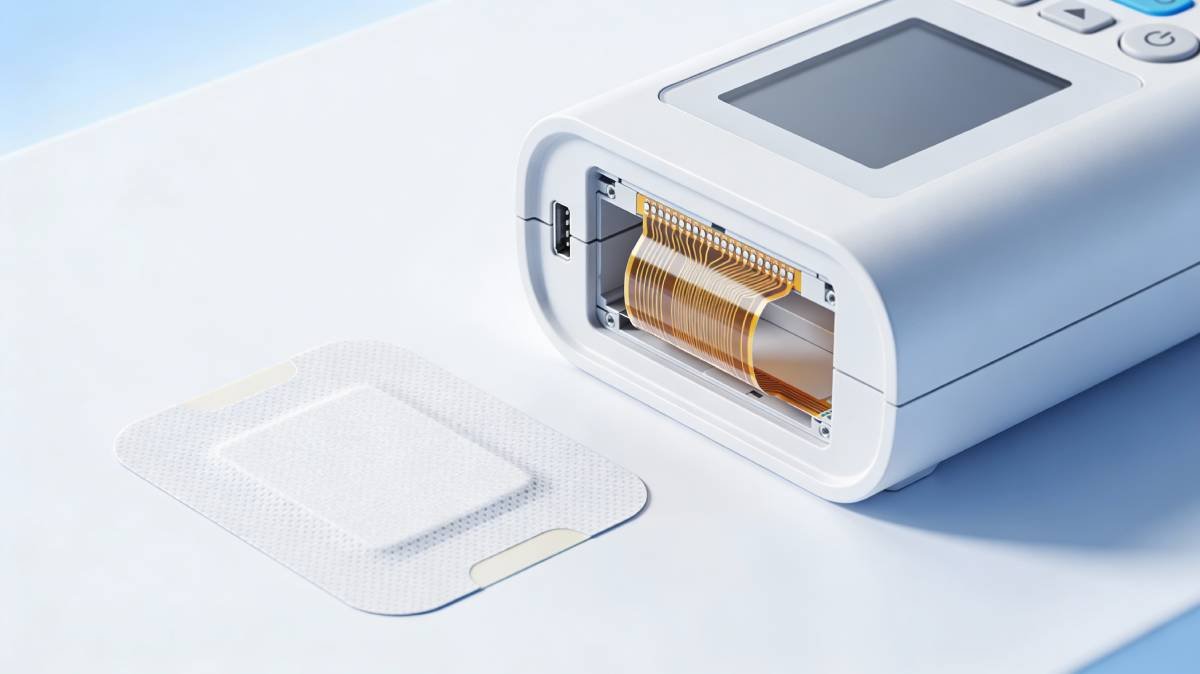
Medical Devices and Healthcare Electronics
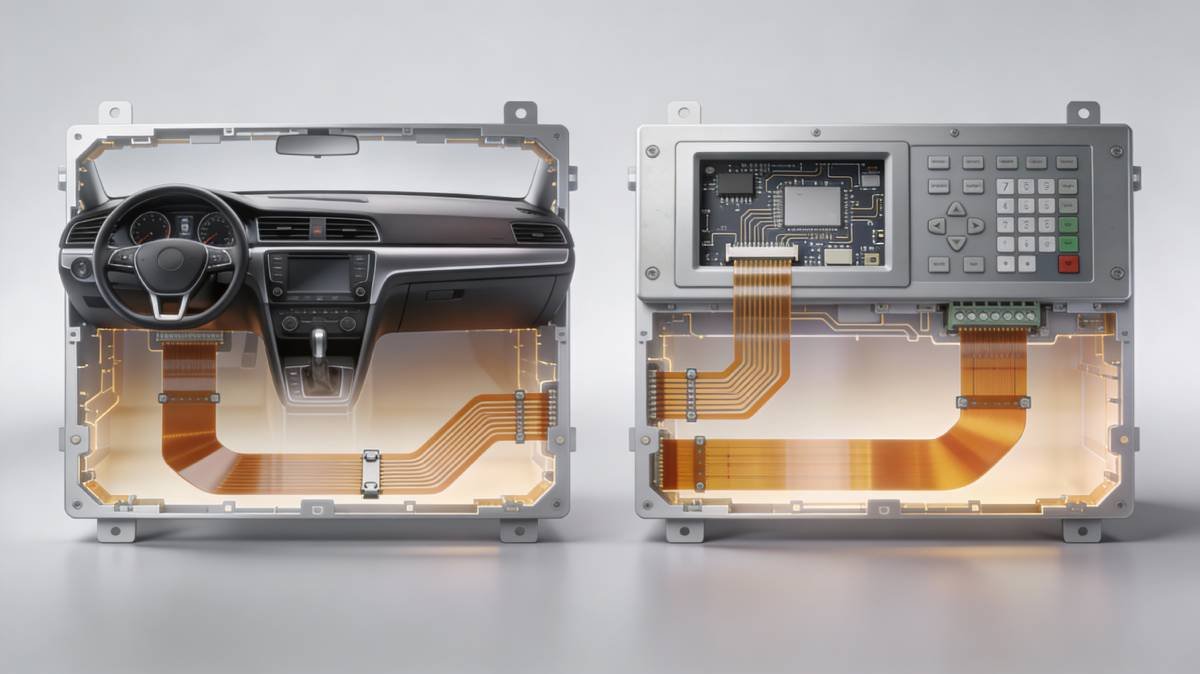
Automotive and Industrial Electronics
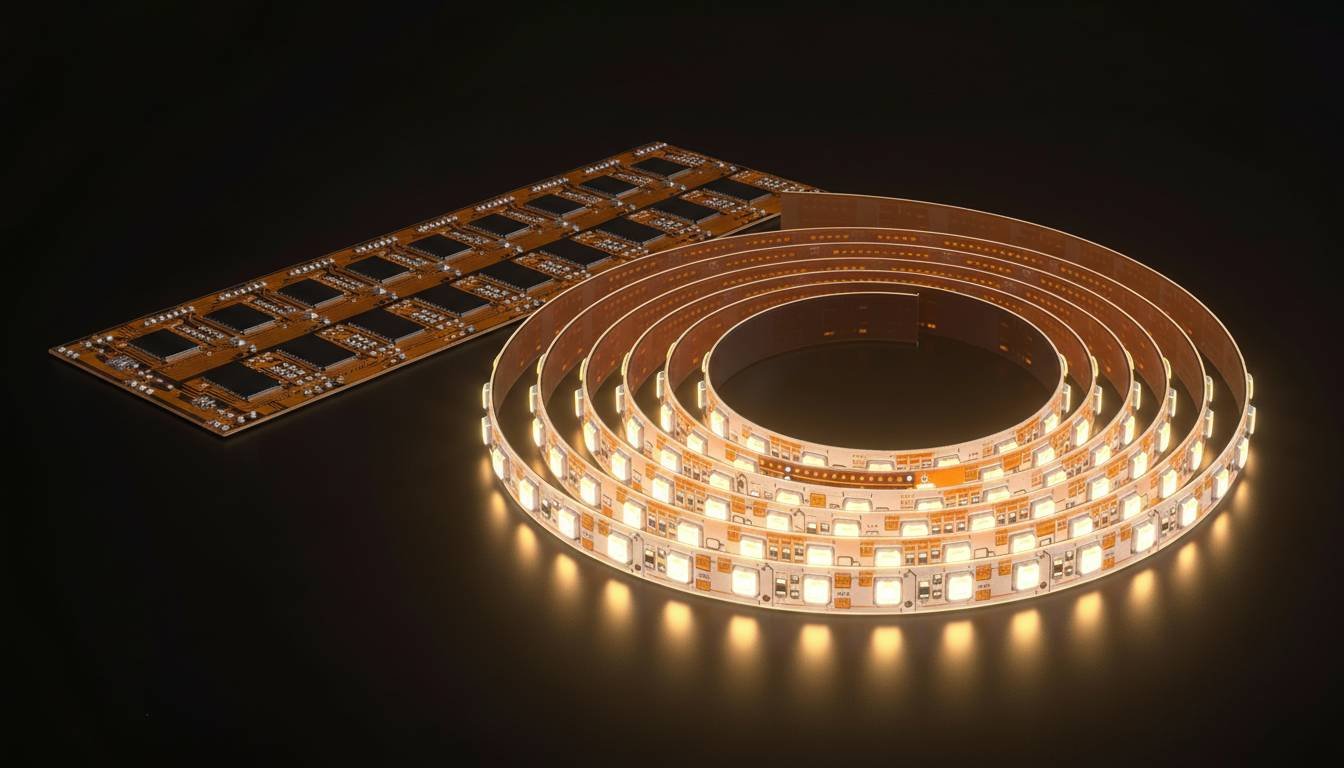
LED Lighting and Display Modules
If you are designing wearable, medical, automotive or LED products and need single-sided flexible PCBs, you can send your Gerber files and requirements to sales@pcbelec.com for a free evaluation and quotation.
Place your order
How to Order Single-Sided Flex PCBs from PCBELEC
Ordering single-sided flexible PCBs from PCBELEC is simple and transparent. Just follow the steps below and our team will respond with a detailed quotation and lead time for your project.
Send your single-sided flexible PCB design files and requirements to sales@pcbelec.com to get a fast quotation and professional technical support. Small quantity, prototype and urgent orders are welcome.
Step 1 – Prepare your design files
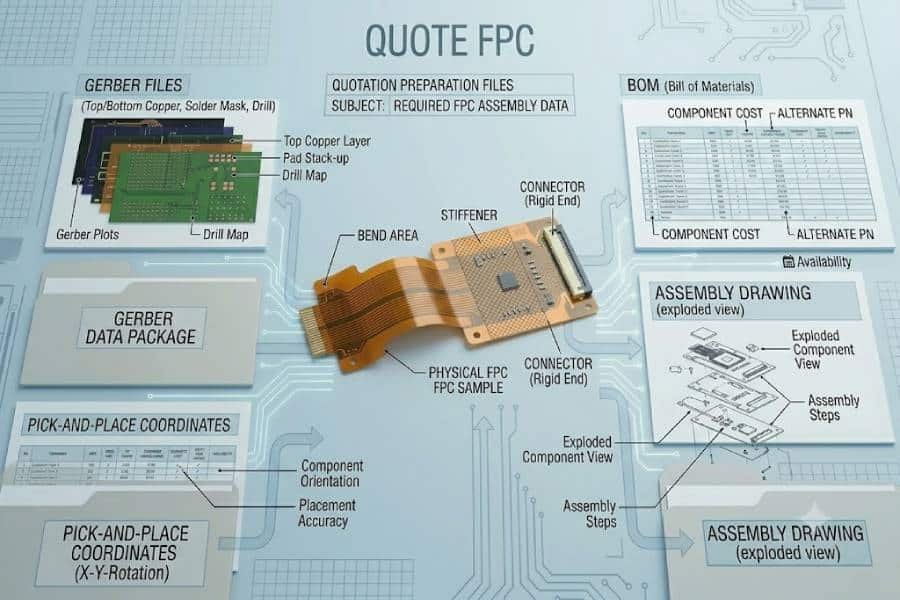
Prepare your Gerber files or CAD data for the single-sided flexible PCB, including drill files, layer stackup and any special fabrication notes. If you have a BOM and assembly drawing, you can send them together for flex PCB assembly services.
Step 2 – Send your requirements to PCBELEC
Email your files and requirements to sales@pcbelec.com, including quantity, board thickness, copper weight, surface finish, coverlay color and any special testing needs. The more detailed your information is, the faster and more accurate our quotation will be.
Step 3 – Receive quotation and confirm the order
Our sales and engineering team will review your design, perform a DFM check if needed and send you a quotation with lead time and technical details. After you confirm the price, delivery time and specifications, we will start production according to the agreed schedule.
Step 4 – Manufacturing, testing and delivery
PCBELEC will manufacture your single-sided flexible PCBs, perform electrical testing and final inspection before shipment. Finished boards will be packed securely and shipped to you by express courier or your designated logistics method.
Single-Sided Flexible PCB FAQ
A single-sided flexible PCB is a flex circuit with copper traces on only one side of a flexible insulating film such as polyimide. It combines the electrical function of a printed circuit board with the bendability of a cable, allowing the circuit to be folded, twisted and routed in three-dimensional space.
Single-sided flexible PCBs offer excellent bendability, lightweight structure and space saving compared to rigid boards and cables. They can simplify wiring inside compact devices, reduce assembly steps and improve reliability by reducing the number of connectors and solder joints.
Most single-sided flex circuits use polyimide (PI) as the base material with rolled annealed or electro-deposited copper foil. Coverlay films and adhesives are selected according to operating temperature, flexibility and reliability requirements, and optional stiffeners can be added for local reinforcement.
The overall thickness of a single-sided flexible PCB is usually between 0.05 mm and 0.2 mm depending on copper weight and base film thickness. Thinner constructions are used for dynamic flex applications, while slightly thicker flex circuits are selected when better mechanical strength is required.
PCBELEC supports very low volume and prototype orders for single-sided flex PCBs, and there is effectively no strict minimum order quantity. You can start with just a few pieces for engineering verification and then smoothly scale to small-batch or mass production when the design is finalized.
For simple single-sided flex PCB prototypes, the typical lead time is about 3–7 working days after Gerber file confirmation. Urgent projects may be expedited depending on design complexity and material availability, and we can usually provide a quotation within 24 hours.
Yes, PCBELEC offers complete single-sided flex PCB assembly services including SMT, through-hole and mixed assembly. We can also provide components sourcing and turnkey solutions, so you only need to provide BOM, Gerber files and assembly drawings.
Single-sided flexible PCBs are widely used in wearable devices, medical sensors, cameras, printers, automotive instrument panels, industrial controls and LED lighting modules. They are especially suitable for applications that require repeated bending, folding or limited installation space.
To receive an accurate quote, please provide Gerber or CAD files, layer stackup, copper thickness, surface finish, coverlay color, quantity and any special testing requirements. If you need assembly, please also provide BOM, assembly drawing and test instructions.
Yes, PCBELEC can review your single-sided flex PCB design and provide design for manufacturability suggestions before production. We can help you optimize bending area layout, copper width, hole size and stackup to improve reliability and reduce total cost.
We can analyze your design and suggest cost-optimization options such as adjusting copper thickness, choosing suitable base film thickness, modifying coverlay openings and optimizing panelization. By balancing performance and manufacturability, we help you reduce the overall cost of single-sided flex circuits without compromising reliability.
Ready to Start Your
Single-Sided Flex PCB Project?
Whether you need a few single-sided flexible PCB prototypes or stable mass production, PCBELEC is ready to support your project from design review to final assembly. Our team can help you optimize stackup, material selection and cost to ensure reliable performance and on-time delivery.
Send your Gerber files and requirements to sales@pcbelec.com or submit your request online to get a fast quotation and professional technical support for your single-sided flex PCB.