Low Cost PCB Assembly: How to Reduce Cost Without Cutting Corners
A practical cost-optimization guide for engineers and sourcing teams — covering the 6 main cost drivers, DFM strategies, and what to check before choosing a budget assembly partner.
Low cost PCB assembly should mean cost-effective — not cheap. The difference comes down to design choices, BOM management, sourcing strategy, and knowing which cost levers actually affect reliability. This guide breaks down the factors that drive assembly cost and shares practical methods to reduce spending without sacrificing essential quality. For affordable assembly services — including SMT, THT, BGA, and turnkey PCBA — our partner brand JHYPCB provides cost-conscious solutions from prototype to low-volume production.
Explore assembly capabilities · Get a quote · Upload your BOM
What Drives PCB Assembly Cost?
Six main factors determine how much your PCB assembly will cost. Understanding these levers helps you make design and sourcing decisions that lower total cost — not just the unit quote.
1. PCB Design Complexity
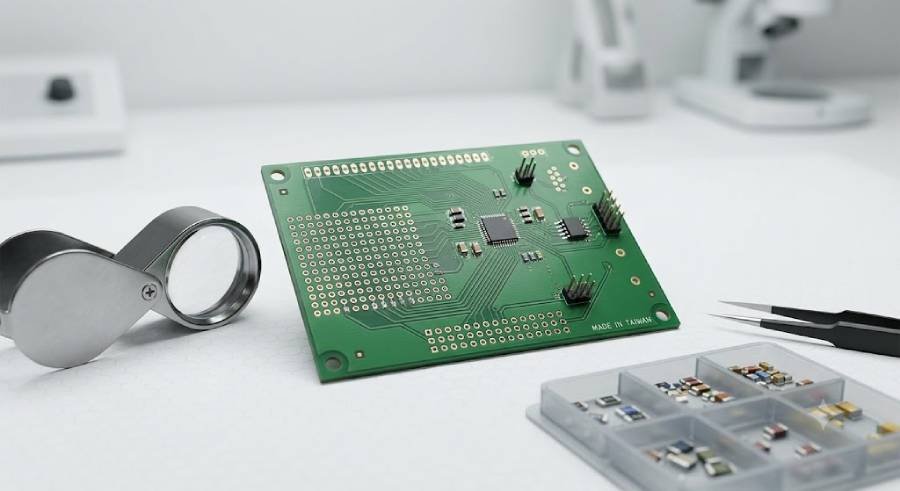
Layer count, board size, via types (blind/buried vs. through-hole), trace density, and panelization efficiency all affect fabrication and assembly time. Simpler designs with standard via structures and efficient panel layouts reduce both material waste and machine time.
2. Component Sourcing
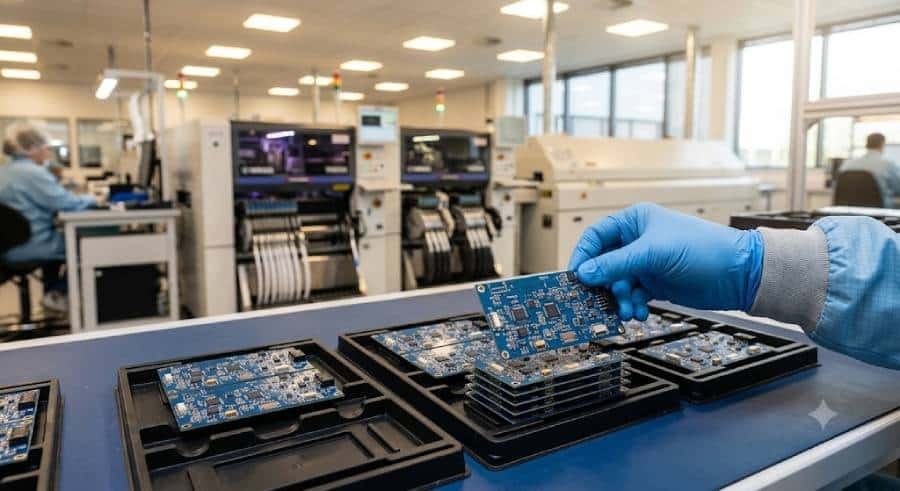
Component cost often accounts for 60–80% of total assembly cost. Choosing readily available packages (0603, 0805), avoiding single-source or obsolete parts, and allowing equivalent alternatives in your BOM can significantly reduce both price and lead time. Full turnkey sourcing (supplier buys all parts) often costs less than consigned assembly for prototype quantities, because the assembler leverages volume purchasing.
3. Assembly Process Mix
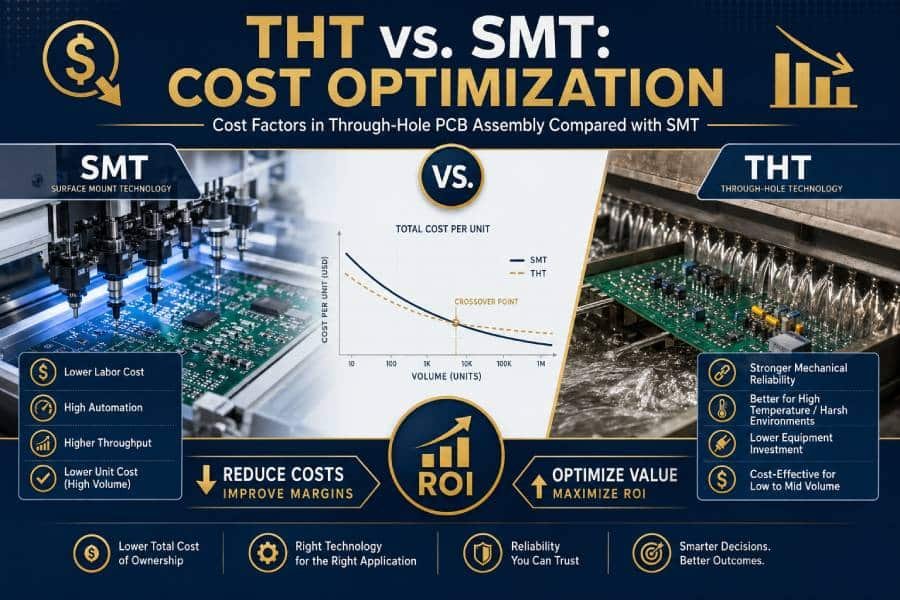
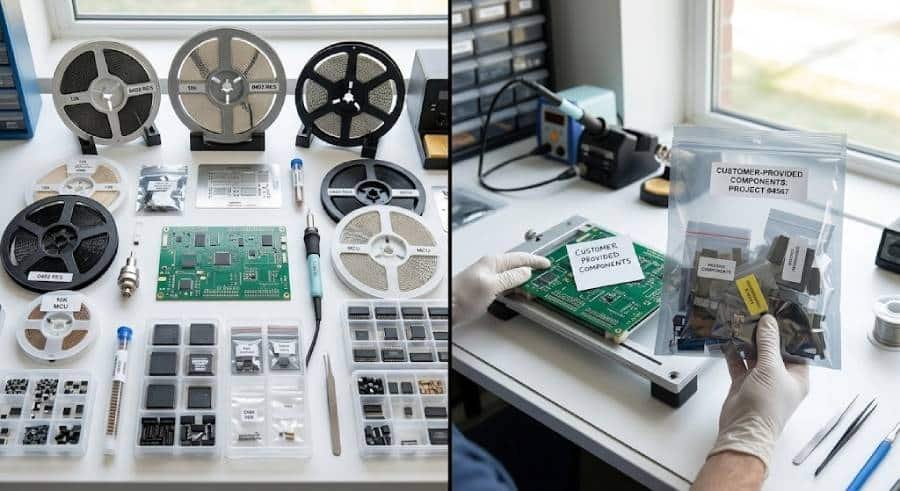
SMT (surface mount) is generally cheaper per joint than THT (through-hole) because it’s fully automated. If your design mixes both, minimize THT components to those that truly need mechanical strength — connectors, large capacitors, transformers. Every THT part adds manual labor cost.
4. Order Quantity and Batch Strategy
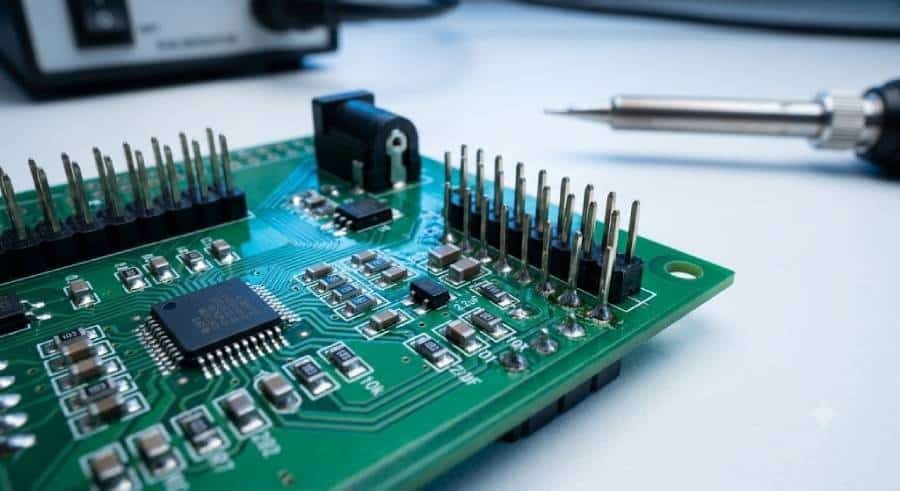
Per-unit cost drops sharply from 1-piece prototype to 50–100 piece batches because setup and stencil costs are amortized. If you need multiple board variants, panelizing them together (multi-design panel) shares setup cost across all variants.
5. Testing and Inspection Level
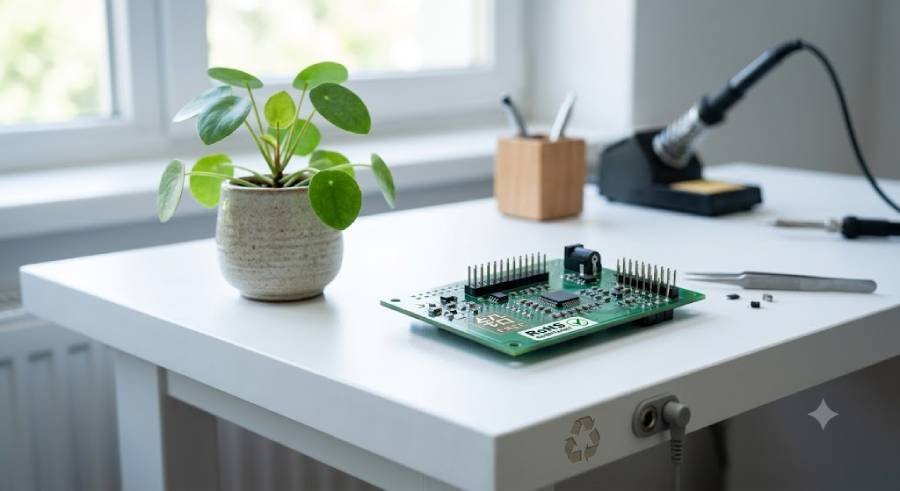
AOI (Automated Optical Inspection) is standard and low-cost. X-ray inspection for BGA joints adds cost but is essential for reliability. ICT/FCT (In-Circuit/Functional Testing) requires custom fixtures and is typically only justified for higher volumes or critical applications. Matching the inspection level to your project’s risk profile avoids paying for testing you don’t need.
6. Surface Finish and Solder Type
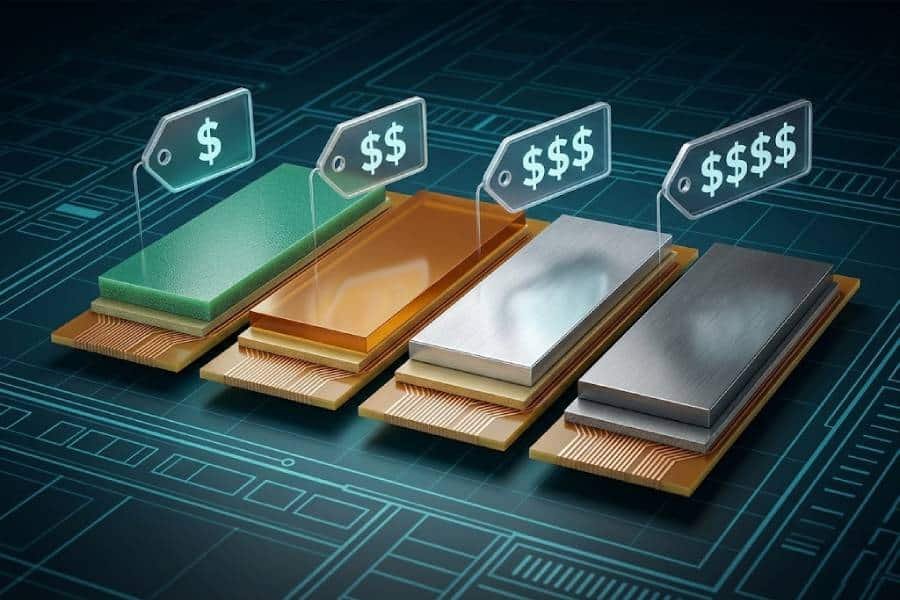
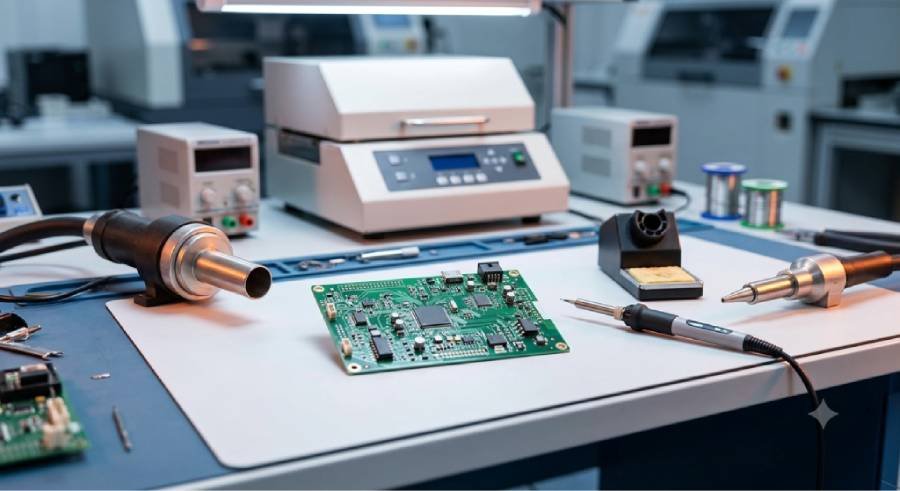
HASL (Hot Air Solder Leveling) is the most economical surface finish. ENIG (gold) costs more but is necessary for fine-pitch and BGA assemblies. Lead-free (RoHS) solder is standard now, but if your application allows leaded solder (HASL-lead), it can slightly reduce both material and process cost.
DFM Strategies That Cut Assembly Cost
Design for Manufacturing (DFM) decisions made before production starts have the biggest impact on final assembly cost. These practical strategies help reduce waste, rework, and process time:
Standardize component packages
Use 0603 or 0805 where possible instead of 0402 or 0201; smaller packages increase placement difficulty and cost.
Design for panelization
Add breakaway tabs or V-score lines; efficient panel layouts reduce handling time and improve SMT throughput.
Minimize BGA and fine-pitch parts
Unless your design truly requires them, BGAs and sub-0.5mm pitch components add X-ray inspection cost and rework risk.
Group similar components
Fewer unique reel setups means faster changeover and lower setup cost on pick-and-place machines.
Provide complete and accurate BOM
Include manufacturer part numbers, package types, quantities, and approved equivalents. Incomplete BOMs cause sourcing delays and can force premium-priced spot purchases.
Specify realistic testing requirements
Don't over-specify testing for prototypes. AOI alone may suffice for early validation; add X-ray and FCT only when the design stabilizes.
Avoid ultra-tight tolerances unless required
Standard tolerances reduce fabrication cost and improve yield, which flows through to lower assembly cost.
How to Evaluate a Low Cost Assembly Partner
Low cost PCB assembly quotes are easy to find; reliable low-cost partners are not. When comparing suppliers, check these criteria:
| Criterion | What to Ask |
|---|---|
| Certifications | ISO 9001 minimum; IATF 16949 for automotive; IPC-A-610 workmanship standard |
| DFM review | Do they review your design before quoting? Or just quote blind? |
| Component sourcing | Full turnkey? Partial? Do they offer equivalent alternatives when parts are unavailable? |
| Inspection included | Is AOI standard or extra? What about X-ray for BGA? |
| Lead time transparency | Do they commit to specific turnaround, or use vague “approximately” language? |
| Communication | How fast do they respond? Is there an English-speaking engineering contact? |
| Total cost vs unit price | Does the quote include stencil, setup, testing, shipping — or are these hidden add-ons? |
A supplier that quotes 30% less but skips DFM review, offers no inspection, and can’t answer technical questions is rarely “low cost” in practice. Rework, delays, and quality failures end up costing more.
Our partner brand JHYPCB offers cost-conscious assembly with DFM review, turnkey sourcing, AOI as standard, and X-ray for BGA projects — from prototype to low-volume production.
FAQ About Low Cost PCB Assembly
Here are some common questions buyers ask before requesting a low cost PCB assembly quote.
The answers below can help clarify service scope, project fit, quotation requirements, and cost-related concerns.
Low cost PCB assembly typically covers prototype, low-volume, SMT, THT, and turnkey assembly options. The "low cost" label should mean cost-optimized — not stripped-down — with practical DFM review, standard inspection (AOI), and flexible sourcing. Always confirm what's included in the quote: setup, stencil, testing, and shipping can be hidden costs.
Not necessarily. True low-cost assembly reduces unnecessary spending — through better design, efficient sourcing, and right-sized testing — while maintaining IPC-A-610 workmanship standards. The risk comes from suppliers who cut corners on process control, skip DFM review, or use unverified components to hit the lowest price.
You'll need a complete BOM (with manufacturer part numbers, quantities, and approved equivalents), Gerber files or ODB++ data, pick-and-place file (CPL/XY coordinates), and any assembly drawings or special process notes. The more complete your documentation, the faster and more accurate the quote.
Focus on design-level decisions: use standard component packages (0603/0805), minimize BGA and fine-pitch parts where possible, design for efficient panelization, allow BOM alternatives to avoid sole-source premiums, and match inspection level to your project's actual risk. These measures reduce cost at the source — without compromising build quality.
In turnkey assembly, the supplier sources all components and handles assembly — often cheaper for prototypes because they leverage volume purchasing. In consigned (kitted) assembly, you supply the components and the supplier only does placement and soldering — more control but you manage sourcing risk and minimum order quantities on parts.
Prototype assembly typically takes 3–7 working days after all files and components are confirmed. Lead time depends on component availability, board complexity, and whether turnkey sourcing is needed. Expedited 24–48 hour turnaround is possible for in-stock components. JHYPCB offers standard and expedited options for most low-cost assembly projects.
Ready to Get a
Low Cost PCB Assembly Quote?
Send your BOM, Gerber files, and quantity to JHYPCB for a cost-conscious quote — typically returned within 24 hours.
Questions about PCB fabrication for your project? Contact PCBELEC at sales@pcbelec.com.