Flying Probe Testing for Bare PCBs
Flying probe testing is a fixtureless electrical test method used to verify continuity and isolation on bare printed circuit boards before shipment. It is especially suitable for prototype, quick-turn, and low-volume PCB fabrication where fast setup and flexible test programming are important.
What Is Flying Probe Testing?
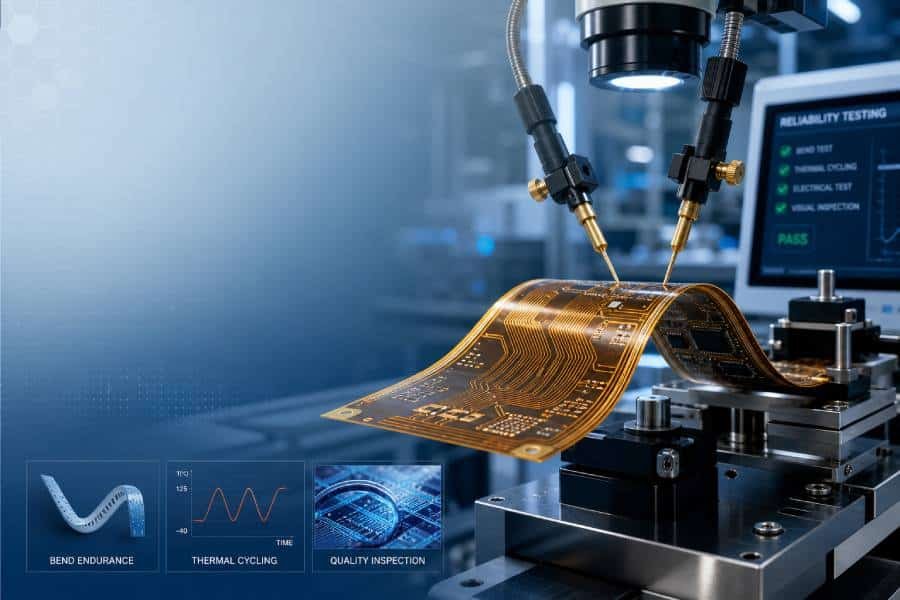
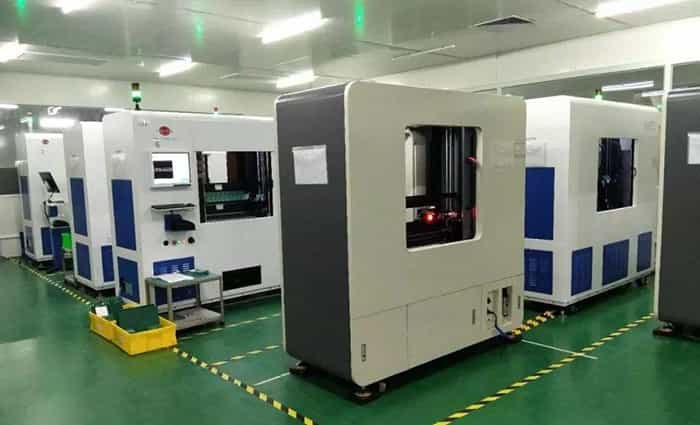
Flying probe testing uses programmable moving probes to contact selected pads, vias, and test points on a bare PCB. The system performs electrical measurements based on approved test data to confirm intended net connections and identify electrical defects created during PCB fabrication.
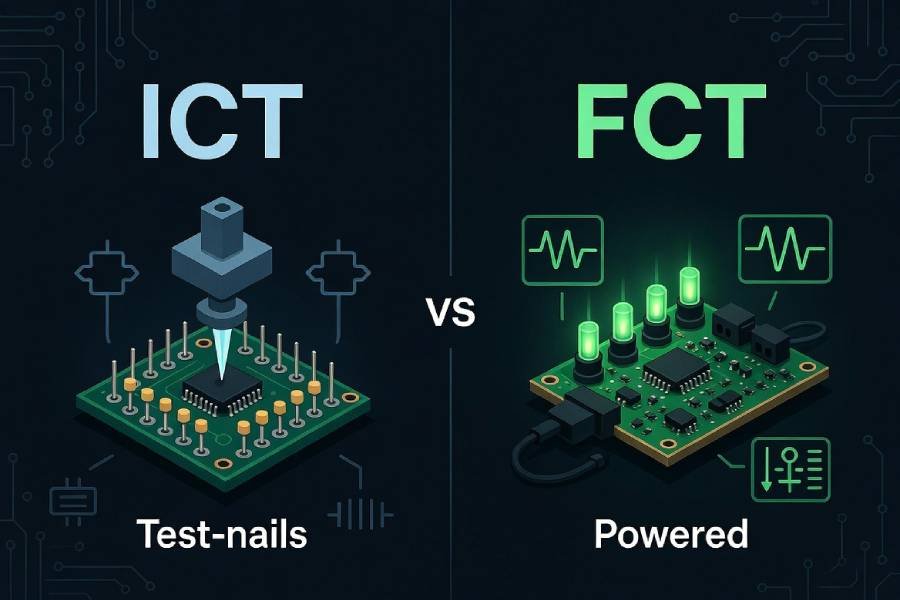
Unlike fixture-based electrical test methods, flying probe testing does not require a custom bed-of-nails fixture. This makes it a practical option for prototype PCB orders, quick-turn production, and projects with frequent design revisions.
What Can Flying Probe Testing Detect?
For bare PCB fabrication, flying probe testing is mainly used to verify electrical integrity and detect connectivity-related manufacturing defects before shipment.
Open Circuits
Detects broken or incomplete conductive paths that interrupt the intended net connection.
Short Circuits
Identifies unintended electrical connections between separate nets on the bare board.
Continuity Failures
Checks whether all required points within a net are electrically connected as expected.
Isolation Failures
Confirms that independent nets remain electrically isolated and do not show unintended conduction.
How Does Flying Probe Testing Work?
The process begins with approved PCB manufacturing data and electrical test information. Where available, a reference netlist helps define the expected connectivity of the bare board and supports accurate continuity and isolation verification.
A test program is created to guide the probes to designated pads, vias, and test locations. The system then performs electrical checks and compares the measured results with the expected interconnection data to identify opens, shorts, or unintended net connections.
- Review Gerber or approved manufacturing data.
- Prepare the flying probe test program.
- Position the bare PCB in the tester.
- Perform continuity and isolation checks.
- Compare measured results with the approved reference data.
Advantages of Flying Probe Testing
01.
No Dedicated Fixture Required
There is no need to create a custom bed-of-nails fixture, which helps reduce tooling cost and setup lead time.
02.
Well Suited to Prototype Orders
Flying probe testing is especially practical for prototype, quick-turn, and low-volume PCB fabrication.
03.
Flexible for Design Revisions
Updated test programming can support revised board data without requiring dedicated fixture changes.
04.
Effective Bare Board Verification
It helps verify continuity and isolation and detect open and short circuit defects before shipment.
05.
Practical for High-Mix Projects
It is a useful option when multiple designs or smaller order quantities make fixture tooling less economical.
Limitations of Flying Probe Testing
Flying probe testing offers flexibility and lower upfront tooling cost, but it is generally slower per board because the probes move sequentially between test locations. For stable, repetitive, high-volume PCB production, a fixture-based electrical test may provide faster throughput after fixture setup is completed.
Flying Probe Testing vs Fixture-Based Electrical Test
Both methods are used to verify the electrical integrity of bare PCBs. The better choice depends on production volume, design stability, turnaround time, and tooling economics.
| Factor | Flying Probe Testing | Fixture-Based Electrical Test |
|---|---|---|
| Fixture requirement | No dedicated fixture required | Dedicated fixture required |
| Best suited for | Prototype, quick-turn, and low-volume PCB orders | Stable, repetitive, high-volume PCB production |
| Initial setup | Faster setup | Longer due to fixture preparation |
| Upfront tooling cost | Lower for small-batch projects | Higher because of fixture investment |
| Test speed per board | Typically slower | Typically faster after setup |
| Revision flexibility | High | Lower |

When Is Flying Probe Testing the Best Choice?
Flying probe testing is often the right choice for prototype PCB fabrication, quick-turn production, low-volume orders, and projects with frequent design changes. It is particularly useful when electrical verification is required but dedicated fixture cost and lead time are difficult to justify.
- Prototype PCB projects.
- Quick-turn fabrication orders.
- Low-volume or high-mix production.
- New designs that may be revised.
- Bare boards requiring continuity and isolation verification.
Why Choose PCBELEC?
PCBELEC is a China-based PCB manufacturer focused on custom bare PCB fabrication. We support prototype, quick-turn, and production PCB requirements with engineering review, manufacturing control, and electrical testing options aligned with board design and project requirements.
Our manufacturing scope includes rigid PCBs, multilayer PCBs, HDI PCBs, flexible PCBs, and rigid-flex PCBs. Send us your Gerber files, PCB specifications, quantity, and delivery requirements for project review and quotation.
Frequently Asked Questions
Flying probe testing is a fixtureless electrical test method that uses programmable moving probes to verify continuity and isolation on an unpopulated PCB.
Yes. It is used to identify open circuits, short circuits, continuity failures, and unintended electrical connections on bare boards.
Lorem ipsum dolor sit amet, consectetur adipiscing elit. Ut elit tellus, luctus nec ullamcorper mattis, pulvinar dapibus leo.
No. One of its main advantages is that it does not require a dedicated bed-of-nails fixture.
Yes. It is especially suitable for prototype, quick-turn, and low-volume PCB fabrication because setup is faster and no dedicated fixture is required.
Gerber data, ODB++, IPC-2581, and IPC-D-356 netlist files can support test preparation and continuity verification.
Not always. For stable, high-volume PCB production, fixture-based electrical testing may provide faster throughput after the fixture is prepared.