Nano-Coated PCB Stencil Manufacturing

Nano-Coated SMT Stencils

Reduce solder paste adhesion and support cleaner release with PCBELEC nano-coated stainless steel stencils. Combine precision laser-cut apertures with the foil thickness, mounting format and coating requirements for your printing process.

  • Precision-Cut Apertures
  • Custom Foil Thicknesses
  • Framed & Frameless
  • Nano-Coated Surface

Stencil inquiries: sales@pcbelec.com

Surface Performance for Solder Paste Printing

Cleaner Release Starts at the Stencil Surface

A nano-coated SMT stencil combines a precision-made printing foil with a surface treatment designed to reduce solder paste adhesion.

PCBELEC supplies nano-coated stainless steel stencils for fine-aperture layouts and repeat printing. Laser cutting defines the aperture pattern; the coating supports release at the treated surfaces.

Configure the foil thickness, aperture layout and framed or frameless format together with the required coating treatment.

Explore Nano-Coated Stencil Specifications
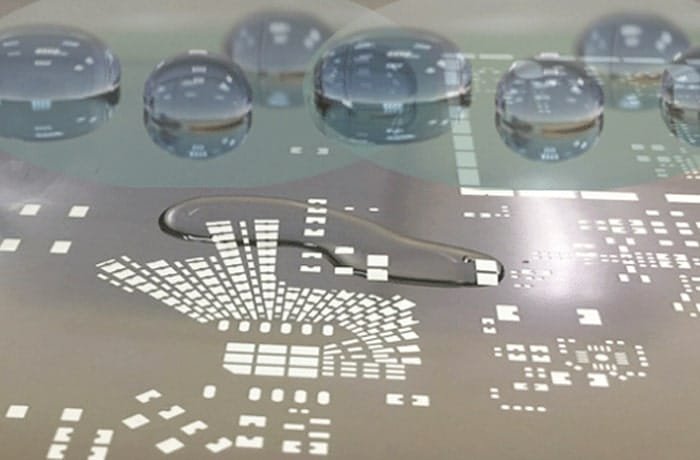
Water droplets on a nano-coated SMT stencil surface beside precision-cut aperture patterns
Nano-coated stencil surface and aperture detail. Water droplets illustrate the surface wetting behavior.
  1. Reduced Paste Adhesion

    The coating reduces the tendency of solder paste to cling to treated surfaces, helping limit residue buildup during printing.

  2. Cleaner Paste Release

    Combine the coating with the selected foil thickness and aperture geometry to support paste transfer from fine openings onto the PCB.

  3. Easier Residue Removal

    Reduced adhesion helps make residual paste easier to remove. Pair the coated stencil with compatible cleaning materials and handling methods.

Comparing the base stencil configuration? Review laser-cut foil, aperture and mounting options alongside the coating selection.

Explore Laser-Cut SMT Stencils

Printing Requirements & Coating Value

Nano-Coating for Fine Apertures and Repeat Printing

Surface treatment becomes especially relevant when small openings, dense patterns or repeated printing make paste release and residue control important. Match the coating with the complete stencil configuration.

  1. Fine Apertures & Small Deposits

    For layouts with small paste deposits, combine precision-cut openings with a coating that reduces adhesion at the treated surfaces. Review the aperture geometry and foil thickness together for the intended transfer.

    Configuration Focus Minimum opening, aperture shape, foil thickness and paste-release requirements.

  2. Dense & Repeated Aperture Patterns

    Dense arrays bring many openings into the same printing region. Specify the pattern, critical features and coating requirements as one manufacturing configuration, with attention to release and residue.

    Configuration Focus Array layout, aperture count, image position and designated critical features.

  3. Repeat Printing & Residue Control

    Reduced paste adhesion supports cleaner treated surfaces during repeated printing. Select the coating alongside the paste system, cleaning materials and planned maintenance routine.

    Configuration Focus Paste behavior, surface treatment, cleaning compatibility and handling practices.

  4. LED & Mini-LED Printing Layouts

    PCBELEC supports nano-coated stencils for LED, backlight and Mini-LED applications. Configure thin stainless steel foils and fine aperture patterns around the required deposition layout.

    Configuration Focus Thin-foil selection, fine openings, repeated arrays and overall stencil format.

Treat the Coating and Aperture Design as One Selection

Nano-coating adds a surface-performance option to the stencil. Select it alongside the foil, aperture pattern and printing setup so the complete tool addresses your deposition requirements.

Review Nano-Coated Stencil Specifications

Thin Foils & Fine-Feature Manufacturing

Nano-Coated Stencil Specifications

PCBELEC combines laser-cut stainless steel foils with nano-coating for precision printing applications. Review the material, aperture and format specifications below when configuring your stencil.

  • 0.02–0.10 mm Foil thickness range
  • 0.04 × 0.05 mm Minimum aperture size
  • 736 × 736 mm Maximum overall size

Swipe horizontally to view the complete specification table.

PCBELEC nano-coated SMT stencil material, foil, aperture and format specifications
ParameterSpecification
Aperture Manufacturing100% laser cut
Foil MaterialSUS304 / SUS301 stainless steel
Frame MaterialAluminum alloy
Foil Thickness 0.02–0.10 mm Stencil foil thickness; separate from the coating film thickness.
Minimum Aperture Size0.04 × 0.05 mm
Maximum Aperture Count1,000,000 openings
Aperture-Wall Roughness1.5 µm
Dimensional Tolerance0.003 mm
Maximum Overall Size736 × 736 mm
Surface Treatment Nano-coating Include the coating requirements and application details in the order specification.
Product Configuration Framed stencils and frameless foils Define the required dimensions, image position and mounting features for the selected format.
Application Focus LED, backlight and Mini-LED printing applications
Fine aperture array and repeated opening patterns in a stainless steel SMT stencil
Fine-aperture pattern detail. Submit the complete layout and designated critical features with your inquiry.

From Capability to Configuration

Specify the Complete Aperture Pattern

Build the order around the complete printing tool: selected foil, aperture geometry, format and surface treatment. Include the critical dimensions and layout references that define your stencil.

  • Approved paste-layer data, units and revision
  • Critical aperture dimensions and array layout
  • Foil thickness, outer dimensions and image position
  • Coating, mounting and inspection requirements

For the full stencil capability reference, compare these nano-coated specifications with the other product configurations.

View the Stencil Capability Reference

Product Configuration

Configure the Foil, Frame and Coating

Build the nano-coated stencil around your aperture pattern and printing setup. Select the foil, define the mounting format and include the surface-treatment requirements in one specification.

Framed stainless steel SMT stencil showing the frame and printing foil
Framed stencil format. Specify the frame dimensions, aperture-pattern position and coating requirements for your printing setup.
  1. Select the Foil & Aperture Layout

    Choose the stainless steel foil and thickness alongside the approved aperture pattern. Identify fine openings and repeated arrays that need particular attention.

    • Material and selected foil thickness
    • Top- or bottom-side paste data
    • Critical features, panel layout and revision
  2. Match the Frame or Frameless Format

    PCBELEC supplies framed stencils and frameless foils. Match the selected format to your printer, tensioning system or mounting fixture.

    • Outer dimensions and required inner size
    • Image position, orientation and fiducials
    • Clamping, tensioning or locating features
  3. Define the Coating & Finishing

    Include the nano-coating requirements with the stencil configuration. Keep the coating application details distinct from the printing-side and aperture-data references.

    • Coating application requirements
    • Polishing or other specified finishing
    • Surface-performance and documentation requirements

Replacing an existing stencil? Include its dimensional drawing or configuration reference together with the current aperture revision.

Request a Configured Stencil Quote

Surface Preparation, Treatment & Inspection

Coating Process, Surface Quality and Care

A nano-coated stencil combines precise geometry with a functional surface treatment. PCBELEC brings the foil specification, coating requirements and finished condition into the manufacturing review.

  1. Prepare the Stencil Surface

    Manufacture the aperture pattern and complete the specified foil finishing. Prepare the stencil surface for the selected coating process and application requirements.

  2. Apply the Specified Treatment

    Apply the nano-coating according to the selected configuration. Keep the treatment requirements connected to the foil, aperture layout and intended printing process.

  3. Check Geometry and Surface Condition

    Review the finished stencil against the approved configuration, including critical dimensions, surface condition and specified coating-related inspection requirements.

Manufacturing Quality

Check the Foil and the Surface

Geometric requirements and coating requirements describe different aspects of the finished stencil. Include both in the order specification.

  • Aperture & Layout

    Approved pattern, designated critical openings, image position and revision references.

  • Foil & Physical Format

    Material, thickness, outer dimensions and the selected frame or mounting configuration.

  • Surface & Treatment Requirements

    Finished surface condition and the coating application requirements defined for the order.

Cleaning & Handling

Match Care to the Coated Surface

Plan cleaning and handling around the selected coating and printing process to support the stencil in regular use.

  • Cleaning Compatibility

    Select cleaning materials and methods compatible with the coating and solder paste.

  • Maintenance Routine

    Match residue removal and cleaning intervals to the actual printing conditions and process requirements.

  • Handling & Storage

    Include the foil or frame format in your handling, identification and storage arrangements.

Share your paste system, cleaning method and any designated coating requirements with the stencil files when requesting a configuration review.

Include Your Coating Requirements

Files, Configuration & Quotation

Request a Nano-Coated Stencil Quote

Tell PCBELEC about your aperture layout, foil and printing setup. Use the form below to submit the configuration and attach your manufacturing files.

  1. Pattern & Revision

    Paste-layer Gerber or approved aperture data, board or panel outline, units, printing side and file revision.

  2. Foil & Mounting

    Thickness, framed or frameless format, dimensions, image position, fiducials and relevant printer or fixture details.

  3. Coating & Finishing

    Nano-coating application, polishing and any designated surface-performance, inspection or documentation requirements.

  4. Quantity & Schedule

    Quantity, required date and delivery destination. Identify repeat orders and any changes from the previous revision.

Need help selecting the configuration? Include the available files and tell us which thickness, format or coating requirements you would like reviewed.

sales@pcbelec.com

Product, Process & Ordering

Nano-Coated Stencil FAQ

Answers to common questions about coating value, manufacturing specifications, mounting formats and stencil care.

Have a defined coating or inspection requirement? Include it with your aperture data and stencil configuration.

Submit Your Stencil Requirements
What does nano-coating add to an SMT stencil?

Nano-coating adds a surface treatment designed to reduce solder paste adhesion and support cleaner release at the treated surfaces.

The aperture pattern and foil thickness remain key parts of the printing tool. Select the coating together with those features and the intended printing process.

Can a laser-cut stencil also be nano-coated?

Yes. Laser cutting defines the aperture geometry, while nano-coating adds a surface-treatment option. PCBELEC combines laser-cut stainless steel foils with the specified coating requirements.

For the base manufacturing configuration, explore our laser-cut SMT stencils .

What foil thicknesses and aperture sizes are available?

The nano-coated stencil specifications on this page list a foil thickness range of 0.02–0.10 mm and a minimum aperture size of 0.04 × 0.05 mm.

Select the thickness, aperture pattern and overall format together. See the manufacturing specification table for the complete set of listed parameters.

Is foil thickness the same as coating thickness?

No. Foil thickness describes the stainless steel printing foil. Coating thickness describes the applied surface treatment and is a separate specification.

When a project requires a particular coating film or surface-performance criterion, include it with the order requirements.

Are framed and frameless nano-coated stencils available?

Yes. PCBELEC supplies framed stencils and frameless foils. Define the format around the printer, tensioning system or mounting fixture.

Include outer and inner dimensions, image position, fiducials and locating features. Keep the printing-side reference separate from the coating application requirements.

What files are needed for a quotation?

Send the paste-layer Gerber or approved aperture data, the board or panel outline, units and revision. Identify the printing side and any requested aperture changes.

Include thickness, mounting format, coating and finishing requirements, quantity, required date and destination. Use the stencil inquiry form to submit the configuration and files.

How should a nano-coated stencil be cleaned?

Use cleaning materials and methods compatible with the selected coating and solder paste. Set the maintenance routine around the actual printing conditions and residue behavior.

Include any established cleaning chemistry or process requirement when requesting a configuration review.

How are production timing and delivery confirmed?

Provide the quantity, configuration, required date and delivery destination with your inquiry. PCBELEC confirms the order schedule around the selected manufacturing and coating requirements.

Production timing and shipping are addressed separately so the delivery plan reflects both manufacture and transport.

Related Products & Resources

Explore More Stencil Options

Compare the base manufacturing configuration, review local thickness options or explore the wider SMT stencil range.

Further Reading

Continue with practical introductions to stencil manufacturing and solder paste printing.

Scroll to Top