Table of Contents
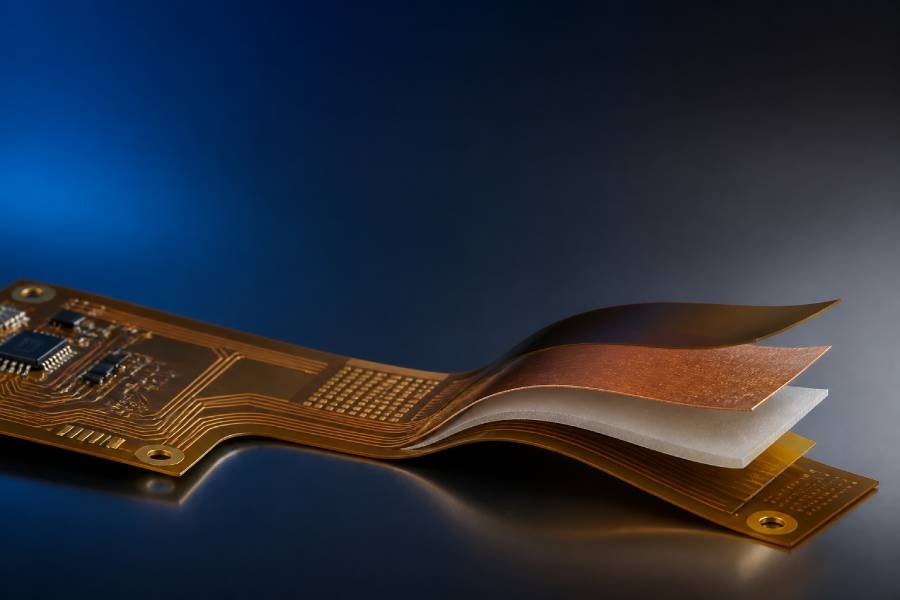
Flex PCB adhesives and bonding materials are essential to the performance, reliability, and manufacturability of flexible circuits. They are used to bond copper foils, attach coverlays and stiffeners, and support lamination in both flex and rigid-flex designs.
Choosing the right bonding system is not just a material decision; it also affects bend life, thermal survivability, process compatibility, and long-term durability.
In this guide, we will explain the main adhesive types used in flex PCB construction, compare adhesive-based and adhesiveless options, and show how to choose the right material for your application.
What Are Flex PCB Adhesives and Bonding Materials?
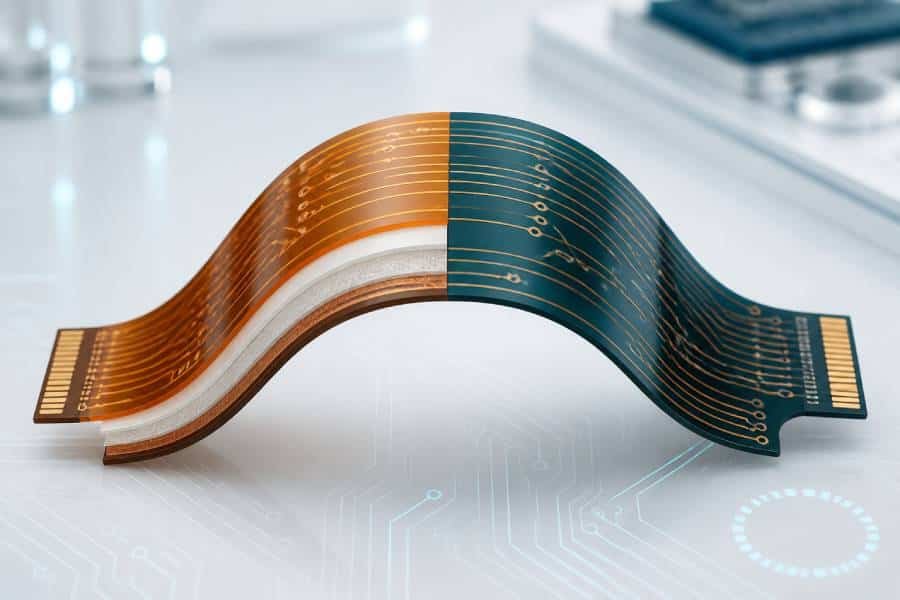
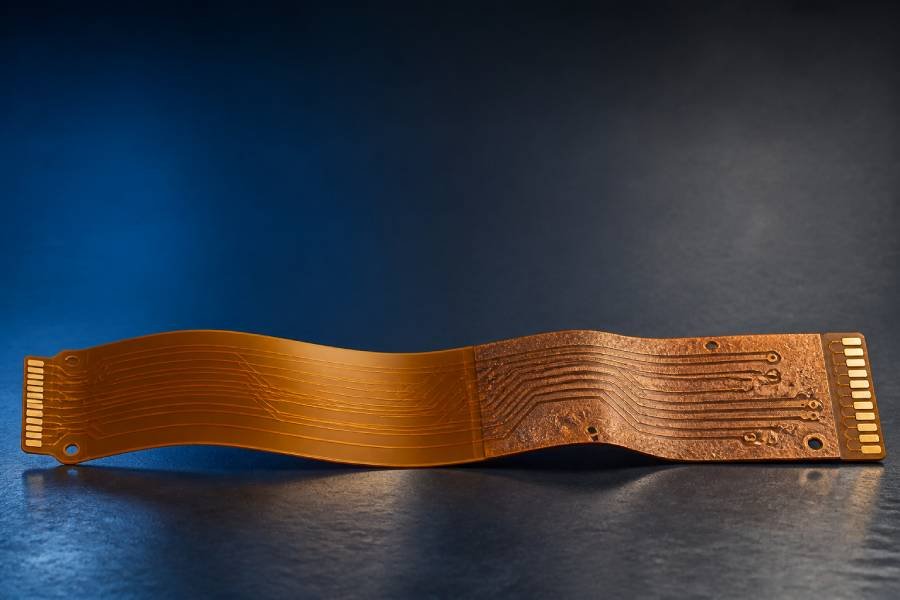
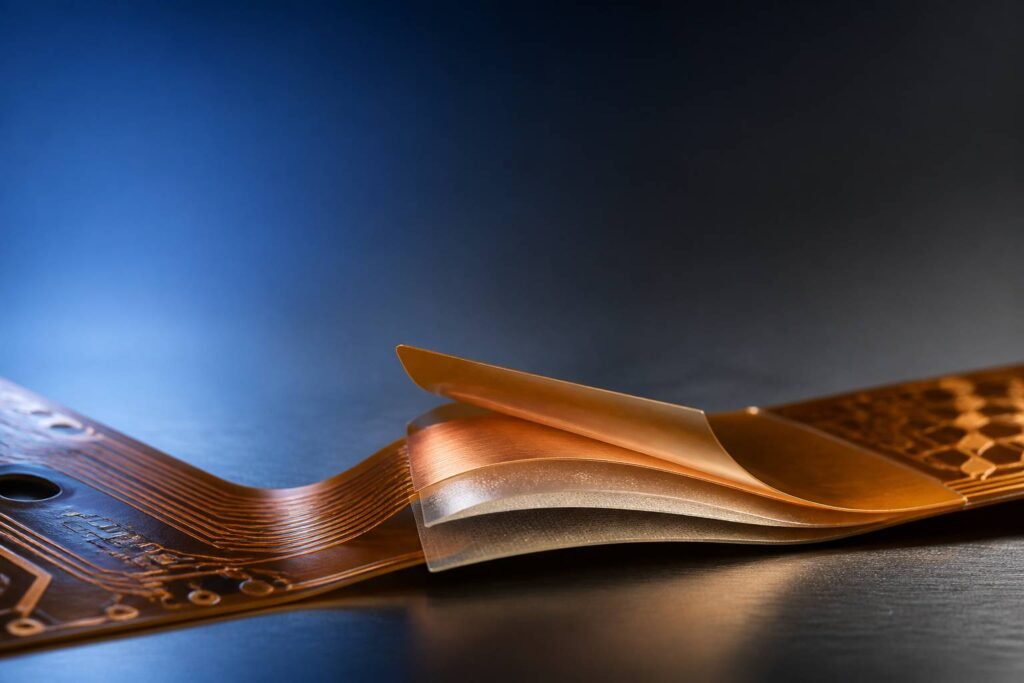
Flex PCB adhesives and bonding materials are the layers or compounds that hold flexible circuit structures together. In practice, they may bond copper to the flexible base material, join multilayer flex constructions, attach coverlays, or secure stiffeners and other reinforcing parts.
In many flex PCB builds, the adhesive layer acts as a structural interface rather than a simple glue. It must maintain adhesion under heat, repeated bending, humidity, and mechanical stress while still fitting the lamination process and the final product’s electrical and mechanical requirements.
Where they are used
The most common uses include copper-to-substrate bonding, coverlay lamination, stiffener attachment, and rigid-flex interconnect construction.
In multilayer or rigid-flex designs, bonding materials also help control stack-up integrity and reduce the risk of delamination during processing or field use.
Why they matter
A flex circuit can fail if the wrong adhesive is chosen, even when the copper pattern and layout are correct. Adhesive performance influences bend durability, reflow resistance, chemical resistance, and the ability of the board to survive environmental exposure over time.
This is why engineers often evaluate adhesives together with substrate type, coverlay material, copper thickness, and the intended bend profile instead of treating them as a separate afterthought.
Common bonding material families
In flex PCB manufacturing, the most common adhesive families include acrylic, epoxy, and polyimide-based systems.
Acrylic adhesives are often favored for flexibility and broad use, epoxy materials are valued for stronger chemical resistance and stiffness, and polyimide-based systems are better suited for higher-temperature applications.
Some constructions also use thermoplastic or thermoset bond systems, depending on whether the design prioritizes processability, thermal durability, or bend performance.
For this reason, the “best” bonding material is always application-specific rather than universal.
Main Types of Flex PCB Adhesives
Flex PCB adhesives are usually grouped into a few core material families, each with different strengths in flexibility, heat resistance, and manufacturing behavior. The most common options are acrylic, epoxy, and polyimide-based systems, while some designs may also use thermoplastic or specialty adhesive materials.
Acrylic adhesives
Acrylic adhesives are widely used in flexible circuits because they offer a good balance of flexibility, adhesion strength, and processability. They are often chosen for general-purpose flex constructions where cost, manufacturability, and bend performance all matter.
In many applications, acrylic systems are a practical default because they bond well to common flex materials and are easier to work with than more specialized high-temperature options. However, they are not always the best choice for the most demanding thermal environments.
Epoxy adhesives
Epoxy adhesives are valued for stronger chemical resistance and higher stiffness. They can be useful when the design needs a more rigid bond or when the assembly may face harsher environmental exposure.
The trade-off is that epoxy is usually less flexible than acrylic, so it may be less suitable for areas that undergo frequent bending. For that reason, epoxy is often selected only when the reliability benefit outweighs the loss in flexibility.
Polyimide adhesives
Polyimide-based adhesive systems are generally used when the design must tolerate higher temperatures and more demanding processing conditions. They are attractive for advanced flex and rigid-flex applications where thermal durability is a priority.
The downside is that these systems can require more specialized processing and may not be the most cost-effective choice for every project. In practice, they are usually reserved for higher-performance designs rather than standard consumer flex boards.
Thermoplastic and specialty materials
Some flex PCB constructions also use thermoplastic or other specialty adhesive materials. These can be selected for specific manufacturing workflows, unusual environmental requirements, or unique performance targets.
Specialty systems may also include materials used for conductive bonding or other niche assembly functions, but these are typically application-specific rather than universal choices.
How to think about the trade-off
In simple terms, acrylic is often the most balanced option, epoxy is often chosen for stronger resistance and stiffness, and polyimide is used when high-temperature performance is critical.
That said, the best material always depends on the complete design context, including bend radius, layer stack, assembly temperature, and long-term operating environment.
Adhesive vs. Adhesiveless Flex
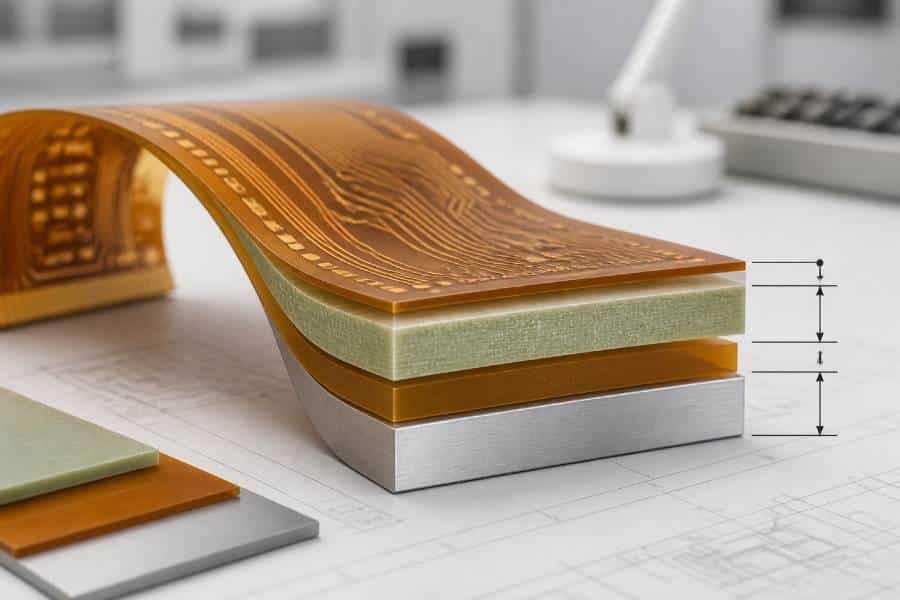
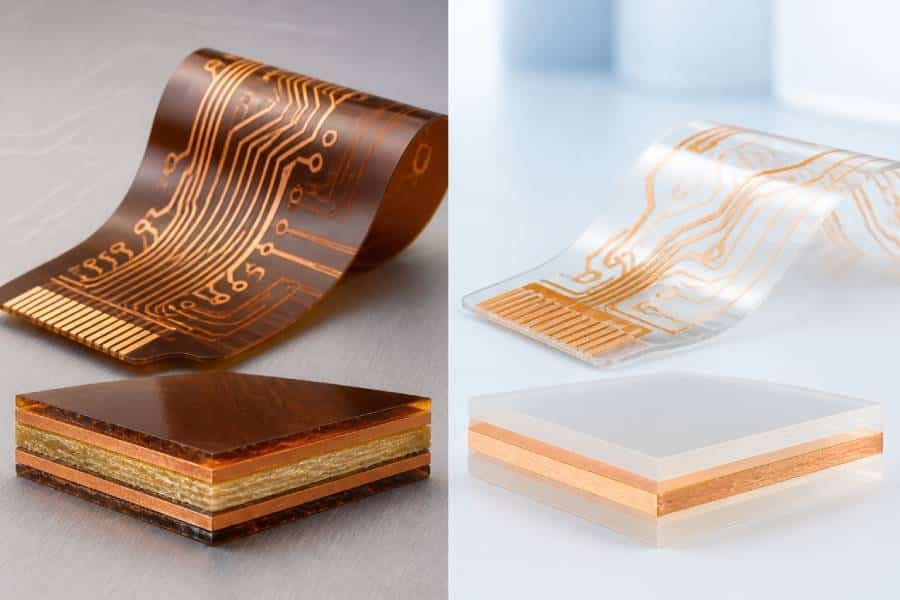
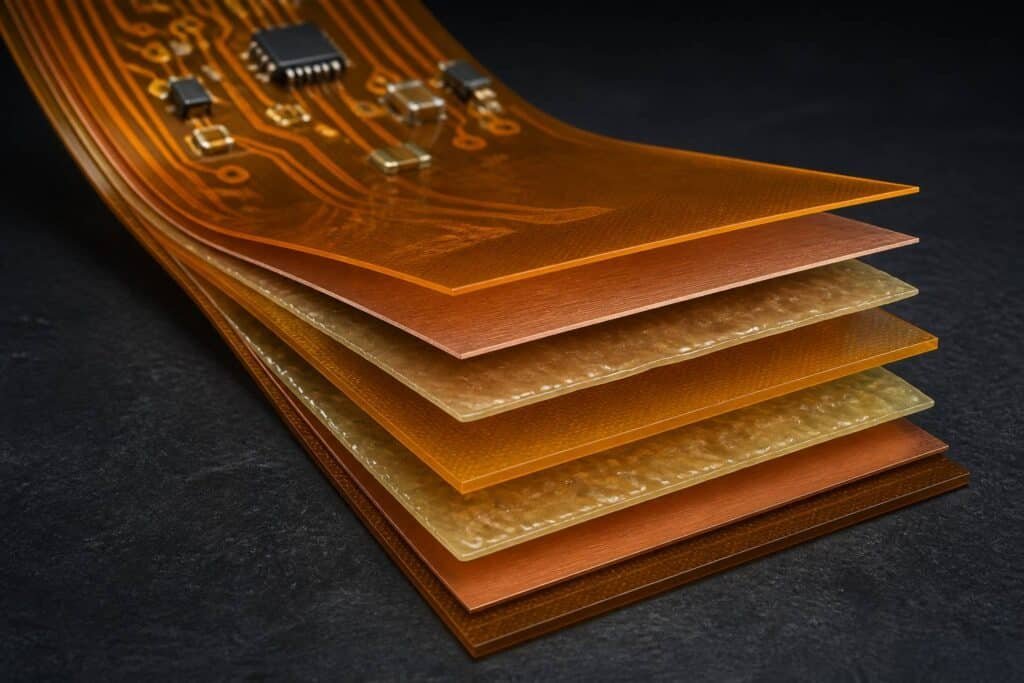
When engineers compare flex PCB constructions, one of the most important decisions is whether to use an adhesive-based or adhesiveless structure. The difference is simple in principle: adhesive-based flex uses a bonding layer between copper and polyimide, while adhesiveless flex attaches copper directly to the polyimide substrate.
Adhesive-based flex
Adhesive-based flex constructions are often chosen because they are cost-effective and widely available. They can provide strong copper peel strength and are suitable for many standard flex applications where extreme bend performance is not the main concern.
The trade-off is that the adhesive layer adds thickness and can introduce more stress during thermal cycling and repeated bending. In rigid-flex and other high-reliability builds, that extra bonding layer may become a weak point if the design is pushed into harsher conditions.
Adhesiveless flex
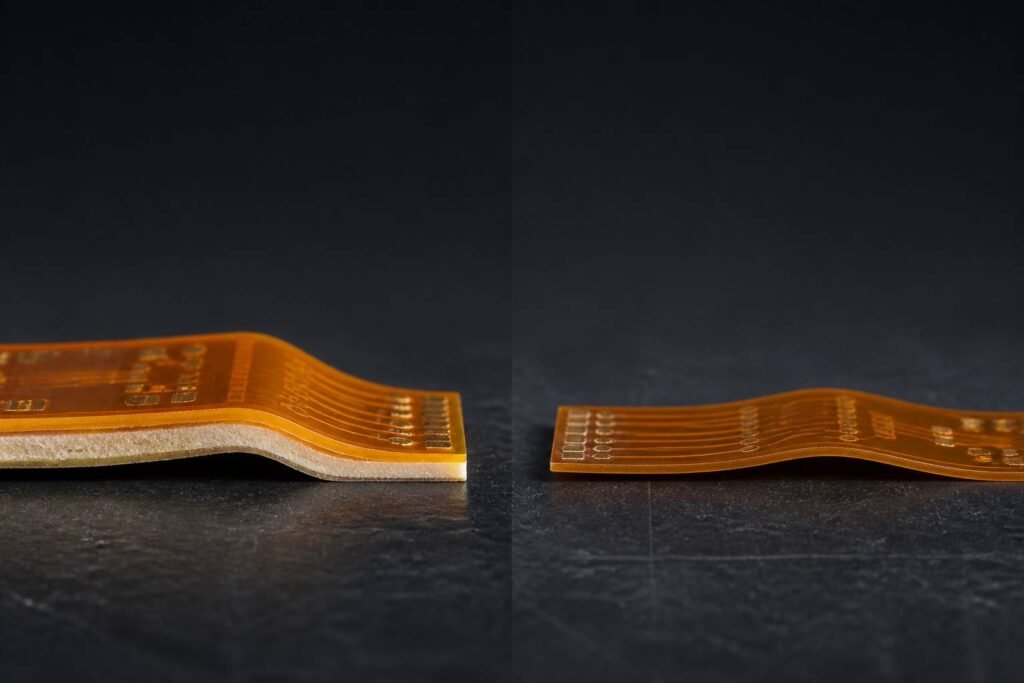
Adhesiveless flex constructions remove the separate adhesive layer and bond copper directly to the polyimide film. This typically results in a thinner stack-up, better flexibility, and improved performance in demanding thermal or dynamic bending environments.
Because the adhesive interface is eliminated, adhesiveless flex often offers better reliability in repeated flexing and can reduce some of the issues associated with thermal expansion or delamination. For that reason, it is often preferred in higher-performance flex and rigid-flex designs.
Key differences
In practical terms, adhesive-based flex is usually the lower-cost and more conventional choice, while adhesiveless flex is often the higher-performance option. Adhesive-based structures are easier to justify for cost-sensitive products, but adhesiveless structures are better suited to thin, high-reliability, or harsh-environment applications.
A simple way to think about it is this: if the design is mostly static and budget-sensitive, adhesive-based construction may be enough; if the design must bend repeatedly, survive more heat, or maintain tighter electrical performance, adhesiveless construction is often the stronger candidate.
Why this matters for designers
This choice affects more than just material cost. It can influence bend radius, signal integrity, hole reliability, dimensional stability, and the board’s behavior during assembly and long-term use.
That is why flex material selection should always be tied to the actual application, not just a general preference for one construction style over another.
How to Choose the Right Bonding Material
Choosing the right bonding material for a flex PCB starts with the application, not the material name. The best option depends on how the board will bend, how hot it will run, what the assembly process looks like, and how much reliability the final product must deliver.
1. Start with the bend profile
The first question is whether the flex circuit will experience static bending or dynamic bending. Static flex designs are bent once or only a few times, while dynamic flex designs must survive repeated movement over the product’s life.
If the circuit must bend many times, the material choice should prioritize flexibility and fatigue resistance. If the board is mostly fixed in place after installation, the design can usually accept a broader range of adhesive systems.
2. Check thermal requirements
Thermal exposure is another major filter. The adhesive must survive lamination, solder reflow, and the product’s operating temperature without softening, flowing, or losing adhesion.
When stability through reflow and thermal cycling is critical, a thermoset-style behavior is often a better fit. When the thermal load is controlled and bonding flow or rework practicality matters more, a thermoplastic-style option may be acceptable.
3. Match the material to the environment
The end-use environment matters just as much as bend and temperature. Humidity, chemicals, vibration, and long-term aging can all affect whether the bond line remains stable over time.
That is why adhesive selection should be evaluated together with the full stack-up, not as an isolated part number. A material that looks fine on paper may still fail if it does not match the mechanical and environmental stress profile of the product.
4. Consider manufacturability
A bonding material also has to work inside the real fabrication process. That includes lamination pressure, curing behavior, compatibility with coverlay or stiffeners, and whether the fabricator can build it consistently at production scale.
Some materials are attractive technically but difficult to process or source reliably. In practice, the right choice is often the one that balances performance with yield, cost, and supply stability.
5. Think about cost versus performance
Cost should be judged against the risk of failure, not only against the material price. A lower-cost adhesive may be perfectly adequate for a simple static flex product, but it can become expensive if it shortens life or creates assembly problems later.
For that reason, the most economical solution is usually the one that meets the reliability target with enough margin, rather than the cheapest one available.
6. Bring the manufacturer in early
One of the best ways to avoid material mistakes is to involve the PCB manufacturer early. Fabricators can confirm which adhesive systems they support, how they behave in lamination, and whether the stack-up is realistic for the intended application.
This is especially important for rigid-flex designs, where bonding choices can affect hole quality, delamination risk, and the mechanical behavior of the flexible section.
Common Applications of Flex PCB Adhesives
Flex PCB adhesives are used in far more places than many designers first expect. In flexible and rigid-flex circuits, they are commonly involved in coverlay bonding, stiffener attachment, multilayer lamination, and rigid-flex stack-up construction.
Coverlay bonding
One of the most common applications is bonding the coverlay to the outer surface of the flex circuit. In this structure, a polyimide film with adhesive is laminated over the copper pattern to protect the circuitry, provide insulation, and leave controlled openings for pads and connection points.
This application is especially important because the coverlay serves as both a protective layer and a mechanical support feature in flexible circuits. The adhesive must bond reliably without causing misalignment, excessive flow, or weak protection around the exposed pads.
Stiffener attachment
Adhesives are also widely used to attach stiffeners to selected areas of a flex PCB. Stiffeners help create local rigid support for connectors, SMT components, assembly handling, and transition zones where extra mechanical reinforcement is needed.
This is a critical application because flexible materials alone may not provide enough support for insertion forces, component weight, or repeated use around contact areas. A properly bonded stiffener can reduce stress on pads, improve solder joint durability, and make the circuit easier to assemble.
Multilayer flex bonding
In multilayer flex PCBs, bonding materials are used to join separate flex layers into a stable stack-up. Bonding sheets, bondplies, or other adhesive systems can create the dielectric spacing needed between layers while holding the construction together during lamination.
This application directly affects thickness control, insulation performance, and long-term resistance to delamination. In some designs, the bonding material also helps achieve target impedance or other electrical requirements by contributing to the dielectric structure.
Rigid-flex construction
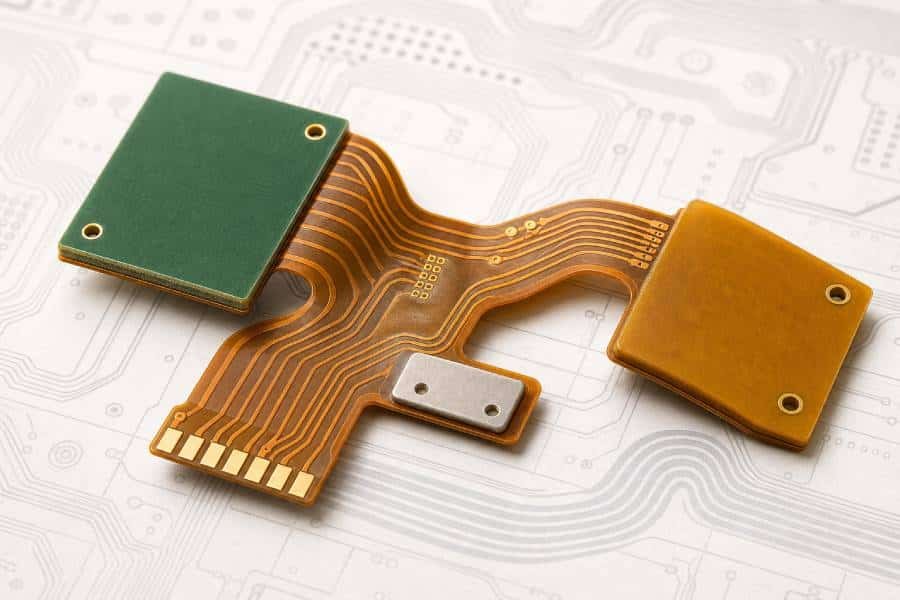
In rigid-flex PCBs, adhesives play a role in both the flexible and transition regions of the design. They may be used to bond flexible layers, attach coverlays, secure stiffeners, or support the interface between flex and rigid sections during fabrication.
Because rigid-flex boards combine different mechanical behaviors in one product, bonding reliability becomes especially important. A weak adhesive choice can increase the risk of stress concentration, delamination, or premature failure near the rigid-to-flex transition.
Specialized assembly uses
Some adhesive systems are also used for more specialized functions, such as attaching heat sinks, bonding circuits into enclosures, or supporting assemblies where screws or other fasteners are not practical. These uses are more application-specific, but they show how bonding materials can influence both the electrical design and the final mechanical integration of the product.
In real projects, this means adhesive selection is often part of system design rather than only PCB fabrication. The right bonding material can improve not just manufacturability, but also how the flex circuit performs inside the final device.
Common Mistakes to Avoid When Selecting Flex PCB Adhesives
Selecting a flex PCB adhesive is not only about finding a material that bonds well in the lab. Many failures happen because the adhesive looks acceptable on paper but does not match the real bending, thermal, and assembly conditions of the final product.
Choosing by cost alone
One of the most common mistakes is selecting an adhesive mainly because it is cheaper or easier to source. A lower-cost material can create much higher downstream costs if it leads to coverlay lifting, delamination, pad movement, or reduced bend life.
In flex and rigid-flex projects, the more useful question is whether the material can meet the required reliability target with margin. A small material saving rarely justifies a field failure or repeated production issue.
Ignoring the bend zone
Another major mistake is using an adhesive without considering where the circuit will bend. If the bonding system is too stiff, too thick, or poorly suited to repeated flexing, the stress can accumulate in the bend area and shorten product life.
This problem becomes worse when bends are placed too close to vias, stiffeners, or rigid-to-flex transitions. Even a good adhesive can fail early if the design creates stress concentration in the wrong place.
Underestimating thermal demands
Some adhesive systems perform well in basic handling but lose strength when exposed to solder reflow, temperature cycling, or long-term heat. If thermal resistance is underestimated, the result may be softening, bond degradation, coverlay lifting, or dimensional instability.
This is especially risky in assemblies that see multiple reflow cycles or elevated operating temperatures. Thermal margin should be checked early instead of assumed late in the design cycle.
Using the wrong amount of adhesive
Too little adhesive can weaken the bond, but too much can also create problems. Excessive adhesive may flow into unwanted areas, interfere with openings, change local thickness, or contribute to mechanical imbalance in the stack-up.
In rigid-flex builds, incorrect adhesive amounts can increase the risk of warpage and delamination. Bonding materials must be controlled as part of the full stack-up, not treated as a secondary detail.
Treating adhesive selection as separate from stack-up design
A flex adhesive should never be chosen in isolation from copper type, polyimide thickness, coverlay structure, and stiffener strategy. Problems often appear when the bonding material is selected first and the rest of the design is forced to fit around it.
A more reliable approach is to evaluate the full mechanical system together. In flex design, material interfaces matter as much as the individual materials themselves.
Waiting too long to involve the manufacturer
A final mistake is postponing discussion with the fabricator until the stack-up is already fixed. At that point, it may be harder to adjust adhesive type, lamination behavior, or transition-zone details without redesign work.
Early DFM review helps catch unrealistic assumptions about bend radius, adhesive flow, stack symmetry, and transition stress before those issues become failures in production. In practice, this is one of the simplest ways to improve flex PCB reliability.
FAQ
The most common adhesive families in flex PCB construction are acrylic, epoxy, and polyimide-based systems. Acrylic materials are often used for balanced flexibility and processability, epoxy is chosen when stronger chemical resistance or stiffness is needed, and polyimide is used in higher-temperature applications.
No. Adhesiveless flex usually offers better bend performance, thinner stack-ups, and improved thermal behavior, but adhesive-based flex can still be the better choice for cost-sensitive or less demanding designs.
Adhesiveless construction is often preferred when the design must support repeated bending, tighter thickness control, higher temperature stability, or more demanding reliability requirements. It is especially attractive in advanced flex and rigid-flex applications.
A bonding sheet, sometimes called bondply, is an adhesive layer used to join flex materials together during lamination. It helps create stack-up structure, electrical spacing, and mechanical integrity in multilayer flex or rigid-flex designs.
Yes. Adhesive thickness, stiffness, and thermal behavior can all influence bend durability. If the adhesive is too rigid or poorly matched to the bend zone, it can increase stress and reduce the circuit’s flex life.
It should be considered during stack-up design, not after. Adhesive selection affects thickness, lamination behavior, bend radius, and reliability, so it needs to be evaluated together with the rest of the flex structure.
Conclusion
Flex PCB adhesives and bonding materials are not just supporting details; they are a core part of circuit reliability, manufacturability, and end-use performance. The right choice depends on the full design context, including bend behavior, thermal exposure, stack-up structure, and the product’s long-term reliability targets.
In general, adhesive-based flex constructions remain a practical choice for many cost-sensitive designs, while adhesiveless flex is often the better option for thinner, higher-reliability, or more demanding applications. For coverlays, stiffeners, multilayer builds, and rigid-flex transitions, the bond line can strongly influence whether the final product works consistently in production and in the field.
The safest approach is to choose the bonding material together with the stack-up, not after it. Involving the PCB manufacturer early helps avoid common mistakes such as thermal mismatch, excessive stress in bend zones, or adhesive flow problems during lamination.