SMT

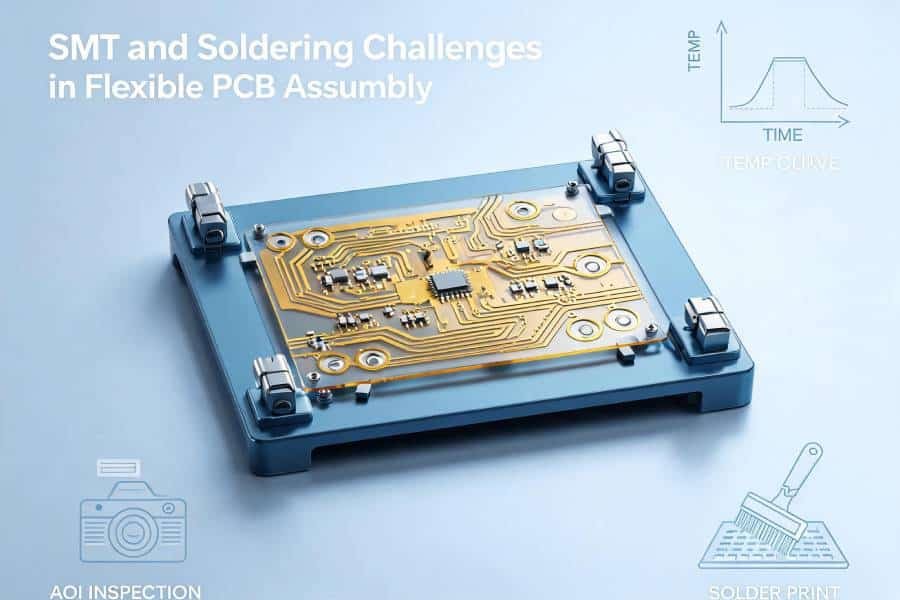
Cover image showing a flexible PCB clamped on an SMT carrier fixture, illustrating SMT and soldering challenges in flexible PCB assembly.

SMT and Soldering Challenges in Flexible PCB Assembly: A Process Engineer’s Guide

Flexible PCBs are far more demanding than FR4 boards during SMT and soldering. This article, written from a process engineer’s perspective, explains the key challenges in flex PCB assembly—including warpage, solder paste printing, reflow profiling, bending‑area reliability, and inspection—and outlines practical, production‑ready countermeasures to stabilize yield before mass production.

SMT and Soldering Challenges in Flexible PCB Assembly: A Process Engineer’s Guide Read More »
pcb substrate materials for smt assembly

PCB Substrate Materials for SMT Assembly: FR4, Rogers, Aluminum, and Beyond – Complete Selection Guide

Choosing the right PCB substrate is critical for signal integrity, thermal management, and SMT assembly success. This comprehensive guide compares FR4, Rogers high-frequency materials, Aluminum MCPCB, Polyimide flex, and more — with detailed performance tables, selection framework, and practical SMT process considerations.

PCB Substrate Materials for SMT Assembly: FR4, Rogers, Aluminum, and Beyond – Complete Selection Guide Read More »

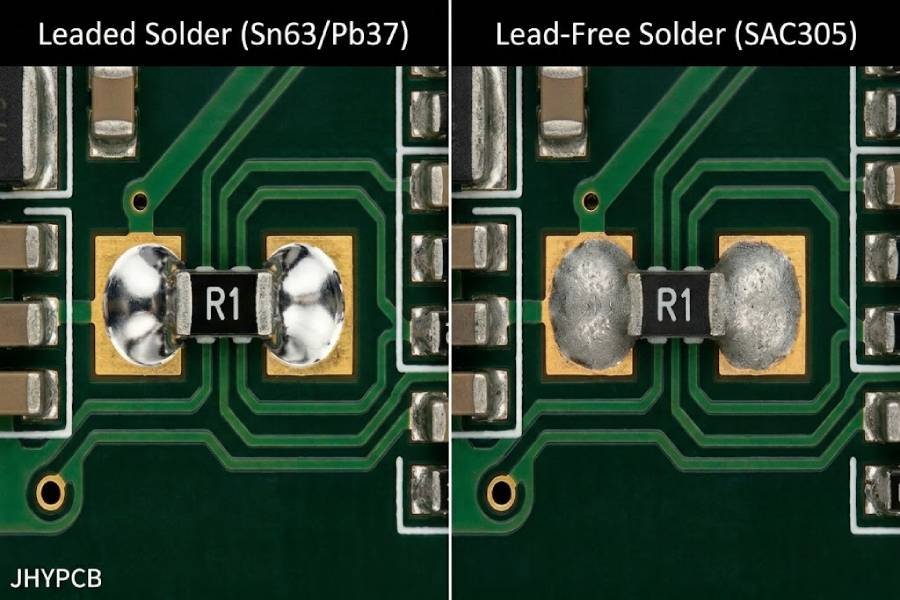
lead free vs leaded solder in smt assembly

Lead-Free vs. Leaded Solder in SMT Assembly: A Comprehensive Guide to Compliance and Reliability

While Lead-Free solder is the global standard for RoHS compliance, Leaded solder remains critical for high-reliability sectors like aerospace. This guide compares their technical performance, manufacturing challenges, and how JHYPCB ensures zero-defect assembly for both processes.

Lead-Free vs. Leaded Solder in SMT Assembly: A Comprehensive Guide to Compliance and Reliability Read More »

Scroll to Top