Table of Contents
In the demanding world of high-density PCB manufacturing, the difference between a functional product and a costly field failure often comes down to the quality of the smallest solder joint. As component footprints continue to shrink—with 0201 and 01005 packages becoming the norm—manual visual inspection is no longer a viable or reliable method for ensuring product integrity. To maintain the high standards required for modern electronics, we must move beyond the limitations of human perception and embrace the precision of automation.
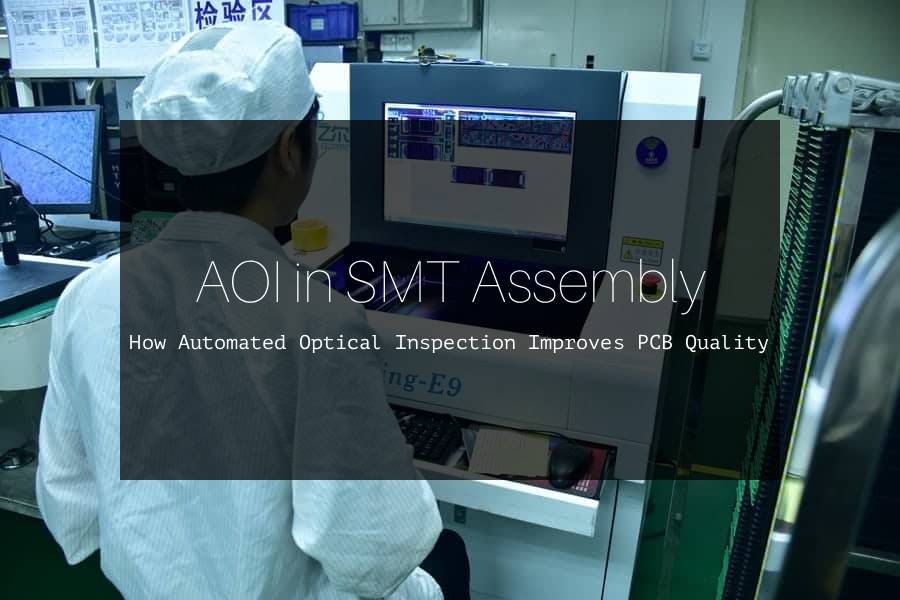
At PCBELEC, we utilize Automated Optical Inspection (AOI) as the indispensable “quality gatekeeper” of our SMT production lines. By integrating high-resolution cameras and advanced image recognition algorithms, AOI allows us to monitor every board in real-time, instantly identifying defects such as missing components, polarity reversals, or soldering irregularities that would be impossible to catch by eye. In this guide, we will explore the critical role of AOI in the SMT assembly process, explain how it bridges the gap between high-speed production and zero-defect quality, and detail why this technology is a non-negotiable standard for any project demanding long-term reliability. If you are ready to see how our rigorous quality control protocols protect your designs, we invite you to visit our SMT PCB Assembly Service to learn more about our commitment to precision manufacturing.
What is Automated Optical Inspection (AOI)?
Automated Optical Inspection (AOI) is a foundational technology in modern SMT (Surface Mount Technology) assembly. It replaces the fallible and labor-intensive process of manual visual inspection with a high-speed, programmable imaging system designed to identify defects with microscopic consistency.
How AOI Works: The Intelligent Eye of the Production Line
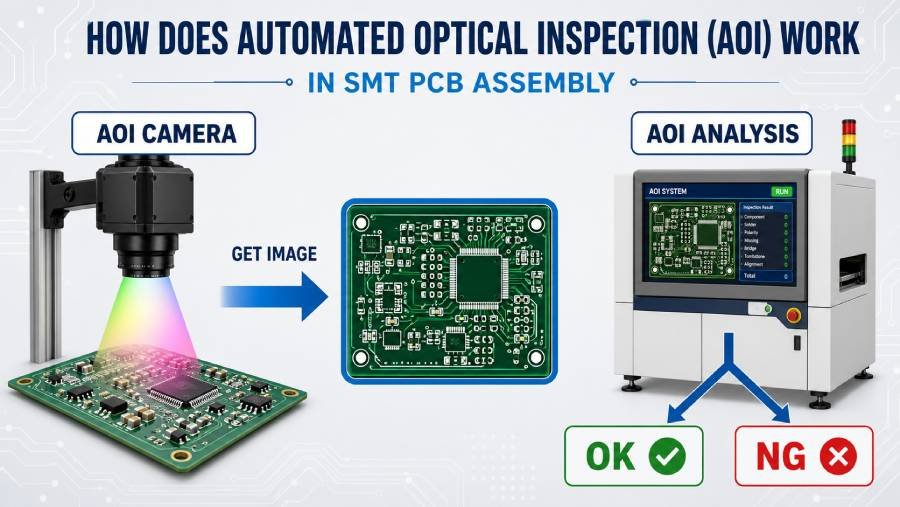
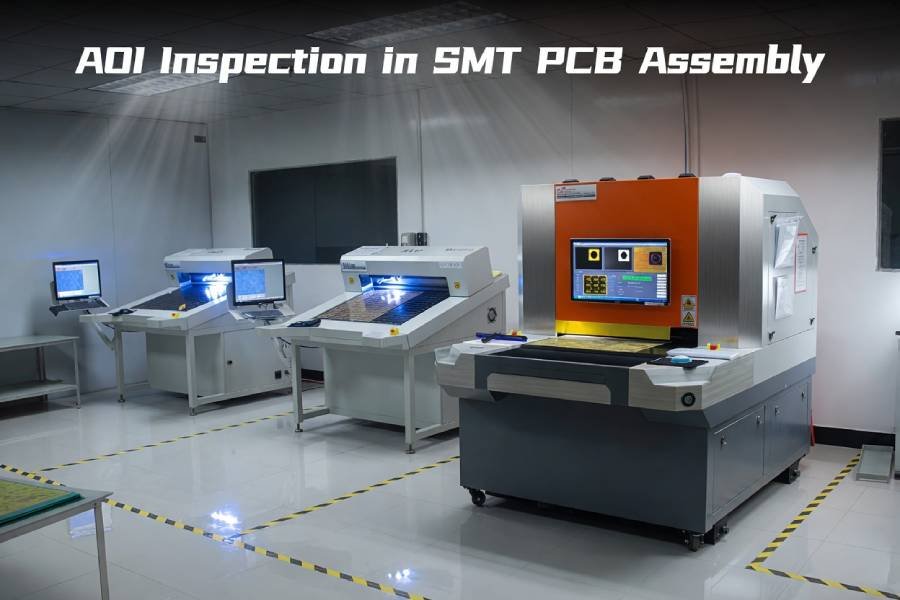
At its core, an AOI system operates through a sophisticated integration of high-resolution cameras, multi-angle lighting, and advanced image processing algorithms. Here is how it functions as the “quality gatekeeper” of the production line:
- Golden Board Comparison: Before inspection begins, the AOI system is programmed with data from a “Golden Board”—a perfect, verified assembly. The system uses this as a reference model for all subsequent boards.
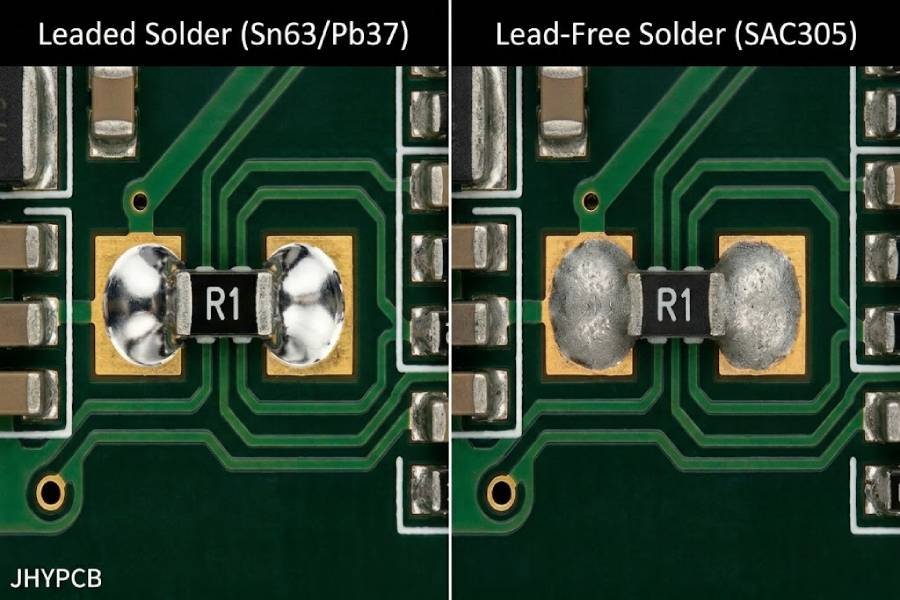
- Multi-Angle Illumination: AOI machines utilize various light sources (often including colored LEDs) from multiple angles. This is crucial because solder joints are reflective; by illuminating the board from different directions, the system can distinguish between a perfect solder fillet, a cold joint, or an open circuit based on how the light reflects off the surface.
- Image Analysis & Algorithm Matching: As the board moves under the camera, the system captures thousands of images per second. These images are processed in real-time, where proprietary algorithms compare the actual components and solder joints against the reference model. The system flags any discrepancies, such as:
- Component Issues: Missing parts, misaligned components, polarity reversals, or tombstoning.
- Soldering Defects: Solder bridges (shorts), insufficient or excessive solder paste, and cold solder joints.
Real-Time Process Feedback
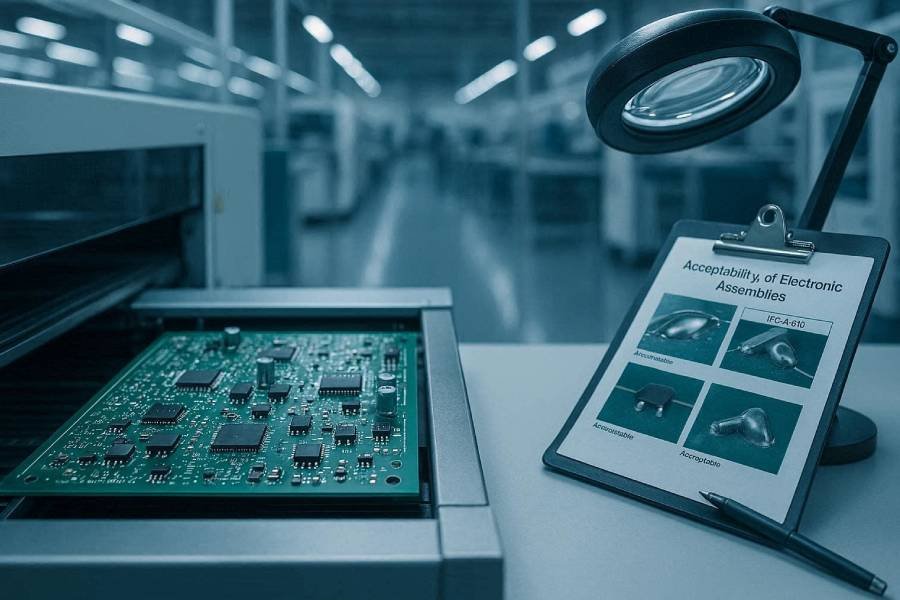
The true power of AOI lies in its ability to provide real-time process feedback. Typically installed immediately after the reflow oven, an AOI system acts as a “tripwire” for the entire production line. If the system detects a recurring trend—such as a slight placement drift on a specific fine-pitch component—it alerts our operators instantly. This allows us to make necessary adjustments to the SMT mounter or reflow profile before hundreds of boards are produced with the same error, effectively shifting our quality management from “detecting failures” to “proactively preventing them.”
The Critical Advantages of AOI in SMT
Integrating Automated Optical Inspection (AOI) into our SMT production line is not just about adding a step; it is a fundamental shift in how we guarantee quality and reliability. By removing the inconsistencies inherent in manual inspection, AOI provides a data-driven approach to manufacturing that benefits both our process efficiency and your product’s success.
1. Unmatched Consistency and Reliability
Human inspection is subject to fatigue, focus drift, and subjective interpretation, especially when dealing with high-density boards containing thousands of components. AOI systems, by contrast, maintain absolute consistency. Whether it is the first board of the shift or the thousandth, the inspection criteria remain identical, ensuring that every unit meets the same stringent quality standards without variation.
2. Real-Time Process Feedback and Prevention
The strategic advantage of installing AOI immediately after the reflow oven is its ability to serve as an “early warning system.” Instead of discovering a recurring defect at the end of a production run, our AOI system identifies trends in real-time.
- Preventive Action: If the system detects a slight trend of misalignment or insufficient paste on a specific component, our operators are alerted instantly. This allows us to calibrate our placement machines or adjust our printing parameters before any significant quantity of defective boards is produced, effectively converting the inspection process from a “detection” tool into a “prevention” tool.
3. Comprehensive Coverage for Micro-Components
With the industry-wide move toward 0201, 01005, and fine-pitch components, the human eye is physically incapable of consistently verifying proper placement or soldering. AOI’s high-resolution optics and advanced image recognition software allow us to perform “micro-inspections” that would be impossible manually. This ensures that even your most complex, high-density designs are built with total visibility and control.
4. Data-Driven Traceability
Every scan performed by our AOI system is logged. This creates a detailed digital footprint for every single board in your batch.
- Traceability Advantage: In the event of an audit or quality review, we can provide documented proof of inspection for every unit produced. This traceability is a vital component for high-reliability industries, providing you with the assurance that your products are manufactured within strict quality parameters and allowing for rapid, data-backed analysis if any issues arise.
AOI vs. Manual Inspection: A Comparison of Quality Assurance Approaches
In the precision-driven environment of modern SMT assembly, the choice between Automated Optical Inspection (AOI) and manual inspection is not merely a preference—it is a decision that directly impacts product reliability and production scalability. While manual inspection once served as the industry standard, the rapid miniaturization of components and the demand for zero-defect manufacturing have rendered it increasingly inadequate.
Key Differences in Quality Assurance
To better understand the strategic trade-offs, the following table compares the operational capabilities of AOI systems against traditional human-based manual inspection.
| Feature | Manual Inspection | Automated Optical Inspection (AOI) |
|---|---|---|
| Consistency | Subject to fatigue, focus drift, and human error | Maintains identical performance 24/7 |
| Speed | Slow, non-linear throughput | High-speed, real-time batch processing |
| Micro-Component Capability | Limited; struggles with 0201/01005 packages | Exceptional; detects sub-millimeter defects |
| Data & Traceability | None; anecdotal documentation | Full digital logs for every unit |
| Process Feedback | Delayed; discovery occurs after production | Instant; enables immediate preventive action |
Why Automation is Mandatory for Modern Projects
The primary limitation of manual inspection is its reliance on subjective human perception. As components shrink to 0201 and 01005 footprints, human visual fatigue becomes a significant liability, inevitably leading to missed defects and inconsistent quality across a production run.
Conversely, AOI provides an objective, data-driven “quality gatekeeper.” By utilizing multi-angle illumination and advanced image recognition algorithms, AOI systems verify every solder joint against a pre-programmed reference model with microscopic precision. This not only ensures that every board meets the highest IPC quality standards, but also generates a comprehensive digital audit trail, providing the documented traceability that high-reliability industries demand.
Frequently Asked Questions (FAQ)
To provide you with a clearer understanding of how Automated Optical Inspection (AOI) integrates into our quality protocols, we have addressed some of the most common questions from our clients below.
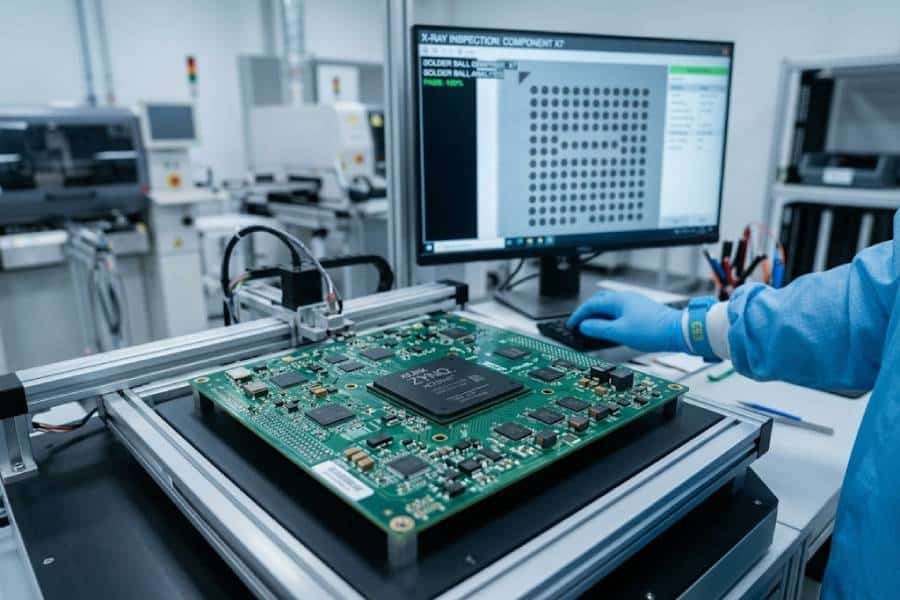
No, AOI and X-Ray inspection are complementary, not interchangeable. While AOI is highly effective at detecting surface-level defects—such as missing components, polarity reversals, or visible solder bridges—it cannot "see" through components. For hidden solder joints, such as those found under BGA (Ball Grid Array) packages or leadless components like QFNs, X-Ray inspection is mandatory to verify internal solder connectivity and detect voiding.
While the addition of AOI technology requires an upfront investment, it significantly reduces your total project cost in the long run. By identifying and correcting process drifts in real-time immediately after the reflow oven, AOI prevents the mass production of defective boards. This drastically lowers your expenditure on rework, scrap, and potential field failures, ultimately delivering a higher-quality product more efficiently.
AOI is a powerful tool for visual quality control, but it has limits. It is designed to inspect for physical features on the surface of the PCB. It cannot perform functional electrical testing to verify that a circuit behaves as designed, nor can it inspect hidden solder joints under packages. To ensure comprehensive quality, we typically recommend a multi-layered testing strategy that includes AOI for visual inspection, X-Ray for hidden joints, and ICT or FCT for functional electrical verification.
A "Golden Board" is a master reference assembly that has been rigorously inspected and verified as meeting all quality specifications. During the AOI setup, we train the system on this board so it knows exactly what a "perfect" assembly should look like. During production, the system compares every incoming board against this reference model, ensuring that every unit meets the same high standard of precision.
Partner with PCBELEC for Guaranteed PCB Quality
In the competitive electronics landscape, the integrity of your PCB assembly determines the reliability of your final product. At PCBELEC, we treat quality not as a final step, but as a commitment integrated into every phase of our manufacturing process. By leveraging advanced technologies like Automated Optical Inspection (AOI) alongside rigorous process controls, we ensure that your designs are manufactured with precision, consistency, and full traceability.
Why Quality Matters at PCBELEC
We understand that high-density designs and miniaturized components leave little room for error. That is why PCBELEC utilizes state-of-the-art inspection equipment to serve as the “quality gatekeeper” of our production lines. Whether your project involves complex BGA packages, fine-pitch components, or high-volume mass production, our commitment to excellence ensures that you receive boards that perform reliably under the most demanding conditions.
Your Path to Precision Manufacturing
Partnering with PCBELEC means more than just contracting an assembly service; it means gaining a manufacturing partner dedicated to your product’s success. We invite you to experience the PCBELEC difference by integrating our advanced quality protocols into your next project.
- Ready to move forward? Visit our SMT PCB Assembly Service to learn how our comprehensive quality management systems—including AOI and beyond—protect your designs and streamline your time-to-market.
- Need a custom solution? Contact our engineering team today to discuss your specific design requirements and discover how our precision-focused approach can help you achieve zero-defect results.