Table of Contents
Choosing an SMT PCB assembly supplier is not just a matter of comparing prices. For buyers, the real challenge is determining whether a manufacturer can consistently deliver boards that meet quality, reliability, and delivery expectations across every production run.
That is why a structured quality checklist is so important. It helps buyers evaluate the supplier’s quality system, process control, inspection methods, traceability, and communication before placing an order, reducing the risk of rework, delays, and field failures later in the project.
In SMT PCB assembly, quality can only be judged properly when multiple factors are considered together. A reliable supplier should not only assemble the board correctly, but also follow clear standards, inspect defects at each stage, and provide documentation that supports accountability and repeatability.
At PCBELEC, we believe that the best buyer decisions are made with clear quality criteria in mind. In this checklist, we will walk through the key points you should review before choosing an SMT PCB assembly partner, so you can compare suppliers with more confidence and select a manufacturer that fits your project requirements.

Why SMT PCB Assembly Quality Evaluation Matters
Quality evaluation matters because even a board that looks fine can still fail later in testing, rework, or real-world use.
For buyers, the real risk is not only receiving defective boards, but also dealing with hidden process instability that leads to delays, extra cost, and unreliable delivery over time.
A supplier that cannot show consistent inspection records or process control is essentially asking you to trust guesswork instead of evidence.
That is why quality evaluation should cover more than final appearance—it should look at the supplier’s inspection methods, documentation, traceability, and ability to catch defects before they become expensive problems.
This is especially important in SMT PCB assembly because small defects can scale quickly across production runs.
A minor soldering issue, placement drift, or component handling problem may pass early checks but later cause field failures, rework loops, or customer returns that are far more costly than the original board price.
For that reason, buyers should evaluate quality the same way they evaluate cost: systematically and early.
If you ask the right questions before placing an order, you can compare suppliers more fairly, reduce project risk, and choose a partner that can deliver stable results instead of just a low quote.
Start with the Supplier’s Quality System
The supplier’s quality system is the foundation of SMT PCB assembly quality, because it determines whether good results are repeatable or just accidental.
If a manufacturer cannot show a structured quality management system, even strong equipment or skilled operators may not be enough to deliver consistent boards over time.
A strong quality system usually starts with recognized standards such as ISO 9001, IPC-A-610, and relevant environmental or compliance requirements like RoHS.
These standards matter because they show the supplier has documented procedures, defined acceptance criteria, and a process for managing corrective actions rather than relying on informal judgment.
Traceability is another key part of the quality system.
A reliable supplier should be able to track component lots, assembly records, inspection results, and any rework history so that quality issues can be traced back and corrected quickly if needed.
Buyers should also look for clear internal controls, such as incoming inspection, operator training, document control, and process monitoring.
These are the signs that quality is managed as a system, not handled as an afterthought at the end of production.
In practical terms, a supplier with a mature quality system is easier to work with because expectations are clearer, communication is better, and problems are easier to resolve.
That is why your first quality check should not be the board itself, but the system the manufacturer uses to build and verify it.
Check SMT Process Control Capabilities
A supplier’s process control capability shows whether quality is actually managed on the line or only inspected at the end.
This matters because stable SMT quality depends on controlling key steps such as solder paste printing, component placement, and reflow—not just catching defects after they appear.
One of the most important indicators is whether the factory uses SPI, AOI, and reflow profile monitoring as part of its standard workflow.
SPI helps verify solder paste quality before placement, AOI checks placement and soldering after assembly, and reflow profiling helps keep the thermal process consistent from board to board.
Buyers should also ask how the supplier handles first article inspection, process drift, and corrective action when a defect trend appears.
A capable manufacturer should be able to show that process data is reviewed, abnormalities are detected early, and adjustments are made before the issue spreads across a batch.
Consistency is the real goal here.
If the supplier can demonstrate controlled process windows, stable inspection results, and feedback loops between inspection and production, that is a strong sign the assembly line can produce repeatable quality rather than occasional good boards.
In short, process control tells you whether the factory is preventing defects or merely reacting to them.
For buyers, that difference is critical because prevention usually means fewer escapes, less rework, and more reliable delivery.
Inspect the Testing and Inspection Methods
A supplier’s testing and inspection methods show how thoroughly it can catch defects before shipment.
For SMT PCB assembly, buyers should look for a layered approach rather than relying on a single test, because different methods reveal different types of problems.
AOI is one of the first methods to check because it verifies visible placement and soldering defects quickly and consistently.
It is especially useful for spotting component misalignment, polarity issues, solder bridges, and missing parts in high-volume SMT production.
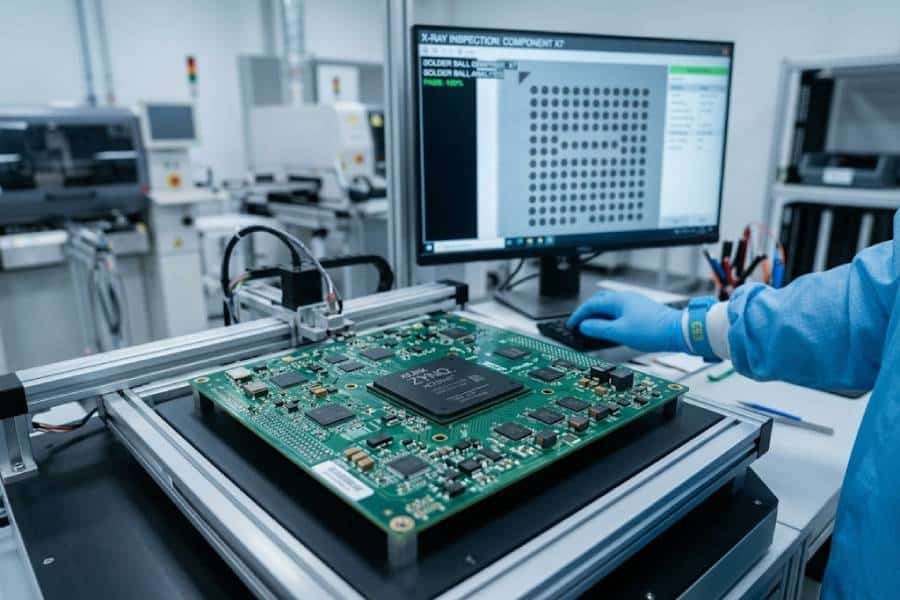
X-Ray inspection becomes important when the board includes hidden solder joints, such as BGA, CSP, or other bottom-terminated packages.
Because these joints cannot be fully inspected by eye or AOI, X-Ray provides a deeper look at internal solder quality and helps identify voids, opens, and other concealed defects.
ICT is another key method because it checks electrical connectivity, shorts, opens, and component-level issues.
This makes ICT valuable for buyers who want evidence that the board is electrically sound before functional testing or system integration.
FCT adds the final layer by confirming that the board behaves correctly under real operating conditions.
For customers, that means the supplier is not only inspecting workmanship, but also validating that the product can perform its intended function.
When evaluating a supplier, ask which of these methods are standard, which are optional, and whether inspection reports are available for each batch.
A strong SMT partner should be able to explain how these tests fit together to reduce risk and improve final product reliability.
Evaluate Solder Joint Quality and Workmanship
Solder joint quality is one of the clearest signs of whether an SMT supplier can build reliable boards consistently.
Good workmanship is not just about appearance; it affects electrical performance, mechanical strength, and long-term durability.
IPC-A-610 is the main reference buyers use when judging solder joint acceptability and workmanship class.
It helps define what counts as acceptable, what is only a process indicator, and what is a true defect for both SMT and through-hole assemblies.
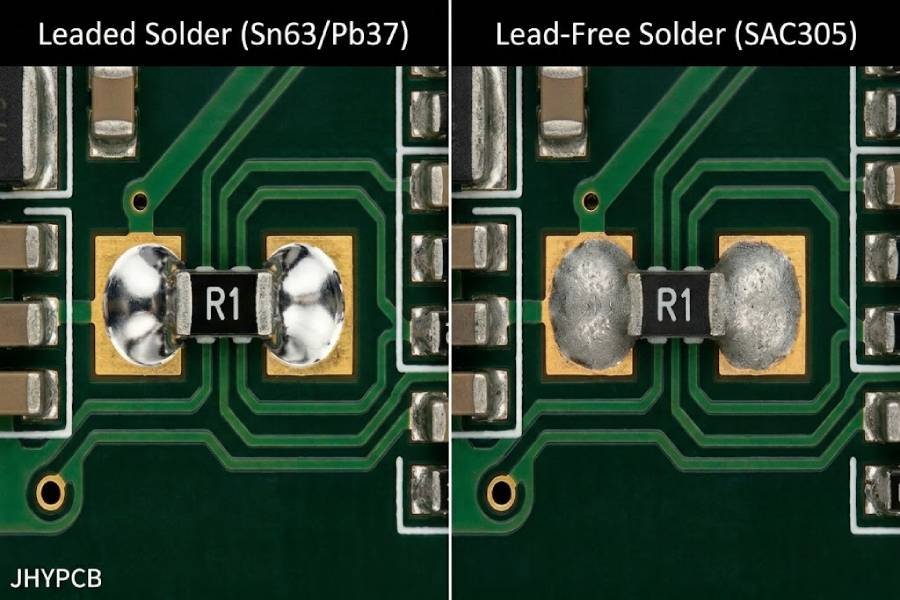
For SMT parts, look for smooth wetting, balanced fillets, proper alignment, and no bridging, tombstoning, or visible cold joints.
For through-hole joints, the important signs are adequate barrel fill, visible wetting, and a fillet shape that looks clean and mechanically secure.
Workmanship also includes cleanliness and consistency across the whole board.
Excess solder, solder balls, uneven fillets, or residue around joints can point to poor process control even if the board still passes basic functionality checks.
When reviewing a supplier, ask for sample boards, inspection photos, and the standard they use for acceptance decisions.
A strong manufacturer should be able to explain why a joint is acceptable under its IPC class and show that inspectors are trained to evaluate the same criteria every time.
Review Component Sourcing and Authenticity
Component sourcing matters because even a well-built PCB can fail if the parts are counterfeit, mishandled, or poorly documented.
For SMT buyers, this means you should treat sourcing as part of quality control, not just a purchasing task.
A reliable supplier should source from original manufacturers or authorized distributors whenever possible, and it should be able to show proof of that relationship.
This reduces counterfeit risk and gives you better confidence in component performance, availability, and traceability.
Traceability is the next thing to check.
Ask whether the supplier records lot codes, date codes, receiving inspection results, and chain-of-custody information for critical parts so that every component can be traced back to its source if a problem appears.
Incoming inspection is also important because authenticity should not depend only on a vendor’s claim.
Strong suppliers often inspect packaging, markings, quantities, and electrical characteristics, and may use additional testing for high-risk or obsolete parts.
You should pay extra attention to grey-market sourcing and end-of-life parts, because those are the areas where counterfeit risk rises fastest.
If a supplier cannot explain how it prevents unauthorized substitutions or verifies non-franchised parts, that is a warning sign.
In practice, the best suppliers combine approved vendor lists, documented sourcing channels, and verification steps before parts ever reach the line.
That combination is what protects both product reliability and your supply chain.
Check Assembly Line Equipment and Maintenance
The condition of the assembly line directly affects placement accuracy, solder consistency, and overall yield.
A supplier may own modern equipment, but without proper maintenance and calibration, that equipment can still produce defects or unstable results.
Start by checking the core machines: solder paste printers, pick-and-place systems, reflow ovens, AOI, and any X-ray or SPI tools used on the line.
These are the machines most likely to influence defect rate, so they should be well maintained and supported by clear service records.
Ask how often the supplier calibrates critical equipment and whether those checks are documented.
Reflow ovens should have profile verification and calibration after maintenance or recipe changes, while pick-and-place systems need regular cleaning, nozzle checks, feeder alignment, and vision calibration.
Maintenance discipline is just as important as machine age.
A strong supplier will have preventive maintenance schedules, spare-part control, and repair logs that show problems are handled before they affect production quality.
You should also look for evidence that inspection tools are calibrated, because even good machines can give unreliable results if their measurements drift.
That is especially important for customers who depend on AOI, SPI, or X-ray reports as part of final acceptance.
In practice, well-maintained equipment gives you more consistent output, fewer line stoppages, and better process stability.
That makes equipment maintenance a useful proxy for how seriously the supplier treats manufacturing discipline overall.
Assess Communication, Documentation, and Engineering Support
Good communication and strong engineering support are what turn a capable supplier into a dependable partner.
This section should show that the supplier can respond clearly, manage documents well, and help you improve the design before production starts.
Start with communication speed and clarity.
A strong supplier answers questions promptly, explains issues in plain language, and confirms decisions in writing so nothing is lost between sales, engineering, and production.
Next, evaluate documentation control.
The supplier should be comfortable working from complete, current files such as Gerbers, BOMs, pick-and-place data, assembly drawings, test procedures, and special instructions.
Just as important, they should flag missing information, file mismatches, and revision conflicts before the job reaches the line.
Engineering support is the final piece.
A useful supplier does more than build what you send; it also reviews the design for manufacturability and assembly risks, then suggests changes that improve yield, reduce cost, or avoid delays.
You can judge this support by asking whether the team offers DFM or DFA feedback, how early they review files, and whether they can handle questions about component spacing, part orientation, lifecycle risk, and special process needs.
Suppliers that provide examples of required documents, clear file guidance, and structured feedback usually make projects smoother and faster to scale.
In practice, this capability helps you avoid rework, missed revisions, and slow approvals.
It also shows that the supplier is acting like an engineering partner rather than just a subcontractor.
Evaluate Pricing, Lead Time, and Flexibility
After communication and engineering support, the next chapter should focus on whether the supplier can deliver the right product at the right time and cost.
This is where you judge if the supplier is practical for your schedule, volume, and budget—not just technically capable.
Start with pricing transparency.
A good quote should separate PCB fabrication, component procurement, assembly, testing, shipping, and any rush or setup fees so you can compare suppliers fairly.
If those items are bundled together, it becomes hard to see where the real cost is coming from.
Then look at lead time.
The key question is not only how fast they can build once everything is ready, but how well they manage material procurement, scheduling, and bottlenecks when parts are scarce or deadlines are tight.
Flexibility matters just as much as speed.
A supplier that can handle prototypes, small batches, and production runs is often more useful than one that is only optimized for a single order size.
You should also ask whether they can support schedule changes, partial shipments, or emergency builds without causing major quality or cost issues.
Capacity is the final piece.
A supplier may quote a good price, but if its line is already overloaded, that price is not very useful when your product launch depends on on-time delivery.
In practice, the best suppliers balance cost, lead time, and production flexibility instead of maximizing only one of them.
That balance is what makes a supplier dependable over both prototype and mass-production phases.
Buyer’s SMT Quality Checklist
Yes—this is the right place to end the outline with a practical buyer checklist.
A good closing section should turn the earlier evaluation points into a simple action list so readers can review suppliers quickly and consistently.
Use this checklist before approving an SMT supplier:
- Quality system: ISO 9001, IPC-A-610 awareness, RoHS compliance, and documented corrective action process.
- Process control: SPI, AOI, reflow profile control, first article review, and stable production parameters.
- Inspection records: AOI, X-ray, ICT, FCT, incoming inspection, and batch-level reports with traceability.
- Soldering workmanship: Clean joints, proper wetting, no bridging, no tombstoning, and consistent acceptance criteria.
- Component sourcing: Authorized channels, anti-counterfeit checks, lot traceability, and clear receiving inspection steps.
- Equipment and maintenance: Calibration records, preventive maintenance, and inspection-tool verification.
- Communication and support: Fast responses, clear documentation control, and DFM/DFA engineering feedback.
- Commercial fit: Transparent pricing, realistic lead times, and enough capacity for your volume and schedule.
You can also add a simple scoring rule: pass only suppliers that meet the required quality, testing, and traceability items, then compare the rest on price and lead time.
That keeps the decision grounded in manufacturing risk first, instead of letting cost dominate the selection too early.
Partner with PCBELEC for Reliable SMT PCB Assembly
If you are looking for a supplier that combines fast turnaround, assembly capability, and practical manufacturing support, PCBELEC is positioned as a strong partner for SMT PCB assembly projects.
The company presents itself as a professional PCB and PCB assembly manufacturer with experience in quick-turn prototypes and small- to medium-volume production.
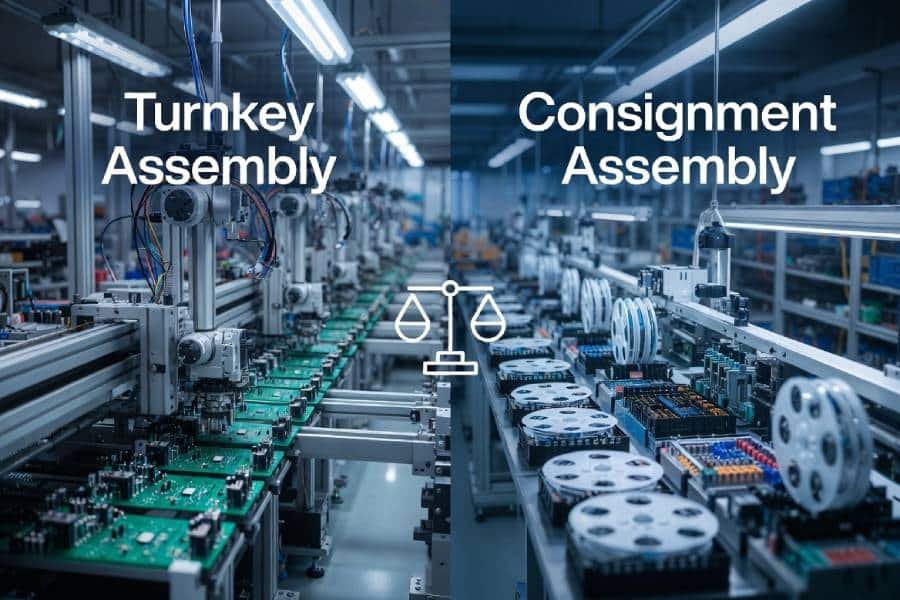
PCBELEC’s service scope includes full turnkey and partial turnkey PCB assembly, with SMT, THT, and automated assembly capabilities.
That makes it suitable for projects that need more than basic placement, especially when sourcing, assembly, and testing need to be managed in one workflow.
For buyers, the main advantage of working with a partner like PCBELEC is simplicity.
A single supplier that can handle board fabrication, component procurement, and assembly can reduce coordination effort, shorten the launch cycle, and help keep production moving when deadlines are tight.
It also helps that PCBELEC emphasizes quick-turn service and reliable delivery.
For prototype and pilot builds, that combination is especially valuable because speed matters, but quality still has to remain stable enough for the next stage of development.
In practical terms, this final section should reassure readers that once they know what to evaluate in a supplier, PCBELEC can be the partner that meets those expectations in a real production setting.
That gives the article a clear ending: criteria first, then a recommended manufacturing partner.