
Table of Contents
In the high-stakes world of electronics development, a single missing SMT component can stall an entire product launch. Whether you’re a hardware engineer debugging your latest prototype, a startup founder racing to reach your first production run, or an SMT factory manager juggling multiple client orders, reliable access to quality components is what separates smooth execution from costly delays.
As we navigate 2026, the SMT component landscape continues to evolve. Ongoing supply chain volatility, tightening export controls, and rising demand for advanced components have made procurement far more strategic than it was just a few years ago. Engineers worry about counterfeit risks and part obsolescence, startups struggle with high MOQs and cash flow, while production teams battle fluctuating lead times and pricing.
This guide is written for all of you:
- Hardware engineers and makers building prototypes or small batches
- Startup founders and product teams scaling from idea to mass production
- SMT assembly houses and EMS providers managing day-to-day component sourcing
- Procurement specialists looking for better suppliers and risk mitigation strategies
We won’t waste your time with shallow “Top 10” lists. Instead, we’ll deliver a practical, up-to-date overview of the major SMT component manufacturers, the most reliable distributors and platforms in 2026, and the real-world strategies experienced teams use to balance cost, quality, speed, and supply security.
By the end of this article, you’ll have a clear framework to source SMT parts more confidently — whether you need 50 pieces for validation or 50,000 pieces for production.
Major SMT Component Manufacturers
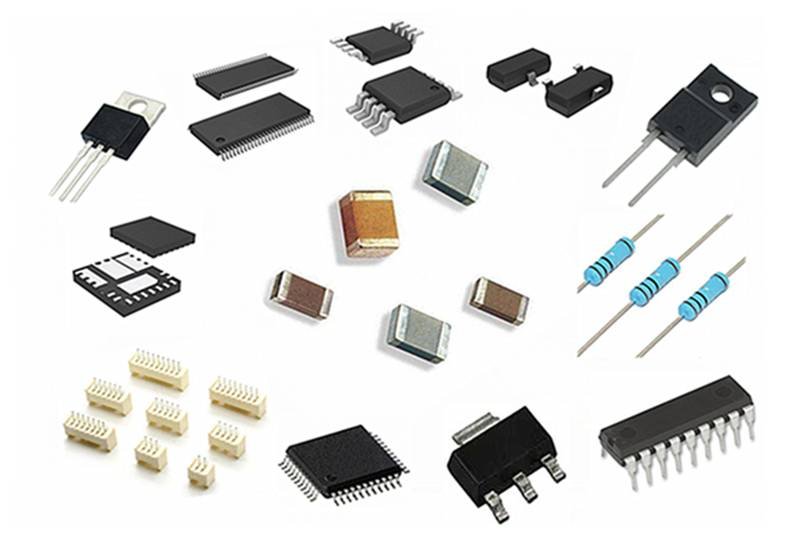
When sourcing SMT components, understanding the strengths of the leading original manufacturers (often called “原厂” in Chinese) is essential. These companies set the standards for quality, reliability, and performance. While many distributors carry their products, always prioritize authorized channels to ensure genuine parts, full warranty support, and access to the latest specifications.
We’ve grouped the major players by category for easier reference.
Passive Components (Resistors, Capacitors, Inductors, etc.)
Passive components form the foundation of nearly every circuit. The market is dominated by a few Japanese, Taiwanese, and American giants known for tight tolerances, excellent temperature stability, and long-term reliability.
- Murata Manufacturing (Japan): World leader in multilayer ceramic capacitors (MLCCs), inductors, and EMI suppression filters. Preferred in high-frequency, automotive, and high-reliability applications.
- TDK Corporation (Japan): Excellent in capacitors, inductors, and magnetics. Strong in both consumer and industrial-grade components.
- Yageo Corporation (Taiwan): One of the largest suppliers of chip resistors and capacitors (including KEMET after acquisition). Offers strong cost-performance balance for high-volume production.
- Samsung Electro-Mechanics (South Korea): Major player in MLCCs and high-capacitance capacitors, often competing directly with Murata on performance and pricing.
- Vishay Intertechnology (USA): Broad portfolio including resistors (thick/thin film), capacitors, and discrete semiconductors. Known for precision and harsh-environment parts.
- Others worth noting: Panasonic, KOA, Taiyo Yuden, and Walsin Technology.
Active Components & Integrated Circuits (ICs)
For microcontrollers, power management, sensors, amplifiers, and RF chips, these brands dominate:
- Texas Instruments (TI, USA): Leader in analog, power management, and embedded processors. Extremely popular for industrial, automotive, and general-purpose designs.
- Analog Devices (ADI, USA): Premier choice for precision signal conditioning, data converters, and high-performance analog solutions.
- Infineon Technologies (Germany): Strong in power semiconductors, MOSFETs, and automotive-grade ICs.
- STMicroelectronics (ST, Switzerland/France/Italy): Excellent balance of performance, power efficiency, and cost — widely used in consumer, industrial, and IoT applications.
- NXP Semiconductors (Netherlands): Leader in automotive, security, and connectivity solutions (including ARM-based MCUs).
- Others: Qualcomm and Broadcom (strong in wireless/RF), Microchip, ON Semiconductor, and Rohm.
Connectors & Electromechanical
- TE Connectivity (Switzerland/USA): Massive range of connectors for automotive, industrial, and harsh environments.
- Molex (USA): Known for innovative interconnect solutions across consumer electronics to datacom.
- Amphenol (USA): High-reliability connectors, especially for industrial, aerospace, and communications.
- Others: Hirose, JST, Samtec (popular for high-speed and board-to-board applications).
Crystals, Oscillators & Timing Devices
Timing components are critical for clock signals and synchronization:
- Seiko Epson (Japan): The world’s largest quartz crystal and oscillator supplier. Renowned for reliability and wide product range.
- Kyocera (Japan): High-quality crystals and temperature-compensated oscillators (TCXOs).
- SiTime (USA): Leading innovator in MEMS-based silicon oscillators. Offers superior shock/vibration resistance, faster startup, and smaller sizes compared to traditional quartz — increasingly popular in modern designs.
Key Recommendation: For critical or high-volume projects, always check the manufacturer’s datasheet for the exact series and consider second-sourcing strategies. Many original manufacturers now provide detailed lifecycle status (Active, NRND, Obsolete) on their websites, which is vital for long-lifecycle products.
Top Distributors & Procurement Channels
Knowing the right manufacturers is only half the battle — finding the best way to actually buy their components efficiently, reliably, and at the right price is where many projects succeed or fail. In 2026, the SMT component procurement landscape offers more options than ever, but each channel serves different needs depending on your volume, timeline, risk tolerance, and location.
Here’s a practical breakdown of the most reliable channels available today.
Franchised / Authorized Distributors (Best for Quality & Reliability)
These distributors have official agreements with component manufacturers, guaranteeing genuine parts, full traceability, and manufacturer support.
| Distributor | Best For | Strengths | Considerations | Ideal Volume |
|---|---|---|---|---|
| Digi-Key Electronics | Prototypes, urgent needs, small-medium runs | Massive inventory, fast shipping, excellent search/tools, broad selection | Premium pricing for very high volumes | Low to Medium |
| Mouser Electronics | Engineering & design phase | Strong technical resources, parametric search, newest releases | Slightly higher prices on some passives | Low to Medium |
| Arrow Electronics | Medium to large production | Strong supply chain services, design support, global reach | Better for larger commitments | Medium to High |
| Avnet | Enterprise & long-term projects | Deep technical expertise, inventory management programs | More suited for bigger companies | Medium to High |
| TTI, Future Electronics, RS Components | Specialized needs | Strong in passives (TTI) or regional support | Varies by region | Varies |
Cost-Effective Asian Platforms (Best for Production & Value)
- LCSC (立创商城): Currently one of the strongest options for SMT assembly and mid-to-high volume sourcing. Backed by JLCPCB, it offers competitive pricing on a wide range of components (especially passives and popular ICs), supports BOM uploads, and integrates seamlessly with PCB assembly services. Excellent for prototypes transitioning into production.
- Other Chinese platforms: Chipmall, Taobao (1688 for bulk), and specialized agents. Great for cost optimization but require stronger quality verification processes.
Direct Manufacturer Channels & Regional Agents
For very high volumes (typically 10k+ pieces per part), contacting the manufacturer directly or through their authorized regional agents often yields the best pricing, technical support, and allocation priority. This is especially relevant for major lines from Murata, TI, Infineon, etc.
Independent Distributors & Brokers (Use with Caution)
Best suited for obsolete, hard-to-find, or legacy parts. Top players in 2026 include Rochester Electronics (strong authorized aftermarket), Smith, and others. Always request full traceability documentation and consider third-party testing for high-risk parts.
Comparison Tools & Aggregators
Before placing any order, use these powerful tools:
- Octopart & Findchips — Real-time price and inventory comparison across multiple distributors.
- SnapEDA — Footprints, symbols, and 3D models alongside sourcing info.
- Manufacturer websites — For lifecycle status (Active / NRND / Obsolete) and direct authorized distributor lists.
Key Strategic Advice for 2026:
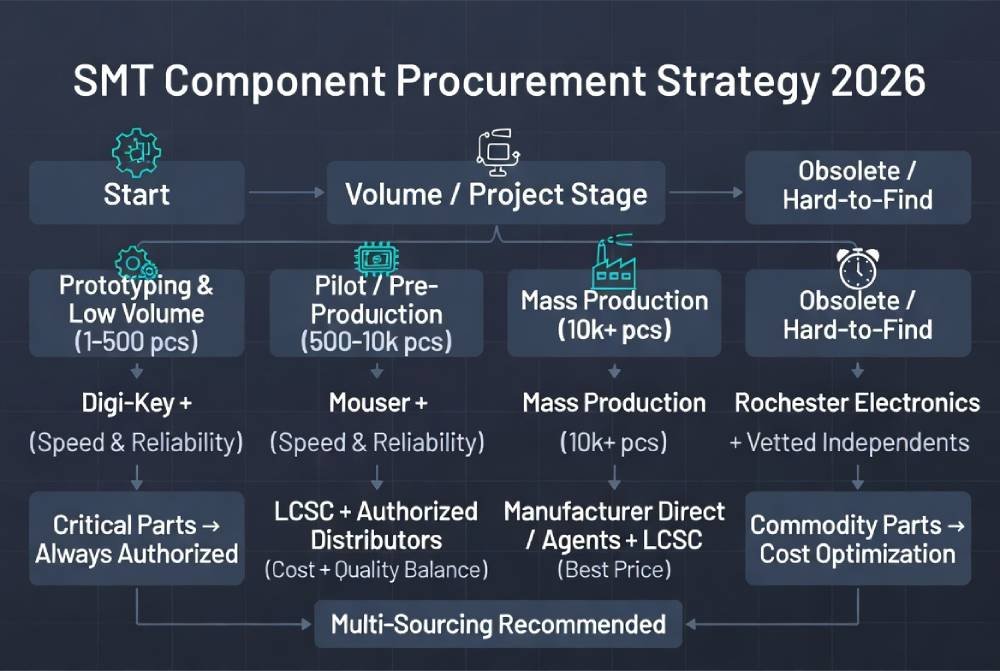
- Prototyping & NPI: Prioritize Digi-Key + Mouser for speed and peace of mind.
- Production runs: Combine LCSC for cost-sensitive parts + authorized distributors for critical/high-reliability components.
- Risk mitigation: Maintain multiple qualified sources, monitor lifecycle status early, and consider buffer stock for long-lead-time items.
- Counterfeit avoidance: Verify authorized status, check date codes/batch numbers, and demand CoC (Certificate of Conformance) when necessary.
Procurement Strategies & Best Practices
Having access to great suppliers is important, but knowing how to use them effectively is what truly protects your project timeline and budget. Here are proven strategies that hardware teams, SMT factories, and startups use in 2026 to source SMT components smarter and safer.
Volume-Based Sourcing Strategy
Match your procurement channel to your actual needs:
- Prototyping & Low-Volume (1–500 pcs): Use Digi-Key and Mouser as your primary sources. Their vast inventory, fast global shipping (often 1-2 days), and no minimum order quantity (MOQ) make them ideal for design validation and early testing.
- Pilot / Pre-Production (500–10,000 pcs): Combine LCSC for cost-sensitive passives and popular ICs with authorized distributors for critical or high-reliability parts. This stage is perfect for transitioning from prototype to real production.
- Mass Production (10,000+ pcs): Negotiate directly with manufacturers or their authorized agents. Leverage LCSC or regional distributors for better unit pricing while maintaining backup sources from franchised distributors.
- Legacy / Obsolete Parts: Turn to Rochester Electronics first (authorized aftermarket), then carefully vetted independent distributors.
Counterfeit Mitigation Tactics
Counterfeit components remain a serious risk in 2026. Protect yourself with these practices:
- Always buy from authorized (franchised) distributors for critical, automotive, medical, or safety-related parts.
- Request a Certificate of Conformance (CoC) and full traceability documentation with every order.
- Verify date codes and lot numbers against manufacturer records when possible.
- For high-value or high-risk parts, consider third-party testing labs (e.g., component authenticity testing services).
- Use visual inspection checklists and basic electrical testing for incoming materials, especially from non-authorized channels.
Supply Chain Risk Management
- Multi-Sourcing: Qualify at least 2–3 suppliers for every key component. This is now standard practice for most professional teams.
- Lifecycle Monitoring: Check part status (Active, Not Recommended for New Design (NRND), Obsolete) early in the design phase on manufacturer websites or tools like Octopart.
- Buffer Stock & Forecasting: Maintain strategic inventory for long lead-time items (especially MLCCs, power ICs, and microcontrollers).
- Design for Supply Chain Resilience: Where possible, select components with multiple manufacturers (second sources) or design in drop-in replacements.
Essential Tools & Resources
Make these part of your daily workflow:
- Octopart and Findchips: Best for real-time price comparison, inventory checking, and multi-distributor search.
- SnapEDA: Free symbols, footprints, and 3D models with direct links to sourcing options.
- Manufacturer Portals: TI, Analog Devices, Murata, etc. — excellent for datasheets, samples, and lifecycle information.
- BOM Tools: JLCPCB/LCSC BOM tool, Excel with pricing columns, or professional tools like Arena or SiliconExpert for advanced teams.
International Procurement Tips
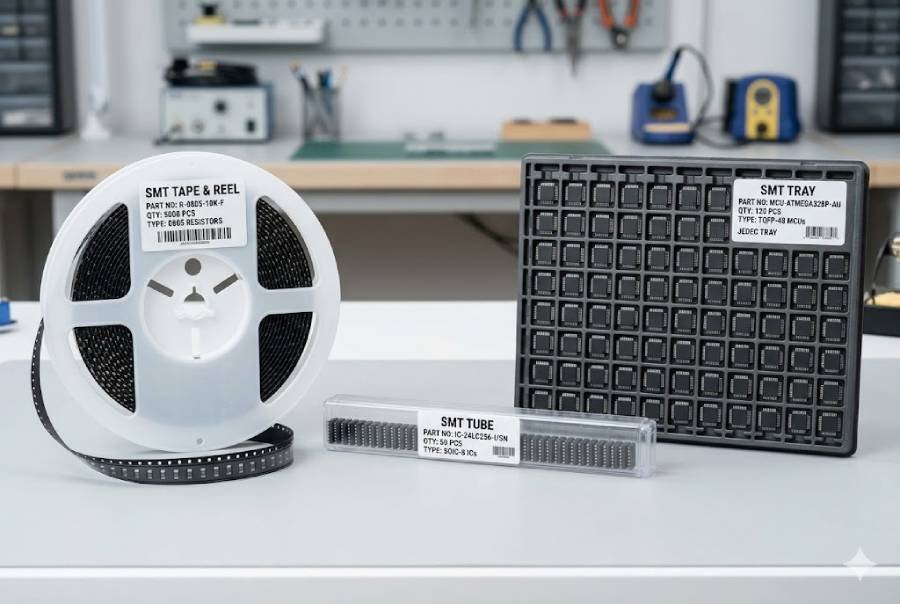
- MOQ & Packaging: Understand reel, tray, and tape quantities. Many suppliers now offer cut-tape or partial reels for smaller quantities at a premium.
- Tariffs & Logistics: Factor in import duties, VAT, and shipping times when comparing total landed cost (especially when buying from Asia to Europe or North America).
- Payment Terms: Established companies can negotiate Net 30 or longer terms with major distributors; startups should start with credit cards and build relationships.
- Communication: Build direct relationships with distributor FAEs (Field Application Engineers) — they can often help with allocation, technical questions, and forecasting.
Golden Rule for 2026: “Pay for certainty when it matters. Optimize cost when it doesn’t.” Critical or long-lifecycle parts deserve authorized channels. Commodity passives (resistors, capacitors) can often be cost-optimized safely through trusted high-volume platforms like LCSC.
Practical Tips for SMT Component Procurement
Instead of theoretical case studies, here are battle-tested tips gathered from real-world hardware development and SMT production experience in 2026:
- Start Sourcing Early: Begin component selection and availability checks during the schematic design phase — not after the PCB layout is complete. Long lead-time parts (certain MLCCs, power ICs, and wireless modules) can easily add 12–20 weeks to your timeline.
- Build a Hybrid BOM Strategy: Divide your Bill of Materials into two categories: • Critical parts (MCUs, sensors, power management, automotive-grade) → Source exclusively from authorized distributors. • Commodity parts (resistors, capacitors, LEDs, common connectors) → Optimize cost via LCSC or similar platforms once you reach production volumes.
- Maintain a Live Supplier Database: Keep an internal spreadsheet or database with approved suppliers, current pricing tiers, lead times, and MOQs for your top 50 components. Update it quarterly.
- Leverage Sample Programs: Many manufacturers and distributors offer free or low-cost engineering samples. Use them wisely during prototyping to validate parts before committing to larger orders.
- Monitor Market Signals: Follow component allocation notices, price trends, and manufacturer announcements. Tools like Findchips alerts or distributor newsletters can give you an early warning when popular parts are heading into shortage.
- Negotiate Smartly: For orders above $5,000–10,000, don’t hesitate to ask for better pricing, extended payment terms, or consignment stock. Even Digi-Key and Mouser sometimes offer flexibility for repeat customers.
- Always Verify Footprint and Package: Double-check the exact package code (e.g., 0402 vs 1005, QFN-32 vs TQFP-32) and recommended land pattern before ordering. A wrong package variant is one of the most common and expensive mistakes.
- Plan for Obsolescence: For any product with a expected lifespan longer than 3–5 years, prioritize components with long lifecycle status or clear second sources.
Conclusion
Sourcing SMT components effectively is both an art and a science. The manufacturers and distributors covered in this guide represent the strongest options available in 2026, but the real advantage comes from building smart strategies around them — matching channels to volume, balancing cost with risk, and staying proactive rather than reactive.
Whether you are a solo hardware engineer, a fast-moving startup, or an established SMT assembly provider, having a clear procurement playbook helps reduce delays, control costs, and minimize costly surprises.
Key Takeaways:
- Use authorized distributors (Digi-Key, Mouser, Arrow, etc.) for quality-critical parts.
- Leverage LCSC and Asian platforms for competitive pricing at production scale.
- Tools like Octopart and Findchips are essential for modern sourcing.
- Early planning and multi-sourcing are your best insurance against supply chain volatility.
The electronics supply chain will continue to evolve. Those who build strong relationships with suppliers, maintain good data hygiene, and adapt quickly will have a significant edge.