
Table of Contents
Introduction: Reliability Starts Before Mass Production
In electronics manufacturing, product reliability is rarely decided on the high-volume production line; it is largely determined much earlier, during prototype and low-volume PCB runs. These early builds act as a controlled environment where engineers can validate the design, manufacturing processes, and test strategy on real hardware before committing budget and capacity to mass production.
Skipping or underestimating this stage can push hidden design flaws, process weaknesses, and component issues directly into thousands of units, where they become expensive warranty claims, field failures, and reputational damage. By contrast, a well-planned sequence of prototype PCB runs and low-volume assemblies gives OEMs and design teams the data they need to refine every aspect of the product, resulting in more robust, stable performance once the design is scaled globally.
For reliability‑driven industries such as medical devices, aerospace, industrial automation, and automotive electronics, small PCB runs are not just a convenience or a way to “try out” a design—they are a critical risk‑management layer in the overall product lifecycle. Using low-volume and prototype builds strategically allows teams to uncover failure modes, tune processes, and validate long‑term behavior while the stakes are still manageable.
What Are Prototype PCB Runs and Low-Volume PCB Assembly?
Before exploring how small PCB runs improve reliability, it helps to clarify what is meant by “prototype runs” and “low-volume PCB assembly”, because each serves a distinct purpose in the development and manufacturing journey.
Prototype PCB Runs: Function and Concept Validation
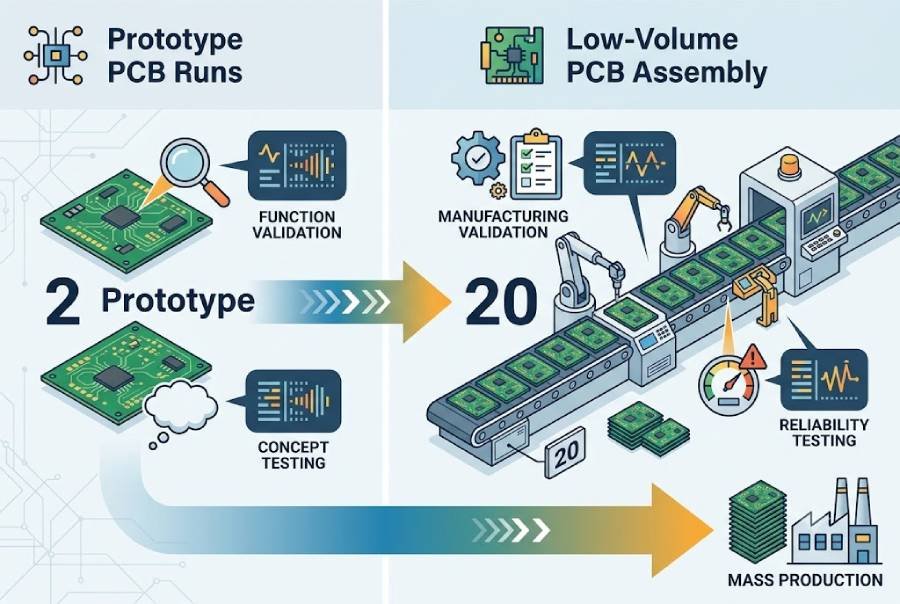
Prototype PCB runs typically involve very small quantities—often just a handful of boards up to a few dozen—that are built primarily to validate the core electrical design and basic performance of the product. At this stage, the main goal is to confirm that the schematic, layout, stack‑up, and component selection behave as intended under realistic operating conditions.
Prototypes allow engineers to verify signal integrity, power distribution, thermal behavior, and critical interfaces, revealing issues that may not be apparent in simulation or on paper. Even though prototype builds can be more flexible in terms of tolerances and options, they still provide a vital window into whether the design is fundamentally sound and capable of meeting its performance targets.
In many projects, multiple prototype iterations are used to evolve the design: the first version confirms basic functionality, while subsequent versions refine layout, component choices, and mechanical integration. Each iteration reduces uncertainty, so that by the time the design moves toward low-volume assembly, the team has confidence that the core concept is viable.
Low-Volume PCB Assembly: Manufacturing and Reliability Validation
Low-volume PCB assembly refers to producing a small batch of assembled boards—typically from a few dozen to several hundred or a few thousand units—using production-grade processes and equipment. These runs bridge the gap between pure prototyping and full high-volume manufacturing, focusing on manufacturability, repeatability, and reliability under realistic production conditions.
Unlike lab‑style prototype builds, low-volume assemblies usually follow the same SMT, THT, and inspection flows that will be used in mass production, including defined reflow profiles, controlled soldering processes, and standardized quality checks. This allows teams to validate design‑for‑manufacturability (DFM) and design‑for‑test (DFT) decisions, confirming that the product can be built consistently with acceptable yields and defect rates.
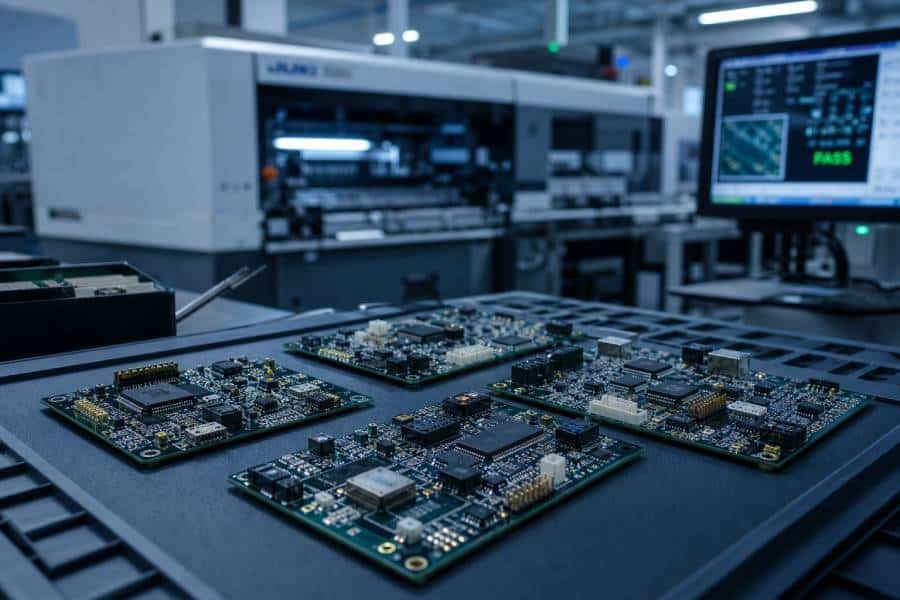
Low-volume runs are also where test strategies—such as AOI, SPI, X‑ray, ICT, flying probe, and functional test—are exercised at a meaningful scale. By applying these processes to a small but statistically useful batch, manufacturers can identify process‑related defects, refine test coverage, and capture early reliability data without exposing the project to the financial risk of a full production run.
How Prototype and Low-Volume Runs Work Together
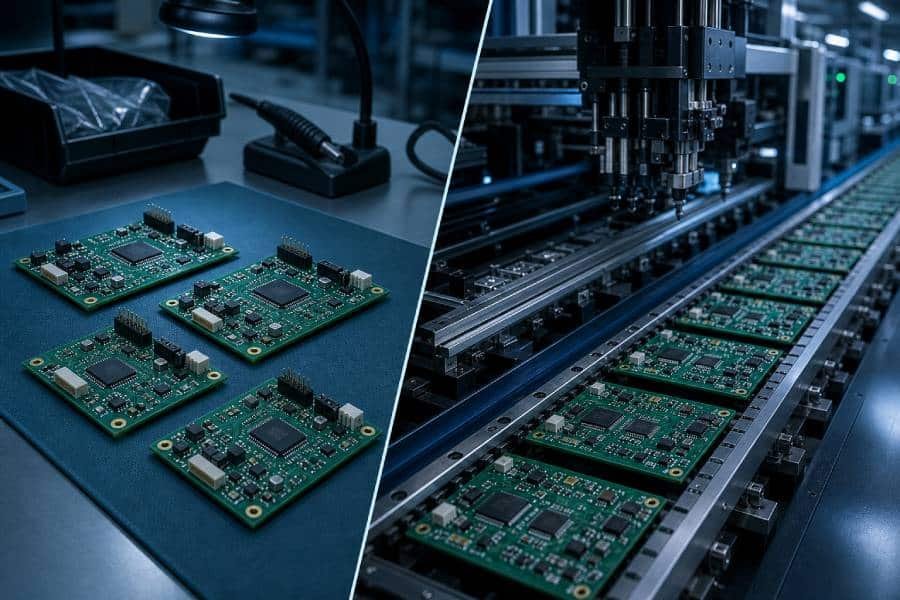
Prototype and low-volume PCB runs are most effective when treated as complementary phases rather than isolated activities. Prototypes answer the question, “Does this design work as intended?”, while low-volume assemblies address, “Can this design be built and tested reliably at scale?”
Insights gained from prototype iterations—such as layout tweaks, component changes, and mechanical adjustments—are fed directly into low-volume builds, where they are tested under production‑like conditions. In turn, process and reliability data from low-volume runs inform the final optimization steps before high-volume manufacturing, ensuring that the product enters global markets with a robust, proven foundation.
How Small PCB Runs Improve Product Reliability
Prototype and low-volume PCB runs provide multiple layers of protection against reliability issues that might otherwise only surface once a product is already in the field. By exposing the design and processes to real hardware conditions in a controlled, small‑batch environment, teams can systematically identify and eliminate weaknesses before scaling up.
Early Detection of Design Flaws
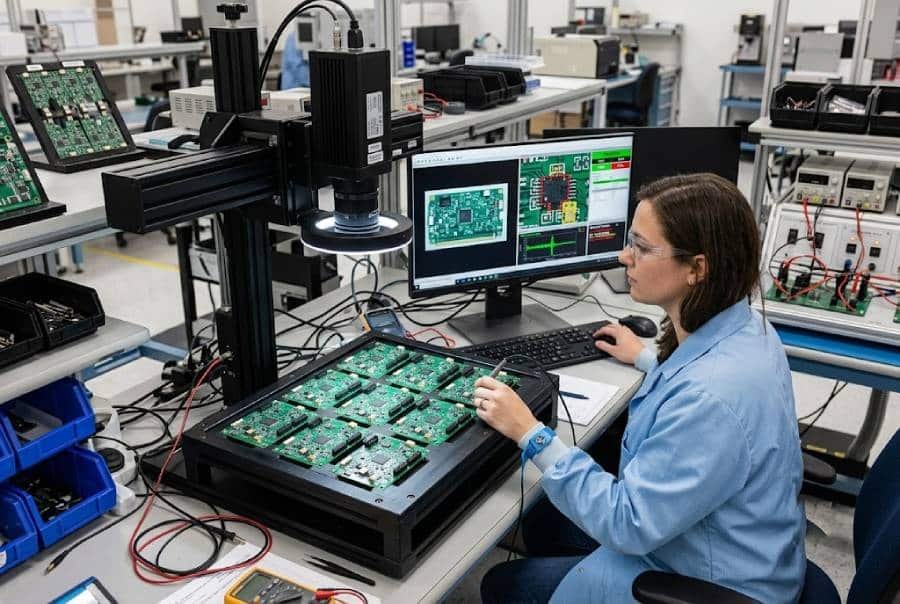
One of the most immediate reliability benefits of small PCB runs is the ability to uncover design flaws early, when changes are still straightforward and affordable. Prototypes and low-volume builds reveal issues that simulations or bench‑top testing alone may miss, such as marginal signal integrity, inadequate decoupling, layout‑induced noise, or thermal hotspots around critical components.
Catching these problems on tens of boards rather than thousands drastically reduces rework and redesign costs, and prevents flawed designs from being locked into tooling and large inventories. When design issues are corrected during prototype and low-volume stages, the resulting production hardware exhibits fewer latent defects and a more stable performance profile over its service life.
Validation of Manufacturing Processes and DFM
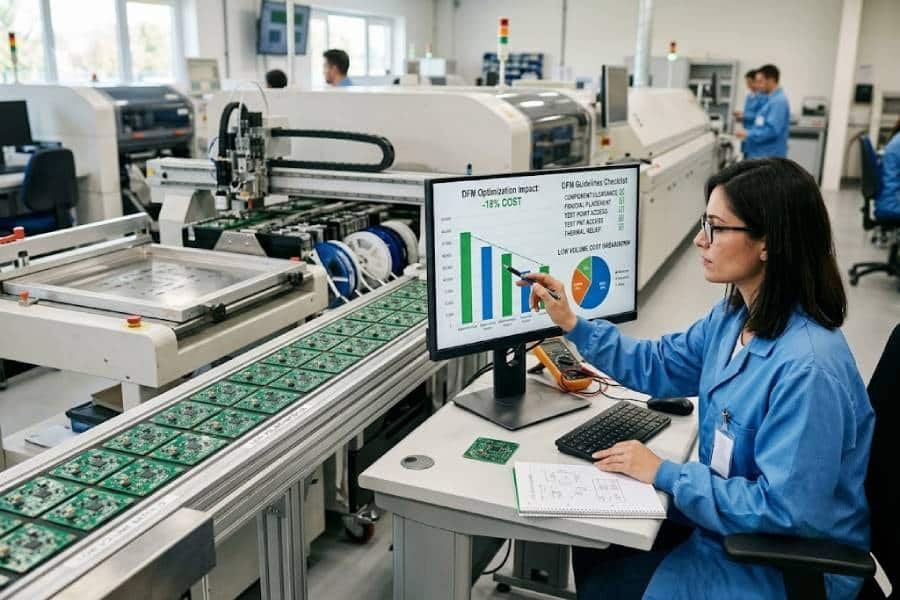
Reliability is not only a function of the circuit design; it also depends on how consistently and robustly the PCB can be manufactured. Low-volume PCB assembly allows teams to validate soldering processes, stencil designs, reflow profiles, placement strategies, and handling procedures using production-grade equipment, but on a manageable batch size.
These builds make it possible to observe failure modes such as tombstoning, insufficient solder, voids, misalignment, or warpage under realistic process conditions. DFM assumptions can be tested and refined—for example, pad geometries for fine‑pitch devices, thermal relief strategies, and board panelization—so that the design moves into high-volume production with proven manufacturability and stable yields.
When DFM issues are resolved during small runs, the manufacturing process becomes more repeatable, which directly contributes to long‑term reliability. Fewer assembly‑related defects mean fewer stress points in solder joints and interconnects, and fewer boards entering service with hidden weaknesses that could fail under temperature cycling, vibration, or mechanical shock.
Robust Test Strategy and Coverage
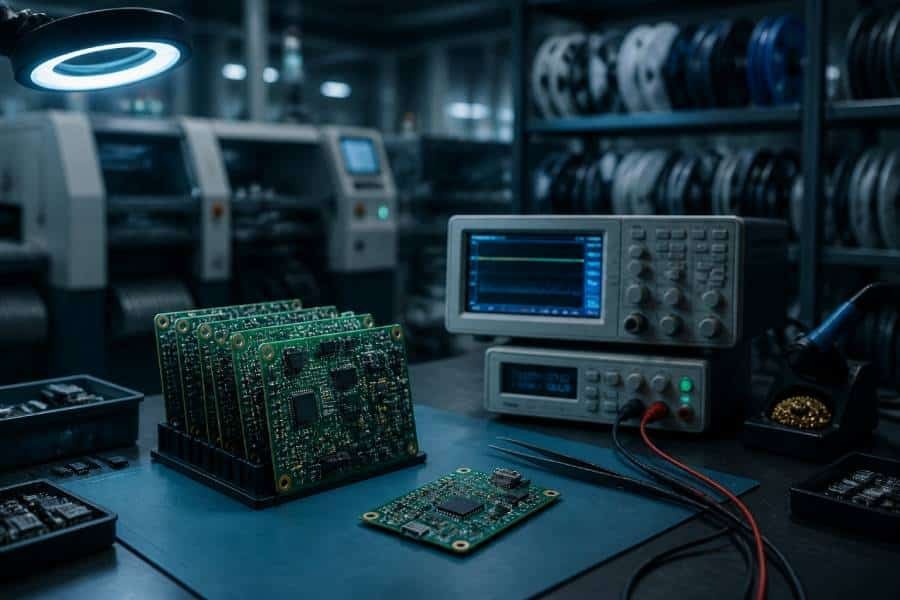
An effective test strategy is a cornerstone of reliable electronics, and small PCB runs provide the ideal environment to develop and optimize it. During prototype and low-volume stages, manufacturers can experiment with AOI, SPI, X‑ray, ICT, flying probe, and functional testing to determine the right mix of coverage and cost for the product and its expected volumes.
Running these tests on small batches enables teams to validate test fixtures, refine test programs, and confirm that critical failure modes are detectable before the product reaches customers. It also highlights gaps in design‑for‑test, such as missing test points or inaccessible pads, which can then be corrected while redesigns are still feasible.
Once an optimized test strategy has been proven on low-volume runs, it can be applied confidently to larger batches, ensuring that manufacturing defects and early‑life failures are intercepted consistently. This systematic defect filtering significantly reduces the number of unreliable units that escape into the field, improving overall product reliability metrics.
Component and Supplier Quality Screening
Many reliability issues originate not in the PCB itself but in the components and supply chain behind it. Small PCB runs offer a practical way to screen new components, alternative sources, and suppliers by observing how they behave in a real assembly and operating environment before they are used in volume.
By monitoring yields, failure rates, and performance trends across prototype and low-volume builds, teams can identify weak links—such as connectors with marginal mechanical robustness, BGAs prone to voiding, or passives with inconsistent tolerances—and either qualify them with additional controls or replace them with more suitable options. This targeted screening is especially important for reliability‑driven applications, where a single problematic component can undermine long‑term performance.
In this way, small runs act as a proving ground for the entire supply chain, ensuring that only components and vendors that meet reliability expectations are carried forward into mass production. The result is fewer unexpected field failures caused by component variability, and a more predictable performance profile across different lots and geographies.
Field Performance and Environmental Stress Testing
Prototype and low-volume PCB runs also provide the hardware needed for environmental and reliability testing, including temperature cycling, thermal shock, vibration, humidity, and EMC evaluations. These tests reveal how the product behaves under realistic or accelerated stress conditions, highlighting failure modes that may not appear under nominal lab conditions.
By subjecting small batches to such stress tests, teams can refine mechanical design, board stack‑up, material choices, and assembly practices to withstand harsh environments. Because these evaluations occur before high-volume production, insights from stress testing can be incorporated into the design and process, strengthening the product’s resilience and reducing long‑term failure rates in the field.
Cost and Risk Benefits That Indirectly Enhance Reliability
While the technical advantages of prototype and low-volume PCB runs are clear, their cost and risk benefits also contribute indirectly to reliability. By structuring a project so that most learning and refinement happens on small, controlled batches, organizations can make more confident decisions and allocate resources more effectively throughout the product lifecycle.
Lower Upfront Investment and Rework Risk
Committing to high-volume production before a design and process are fully proven exposes the project to significant financial risk. If reliability issues are discovered after thousands of boards have been built, the cost of rework, scrap, and redesign can be substantial. Low-volume and prototype runs reduce this risk by limiting exposure while the product is still evolving.
By discovering and correcting problems early on relatively small quantities, teams avoid large‑scale scrap and expensive field interventions. This not only protects budgets but also ensures that the units eventually shipped to customers represent a mature, refined design, rather than an early version with unresolved weaknesses.
Faster Iteration Cycles for Reliability Improvements
Small PCB runs are generally easier to schedule and turn around than full‑scale production, which enables faster iteration cycles. Engineering teams can implement design or process changes, build a new batch, collect data, and repeat the cycle multiple times without tying up extensive capacity or inventory.
This rapid feedback loop is particularly valuable when improving reliability, because it allows issues to be addressed in successive steps instead of waiting for a single, large production run to reveal all problems at once. Over several low-volume iterations, design robustness, process stability, and test effectiveness can be steadily improved, leading to a more reliable product at launch.
Reduced Inventory Risk of Unreliable Products
Producing large inventories of a design that has not been thoroughly proven is inherently risky. If field performance reveals reliability problems, the organization may face scrap, rework, or costly retrofit campaigns across multiple regions. Using prototype and low-volume runs as a gate before high-volume manufacturing keeps the number of affected units small until confidence in the design is high.
This approach lowers the financial and logistical impact of any residual issues that slip through earlier testing, while providing a clearer signal of when the design is ready for broad deployment. As a result, reliability becomes an explicit criterion for increasing production volume, rather than an assumption checked only after products reach customers.
Typical Use Cases Where Low-Volume and Prototypes Are Critical
Not every electronics project requires the same level of reliability, but in many sectors, prototype and low-volume PCB runs are fundamental to meeting performance and regulatory expectations. These small batches provide the hardware needed for functional validation, qualification testing, and early customer trials, while keeping risk and cost under control.

Medical Devices and Healthcare Electronics
Medical devices and healthcare electronics operate in environments where failures can directly impact patient safety and clinical outcomes, so reliability is non‑negotiable. Low-volume PCB assembly supports the iterative testing and certification cycles required by regulatory bodies, enabling teams to validate designs, software, and hardware interactions on small batches before scaling.
Engineers use prototype and low-volume boards for tasks such as electrical safety testing, EMC compliance, and long‑term performance monitoring in realistic scenarios. Issues identified during these evaluations can be corrected without scrapping large inventories, ensuring that only thoroughly proven designs advance to broader production and deployment in hospitals, clinics, or wearable applications.
Aerospace and Defense Systems
Aerospace and defense applications typically involve mission‑critical systems where failure is unacceptable. In these sectors, exhaustive qualification testing on limited quantities of boards is standard practice before any design is approved for operational use. Low-volume PCB runs provide the hardware for environmental stress testing, vibration and shock evaluations, and software‑hardware integration trials under realistic conditions.
By using small, highly controlled batches, organizations can assess how boards perform under extreme temperatures, pressure variations, and mechanical loads, and refine both design and manufacturing processes accordingly. This disciplined approach ensures that avionics, communication systems, and control modules entering service have already demonstrated robust reliability across multiple test cycles.
Industrial Automation and Control Systems
Industrial automation and control systems often operate continuously in harsh environments, where downtime is costly and failures can affect entire production lines. Many of these applications are permanently low‑volume, with annual quantities in the hundreds rather than tens of thousands, making prototype and small batch PCB assembly the default mode of production.
Low-volume runs allow engineers to verify that boards meet performance expectations in terms of noise immunity, temperature stability, and mechanical durability, while also validating interfaces to sensors, actuators, and communication networks. Because volumes are modest, the emphasis is on building a highly reliable design and process from the beginning, rather than trying to correct issues after large‑scale deployment.
Automotive and EV Electronics
Automotive electronics—including powertrain controllers, battery management systems, ADAS modules, and infotainment units—must maintain reliable operation over long lifetimes and wide environmental ranges. Prototype PCB runs provide early hardware for integration in test vehicles, where engineers can observe behavior under real driving conditions, temperature extremes, and mechanical stress.
Subsequent low-volume assemblies are used for fleet trials, pre‑production vehicles, and regulatory testing, allowing manufacturers to validate durability and safety before launching full‑scale production. This staged approach reduces the risk of costly recalls or field failures and ensures that critical automotive systems reach the market with a proven reliability record.
Startups, Niche Products, and Market Validation
Beyond heavy industry, startups and niche product manufacturers rely heavily on low-volume PCB assembly to validate their ideas without overcommitting resources. Small batches support concept proving, beta programs, and early customer deployments, providing valuable feedback on performance, usability, and reliability before mass production is considered.
This strategy is particularly useful for innovative IoT devices, specialized sensors, and custom electronics where demand is uncertain. By iterating through prototype and low-volume runs, teams can refine their products based on real‑world data and customer input, while ensuring that reliability improves with each generation rather than being left to chance.
What to Look for in a PCB Partner for Reliable Low-Volume and Prototype Runs
Choosing the right PCB manufacturing partner is crucial for getting the full reliability benefits of prototype and low-volume runs. A supplier focused solely on price or speed, without robust engineering and quality capabilities, may deliver boards quickly but leave critical issues undetected until later stages. Instead, teams should evaluate partners based on their technical depth, process maturity, and support across the product lifecycle.

Experience With Reliability-Driven Applications
A PCB partner with experience in reliability‑driven sectors—such as medical, aerospace, automotive, and industrial automation—will be more familiar with the failure modes, standards, and testing expectations relevant to demanding applications. This background enables more informed design feedback and process recommendations tailored to long‑term performance rather than short‑term cost alone.
When reviewing potential suppliers, it is helpful to ask about the industries they serve, example projects, and how they support customers through qualification or regulatory approval processes. Partners who can provide case histories or references in reliability‑critical projects are often better equipped to help you meet your own reliability targets.
Production-Grade Processes for Small Runs
For prototype and low-volume boards to yield meaningful reliability data, they must be produced using processes that closely reflect eventual mass production. Look for PCB assemblers that run small batches on the same or similar SMT lines, reflow ovens, and inspection systems as their high‑volume work, rather than using ad‑hoc or simplified methods only suitable for one‑off prototypes.
Production‑grade processes in low-volume runs ensure that any defects, yield trends, or process sensitivities uncovered represent what would happen at scale. This alignment allows teams to trust the data and make design and process decisions with confidence, knowing they are based on realistic manufacturing conditions rather than lab‑only scenarios.
Comprehensive Testing and Inspection Capabilities
Robust test and inspection capabilities are essential for catching defects early and building a reliable product. A strong PCB partner should offer solder paste inspection (SPI), automated optical inspection (AOI), X‑ray inspection for hidden joints, in‑circuit testing (ICT), flying probe, and functional testing, and be prepared to apply these methods even to small batches where issues are most easily corrected.
When evaluating a manufacturer, confirm which inspection and test methods are standard for prototype and low-volume orders, and whether additional options are available for complex designs involving BGAs, fine‑pitch components, or high‑reliability requirements. Partners who treat small runs with the same quality discipline as larger orders are more likely to help uncover and address latent issues before they reach customers.
Engineering Support and DFM/DFT Feedback
A PCB partner that provides proactive engineering support can significantly accelerate reliability improvements. Look for manufacturers who review Gerber files, BOM, and assembly drawings for DFM, DFA, and DFT considerations, and who provide clear feedback on layout, test points, component choices, and potential risk areas.
This collaborative approach allows designs to be adjusted before fabrication and assembly, reducing the likelihood of process‑induced defects and testing blind spots. Over multiple prototype and low-volume iterations, ongoing engineering input from the manufacturer helps refine both design and production strategy, resulting in PCBs that are easier to build, test, and support reliably at scale.
Integrated Prototyping-to-Mass-Production Capability
Finally, consider whether the PCB partner can support the full journey from initial prototypes through low-volume pilot runs to eventual high‑volume manufacturing, even if the current project is only at the early stage. Working with a single supplier across these phases allows process knowledge, reliability data, and test optimizations to accumulate in one place and be reused effectively.
An integrated partner can gradually scale capacity as confidence in the design and process grows, without the disruption of transitioning to a new manufacturer. This continuity reduces the risk of variability introduced by different equipment or procedures and ensures that improvements made during small runs are preserved when the product reaches larger global volumes.
How PCBELEC Supports Reliable Low-Volume and Prototype PCB Projects
Turning prototype and low-volume PCB runs into meaningful reliability gains requires more than simply building small quantities of boards. It depends on whether the manufacturing partner can combine engineering support, process discipline, inspection capability, and scalable production planning into one coordinated workflow. This is where a supplier with practical experience in both prototyping and production becomes especially valuable.
At PCBELEC, prototype and low-volume PCB projects can be approached not as isolated sample orders, but as the foundation for long-term production success. By aligning early builds with manufacturability review, process verification, and quality control, the goal is to help customers identify potential reliability risks early and move toward larger-scale production with greater confidence.
High-Mix, Low-Volume Manufacturing Flexibility
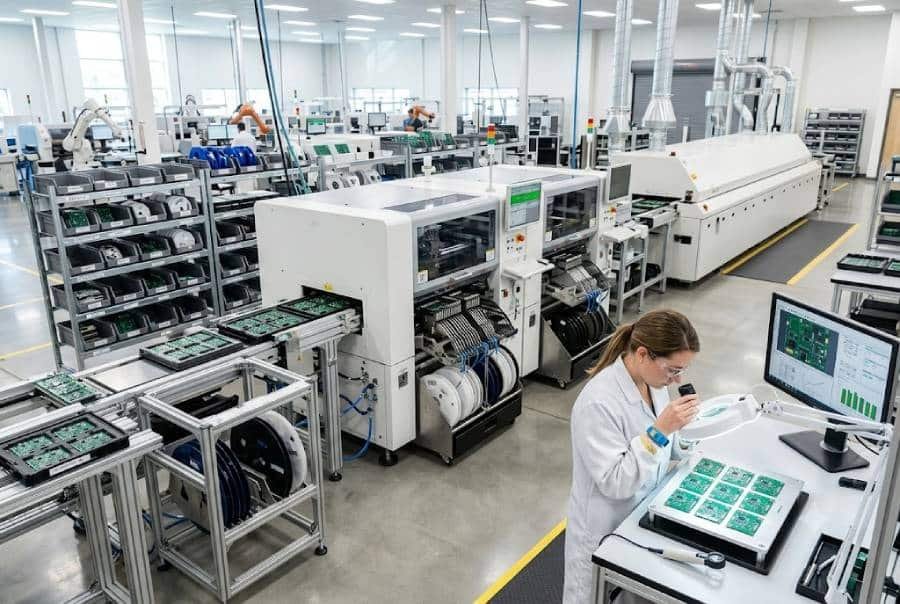
For many OEMs, startups, and industrial electronics companies, early-stage projects involve frequent design revisions, mixed component packages, and changing demand forecasts. In this context, high-mix, low-volume capability is essential because it allows multiple board types and small batch quantities to be processed efficiently without sacrificing process control.
A manufacturer that is comfortable with prototype builds, pilot runs, and small-batch assembly can support the iterative nature of product development more effectively. This flexibility helps engineering teams test revised designs quickly, compare versions, and validate improvements in real hardware, all of which contribute to better product reliability before scale-up.
Engineering Review and Early Design Feedback
One of the most valuable aspects of a reliability-focused PCB partner is the ability to provide engineering input before problems reach the production floor. Reviewing Gerber data, BOMs, assembly drawings, and test requirements at the early stage helps identify DFM, DFA, and DFT issues that could later affect yields, inspection efficiency, or long-term field performance.
For customers developing new products, this kind of feedback can reduce the number of design iterations needed to reach a stable manufacturing-ready version. It also helps ensure that prototype and low-volume boards are not only electrically functional, but also easier to assemble, inspect, and test consistently as order volumes increase.
Quality Control for Small Batches
Prototype and low-volume orders should not be treated as “informal” builds with reduced quality discipline. To generate reliable data, small batches need to be processed with appropriate inspection and testing methods, including visual inspection, AOI, X-ray for hidden solder joints when needed, and electrical or functional verification depending on the product complexity.
Applying structured quality control to small runs helps reveal soldering defects, alignment issues, and process instability before they become systemic in larger builds. This is especially important for fine-pitch devices, BGAs, dense multilayer boards, and products intended for industrial, automotive, or medical use, where latent defects can create serious reliability problems later in the field.
A Smoother Path From Prototype to Production
A major advantage of working with a supplier that supports both early prototypes and later production is continuity. When the same manufacturing partner participates from the prototype stage onward, design history, process adjustments, quality observations, and test refinements can be carried forward rather than re-created during a factory transfer.
This continuity reduces the risk that a design which performed well in prototype will behave differently in mass production due to changes in process assumptions or supplier interpretation. It also makes scaling more efficient, because lessons learned during small runs can directly inform panel design, work instructions, inspection criteria, and test coverage for future batches.
Supporting Global Customers With Practical Reliability Goals
For globally oriented electronics projects, customers often need more than fast samples; they need a manufacturing partner that can support practical reliability goals across different product stages and market requirements. That means balancing responsiveness, engineering communication, quality consistency, and the ability to transition from validation builds to repeatable production without losing control of the details that affect field performance.
In this kind of workflow, low-volume and prototype PCB runs become more than a purchasing step—they become a structured reliability-building process. When supported by disciplined engineering review, production-grade assembly, and scalable manufacturing support, these early runs help customers reduce uncertainty and launch products with a stronger technical foundation.
Conclusion
Low-volume and prototype PCB runs play a decisive role in building reliable electronic products because they give engineering and manufacturing teams the opportunity to validate design intent, assembly processes, and testing strategies before scaling to full production. Instead of treating small runs as a temporary checkpoint, companies that prioritize reliability use them as a structured stage for reducing technical uncertainty and improving long-term field performance.
From early defect detection and DFM validation to test optimization and supply chain screening, the benefits of small-batch PCB manufacturing extend far beyond simple cost control. They help prevent weak designs, unstable processes, and incomplete test coverage from being multiplied across large volumes, which ultimately protects product quality, brand reputation, and total lifecycle cost.
For OEMs, startups, and global electronics brands alike, the most effective path to reliable mass production is rarely a direct jump from concept to scale. A disciplined progression from prototype to low-volume build and then to full production creates the technical confidence needed to launch products that perform consistently in real-world environments.
FAQ
No. PCB prototyping is mainly used to verify that the design works electrically and mechanically in very small quantities, while low-volume PCB assembly uses more production-oriented processes to validate manufacturability, repeatability, and reliability before larger-scale production begins.
Prototype runs answer whether the design can work, while low-volume assembly helps confirm that the design can be built, inspected, and tested consistently under real manufacturing conditions. Both stages are important, but they serve different purposes in the path to a reliable finished product.
Low-volume PCB runs reduce risk by allowing teams to uncover design flaws, process weaknesses, component issues, and test gaps before they are multiplied across large production quantities. This makes them an essential bridge between prototype validation and high-volume manufacturing.
They also provide a practical environment for refining BOM control, assembly instructions, inspection criteria, and test coverage, which improves yield and reliability when the product is eventually scaled. Moving too quickly into full production without this intermediate step often leads to costly rework and avoidable field failures.
The exact quantity varies by supplier and product type, but low-volume PCB assembly generally refers to small production runs ranging from a few dozen boards to several hundred or a few thousand units. The defining feature is not just the number of boards, but the balance between production-grade control and flexibility for engineering change.
For some projects, especially pilot runs and NPI programs, even 50 to 500 units may be enough to validate process stability and test readiness. In more specialized sectors, low-volume production may remain the normal long-term manufacturing model rather than simply a transition stage.
There is no single standard number, because the required iterations depend on design complexity, application risk, compliance requirements, and how mature the initial design is. Many projects use at least one early functional prototype and then one or more revised builds before moving into low-volume or pilot production.
Products intended for medical, automotive, aerospace, or industrial use often require more iterations because reliability validation, regulatory testing, and environmental stress testing add additional checkpoints. The goal is not to minimize the number of builds at all costs, but to reduce uncertainty enough that the design can scale with confidence.
Recommended methods depend on the board design and application, but common approaches include AOI, SPI, X-ray inspection for hidden joints, flying probe testing, ICT, and functional testing. These methods help detect assembly defects, validate electrical performance, and confirm that the board can be built and tested consistently before volume production.
For more complex boards involving BGAs, fine-pitch components, or high-reliability requirements, manufacturers often combine several inspection and test methods to improve coverage. A strong low-volume test strategy should be aligned with the product’s failure risks, regulatory needs, and future production plan.
A company should move beyond prototyping when the design is stable enough to justify production-oriented validation, including BOM review, DFM checks, test planning, and repeatability assessment. The shift to full production usually comes only after low-volume or pilot runs show that the board can be manufactured and tested consistently with acceptable yields and reliability performance.
If the design is still changing frequently or unresolved reliability issues remain, jumping directly to high-volume manufacturing increases both technical and financial risk. A staged transition helps ensure that scaling decisions are based on verified process data rather than assumptions.