
Table of Contents
Many engineers start their sourcing journey by typing “multilayer PCB fabrication near me” into a search bar and shortlisting whoever happens to be within driving distance. That feels intuitive—local often means faster conversations, easier site visits, and fewer unknowns in shipping and customs—but proximity alone rarely guarantees the right partner for your design. As your stackups get more complex, layer counts climb, and reliability requirements tighten, the real question becomes less “who is closest?” and more “who can consistently build what I actually need, at an acceptable cost and lead time?”.
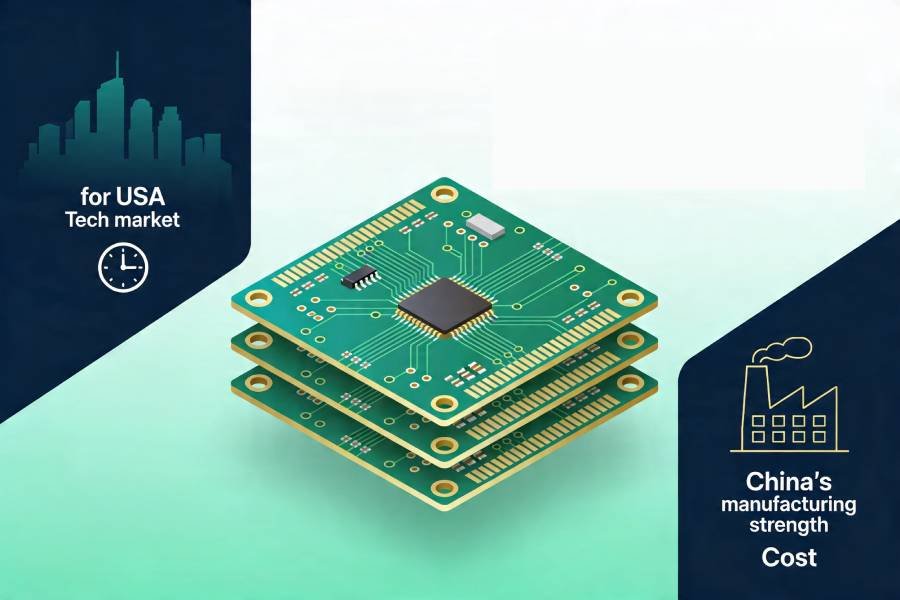
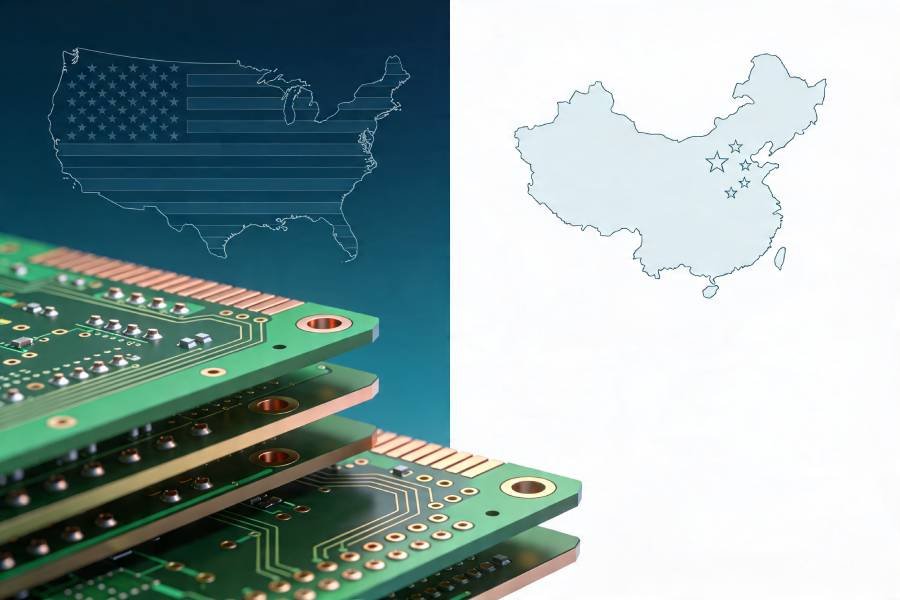
In this article, we will walk through a practical framework for choosing the best multilayer PCB fabrication service near you by starting from your technical and business requirements instead of a map. You will learn how to identify and evaluate local multilayer PCB shops using concrete criteria—capabilities, quality systems, lead time, pricing transparency, and engineering support—so that a “nearby” supplier is also a genuinely good fit for your project. We will then look at the flip side: when it makes more sense to go overseas, especially to established China-based multilayer manufacturers, to gain access to higher layer counts, HDI processes, or more competitive pricing for sustained production. Finally, we will show how many teams combine both approaches—working with a trusted local partner for sensitive or time-critical builds while leveraging an overseas fabricator like PCBELEC for cost-effective prototypes and volume runs—so you can build a supply strategy that scales with your roadmap.
Start with Your Requirements, Not the Map
When you are under schedule pressure, it is tempting to start with a simple search for “multilayer PCB fabrication near me” and assume that anything local will be “good enough.” The problem is that geography by itself does not tell you whether a fabricator can reliably build your stackup, meet your reliability targets, or support your roadmap over the next few revisions. A better approach is to first clarify what your design and your business actually need, then use that requirements list to evaluate both nearby and overseas options. Once you are clear on complexity, risk tolerance, and budget, you can decide whether a local shop, an overseas specialist, or a combination of both gives you the best fit.
Clarify Your Multilayer PCB Design Complexity
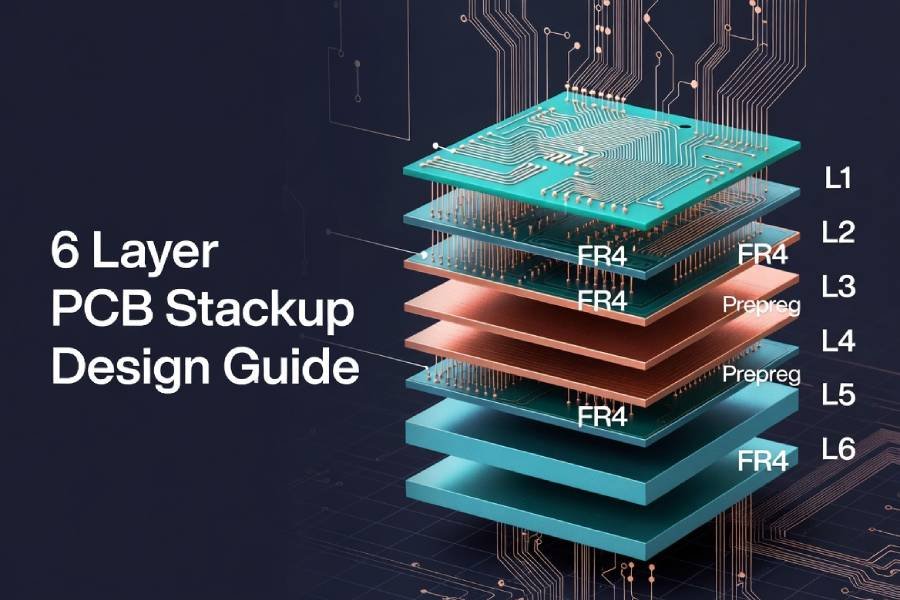
The first step is to be honest about how demanding your multilayer board really is. Document the basics: target layer count, finished board thickness, minimum trace/space, via structures (through-hole only, or HDI with microvias and blind/buried vias), and any controlled impedance or high-speed requirements. A 6‑layer industrial control board with modest routing density can be handled by many regional fabricators, while a 12‑layer HDI design with dense BGAs, tight impedance control, and mixed materials may require a more specialized shop with advanced lamination and registration capabilities. The clearer you are about this complexity up front, the easier it becomes to filter out suppliers who are not truly equipped for your class of multilayer work.
Define Your Project Type and Risk Profile
Next, consider the context of the project itself, not just the PCB. Is this an early prototype for an internal demo, a validation build for regulatory testing, or a board that will ship in volume into a safety‑critical or mission‑critical product? For low-volume prototypes with moderate risk, you may accept more variability in lead time or minor cosmetic issues, as long as the electrical performance is sound and issues are resolved quickly. In contrast, for medical, aerospace, automotive, or industrial safety applications, you will likely prioritize certifications, traceability, and proven quality systems over the lowest unit cost or the shortest shipping distance. Clearly categorizing each project into “fast learning,” “design validation,” or “production-critical” buckets helps you decide how strict your supplier criteria should be and how comfortable you are with sourcing overseas.
Prioritize What Matters Most: Speed, Cost, or Partnership
Finally, force yourself to rank your priorities instead of treating everything as equally important. If you absolutely must hit a near-term demo or trade show, calendar time and predictable turnaround will likely outrank per‑unit cost, making a responsive local fabricator very attractive. If you are ramping a cost-sensitive product into volume and your design is already stable, overseas multilayer specialists can often provide more competitive pricing—especially at higher layer counts—without compromising quality. And if you are building a long-term platform, you may value a true engineering partnership: a supplier that provides DFM feedback, helps optimize layer count and stackup, and stays engaged across multiple spins, whether they are across town or across an ocean. Writing down this priority order gives you a simple way to compare candidates later: any “nearby” shop that cannot support your top one or two priorities is not really the best multilayer PCB fabrication service for you.
How to Identify Multilayer PCB Fabrication Services Near You
When you know what your multilayer design requires, the next step is building a realistic shortlist of fabricators in your region instead of relying on whoever appears first in an ad. Your goal is not to find every PCB shop within a certain radius, but to identify a manageable set of local candidates that plausibly match your technical, quality, and schedule needs. By combining online tools, industry directories, and recommendations from peers, you can quickly distinguish between generic “PCB” providers and those that truly focus on multilayer work.
Use Search Engines and Maps Strategically
Start with targeted searches rather than generic “PCB manufacturer near me” queries. Include both your technology and your location, for example “multilayer PCB fabrication San Jose,” “HDI PCB manufacturer [your city/region],” or “rigid-flex PCB fab near me” if relevant. Then, use map views (Google Maps, Apple Maps, etc.) to see which of these companies actually operate manufacturing facilities in your area versus sales offices or brokers. As you click into individual websites, look for explicit mentions of layer count capabilities, multilayer or HDI focus, and photos of real production equipment to separate true fabricators from pure assembly houses or design consultancies.
Leverage Industry Directories and Associations
Next, use curated directories to avoid missing strong local options that may not rank highly in generic search results. PCB-focused platforms such as PCB Directory allow you to filter manufacturers by country, state, city, and capabilities like maximum layer count, materials, and certifications. These listings typically include a brief overview, capability highlights, and contact details so you can quickly flag which companies align with your multilayer requirements and are within a reasonable distance. In addition, regional industry associations and electronics manufacturing groups often maintain member lists that can surface smaller, highly specialized shops that may not invest heavily in SEO but have excellent reputations in your niche.
Ask Your Network and Local Community
Finally, tap into the experience of other engineers and hardware teams who have already navigated your local supply landscape. Online forums, professional groups on LinkedIn, and local hardware or maker meetups are valuable sources of unfiltered feedback on which nearby multilayer PCB shops are responsive, consistent, and easy to work with. Pay attention to patterns: if the same names keep coming up as reliable—or problematic—that is usually more meaningful than a handful of anonymous online reviews. Combining this qualitative input with your directory and search findings will give you a shortlist of local fabricators who not only claim multilayer capability on paper, but have demonstrated it for teams similar to yours.
Key Criteria for Evaluating a Local Multilayer PCB Fabrication Service
Once you have a shortlist of nearby multilayer PCB fabricators, the real work is comparing what they can actually deliver against what your designs require. At this stage, it helps to move beyond marketing claims and ask specific, comparable questions about capability, quality, lead time, pricing, and engineering support. The goal is to end up with two or three local suppliers you would trust with your next build, rather than a long list of “maybes” that all look similar on their websites.
Technical Capabilities and Layer Count
Start by confirming that each shop’s hard capabilities match your current and future multilayer needs. Ask about maximum and minimum layer counts they routinely build, typical finished thicknesses, and supported copper weights for both inner and outer layers. Clarify their limits on trace/space, via sizes, aspect ratios, and whether they regularly handle HDI features such as microvias, blind and buried vias, or via-in-pad for fine-pitch BGAs. Finally, review their material set—standard FR-4, high‑Tg laminates, high‑speed or RF materials—and controlled impedance capability so you know whether they can support your next generation designs, not just the board you have today.
Equipment, Processes, and Quality Systems
A fabricator’s equipment and process control say a lot about the consistency you can expect. Ask what kind of imaging, drilling, lamination, and inspection equipment they use, and whether they perform 100% electrical test or sample-based testing on multilayer boards. Look for established quality systems and certifications—such as ISO 9001, automotive or aerospace approvals where relevant—as well as documented procedures for handling moisture-sensitive materials, baking, and cleanliness. For higher‑risk applications, you may also want to know how they handle traceability, from lot-level tracking to serialization and record retention.
Lead Time, Capacity, and Schedule Reliability
Lead time is more than just the smallest number a sales page advertises. Ask each local fabricator for typical lead times by board type—for example, standard multilayer prototypes, HDI prototypes, and repeat production orders—and what their realistic expedited options are. It is also important to understand their capacity: how many multilayer panels they can push through per week, how they handle demand spikes, and whether your orders would be squeezed in around larger customers. Finally, probe on schedule reliability by asking for on‑time delivery statistics or references; a shop that routinely meets slightly longer quoted lead times may be more valuable than one that frequently misses aggressive promises.
Pricing Structure and Transparency
While cost is not the only factor, it will always be part of your decision. Focus less on a single quote and more on how each supplier builds their pricing: what is included in the base fabrication charge, what counts as non‑recurring engineering (NRE), and how rush fees, extra drill hits, or special materials affect the total. Ask for sample pricing across a few quantity breaks for the same design so you can see how their costs scale from prototypes to low or medium volume. A good local multilayer fabricator will be upfront about cost drivers and may even suggest design or stackup changes to help you reduce price without compromising performance.
Communication, DFM Support, and Engineering Collaboration
Finally, evaluate how easy each supplier is to work with at an engineering level. Pay attention to how quickly they respond to RFQs, how clear their questions are, and whether you get access to knowledgeable CAM or process engineers—not just salespeople. Ask whether they routinely provide DFM feedback, stackup recommendations, and impedance modeling as part of the quoting or NPI process, or if those are treated as paid extras. For local partners, the ability to visit the facility, sit down with engineers, and walk through a build one‑on‑one can be a significant advantage, especially when you are bringing up new multilayer or HDI platforms.
The Advantages of Choosing a Multilayer PCB Fabrication Service Near You
When a local multilayer PCB fabricator is a good technical fit, physical proximity can translate into very real project advantages. You gain faster communication, more predictable logistics, and the option to build deeper engineering relationships than is often practical across long time zones. For many teams, these factors significantly reduce project risk—especially in the early phases of a new platform or on high‑stakes builds.
Faster, Clearer Communication in Your Time Zone
Working with a fabricator in your own or a nearby time zone makes back‑and‑forth communication much smoother. Questions about stackup, drill files, or missing information can often be resolved within the same business day, instead of waiting overnight for replies. You are also more likely to be able to pick up the phone, schedule quick calls, or even stop by in person when something is unclear, which can prevent small misunderstandings from turning into manufacturing delays.
Easier Factory Audits and On-Site Collaboration
Having a multilayer PCB supplier within reasonable travel distance makes it much easier to verify what you are buying. You can visit the factory, walk the line, and see their lamination, drilling, imaging, and inspection processes for yourself instead of relying solely on photos or certifications. On‑site visits also create opportunities for deeper collaboration, such as whiteboard sessions on stackup optimization or reviewing yield issues together while looking at real panels in process. In sectors where audits or customer visits are a requirement—such as automotive, aerospace, or medical—having a local multilayer partner can simplify compliance and reduce travel time and cost.
More Predictable Logistics and Lead Times
Local fabrication also reduces complexity and uncertainty in the logistics chain. You avoid international shipping, customs clearance, and cross‑border paperwork, all of which can introduce delays and variability—especially for small, time‑sensitive prototype runs. Shipping times are shorter and easier to predict, and you may even have the option for same‑day courier delivery from the factory to your lab for urgent builds. This combination of shorter transit and fewer variables can make it much easier to hit tight integration milestones where one or two days of delay would ripple through downstream testing schedules.
Stronger Visibility, Trust, and IP Confidence
Physical proximity and frequent interaction tend to build trust faster. Being able to meet the team, see how data is handled, and understand their security practices can increase your confidence in how design files and project information are treated. For sensitive designs or applications where intellectual property protection is a major concern, some companies prefer to keep fabrication within their own country or region when possible. Local partners are also often more familiar with your regulatory environment and contractual expectations, which can simplify NDAs, quality agreements, and long‑term supply arrangements.
Better Fit for High-Risk or Early-Stage Builds
Taken together, these advantages make local multilayer PCB fabricators especially attractive for early prototypes, complex new designs, and high‑risk or highly regulated projects. When you are still learning about your design’s manufacturability, having a nearby partner who can iterate with you, provide rapid DFM feedback, and support on‑site discussions often outweighs any cost savings you might gain by going overseas. Once your design stabilizes and you understand its manufacturing behavior, you are in a much stronger position to decide whether to keep everything local, add an overseas supplier, or split roles between the two.
Limitations of Only Using Local Multilayer PCB Fabricators
Relying exclusively on local multilayer PCB fabricators can be very comfortable, but it also introduces limits you will eventually feel as designs and volumes grow. Higher structural costs, constrained capacity, and narrower technology options can all show up as higher unit prices, longer queues, or compromises you would not face with a broader supply base. Understanding these limits does not mean you should abandon local partners; it simply helps you see where an overseas option might complement them.
Higher Structural Costs, Especially at Scale
Local PCB manufacturers—whether in North America, Europe, or other high‑cost regions—typically operate with higher labor, facility, and regulatory expenses than their offshore counterparts. These higher operating costs are often reflected in per‑board pricing, which becomes more noticeable as layer counts rise or when you move from prototypes into sustained production. In contrast, many Asian multilayer PCB factories benefit from lower labor rates, large-scale automation, and concentrated supply chains, allowing them to spread setup and tooling costs over very large volumes and offer lower unit prices. For cost‑sensitive products, staying purely local can therefore limit your ability to hit target margins once volumes increase.
Limited Capacity and Scalability for High Volumes
Many local multilayer PCB shops are optimized for engineering‑focused, low‑to‑medium volume work rather than very high‑volume production. This makes them excellent partners for prototypes, NPI, and specialized builds, but it can create bottlenecks when a product suddenly succeeds and demand ramps quickly. As their lines fill up, you may see longer lead times, tighter allocation of production slots, or the need to spread orders across multiple local suppliers, which adds coordination overhead. By contrast, large overseas multilayer facilities often have more room to scale individual programs because they are designed from the outset around high throughput and multi‑shift operation.
Narrower Technology or Material Options in Some Regions
Depending on where you are located, local fabricators may offer a relatively narrow slice of multilayer technology compared with major manufacturing hubs. Some shops focus primarily on standard FR‑4 boards up to a certain layer count and may only occasionally build advanced HDI, very high layer counts, or exotic material combinations. If you are pushing towards denser HDI designs, very tight tolerances, or specialized high‑speed and RF materials, this can limit your options or lead to higher prices and longer development cycles. In contrast, large overseas multilayer specialists often support a broader menu of stackups, materials, and process variants because they aggregate demand from many global customers with similar needs.
Potentially Longer Queues for Certain Job Types
Local fabricators that serve a mix of industries sometimes prioritize their largest or most predictable accounts when capacity gets tight. For smaller customers or irregular orders, this can translate into longer queues or less flexibility when you need a quick extra run between scheduled builds. While this behavior is not unique to local shops, the combination of higher demand and limited regional capacity can make it harder to secure short‑notice slots compared with large overseas plants that run many parallel lines.
Reduced Cost Flexibility for Cost-Sensitive Markets
Finally, staying exclusively local can limit your flexibility in markets where PCB cost is a major competitive factor. In consumer, IoT, and some industrial segments, even modest per‑board savings can translate into significant annual impact once you reach tens or hundreds of thousands of units. Without an overseas option to benchmark against, it is harder to know whether the prices you are paying locally are efficient or whether design‑for‑cost opportunities are being fully explored. Many companies address this by keeping strong local partnerships while also engaging at least one reputable overseas multilayer supplier, using quotes and feedback from both sides to balance cost, risk, and performance.
When It Makes Sense to Go Overseas for Multilayer PCB Fabrication
For many teams, the question is not “local or overseas forever,” but “at what point does it make sense to add an overseas multilayer supplier into the mix?”. Overseas partners—especially in established manufacturing hubs—can offer meaningful advantages in cost, capacity, and technology breadth when your situation matches their strengths. The key is to recognize the scenarios where those benefits outweigh the added complexity of distance, time zones, and international logistics.
When Cost per Board Becomes a Major Driver
As your product moves from one‑off prototypes into sustained production, cost per board inevitably becomes more important. Overseas multilayer PCB manufacturers, particularly in Asia, often achieve lower unit prices by combining lower labor costs with high levels of automation, panel utilization, and economies of scale. The impact is especially noticeable for higher layer counts, larger panels, or designs that would carry significant premiums in higher‑cost regions. If your business model depends on hitting aggressive price points in competitive markets—such as consumer electronics, IoT, or price‑sensitive industrial devices—adding an overseas multilayer supplier can make those targets achievable without compromising on basic quality.
When You Need Higher Layer Counts or Advanced HDI
Overseas PCB hubs tend to concentrate a large number of fabricators that specialize in complex multilayer and HDI work. If your roadmap includes 10‑, 12‑, or 16‑layer boards, stacked or staggered microvias, via‑in‑pad for fine‑pitch BGAs, or mixed-material stackups for high‑speed and RF, you may find more options, more experience, and better pricing among dedicated overseas specialists. These facilities often run advanced lamination, registration, and inspection processes as their norm rather than exceptions, because they serve many global customers with similar high‑density requirements. In practice, this means you can sometimes move faster and with fewer design compromises by working with a partner whose core business is exactly the kind of multilayer complexity you are designing.
When You Need More Capacity and Parallel Programs
Some product lines require not just one complex board, but many multilayer designs running in parallel. In these cases, the aggregate capacity and scheduling flexibility of large overseas factories can be a strong advantage. They are often set up with multiple production lines, multi‑shift operation, and dedicated engineering resources capable of onboarding and supporting several programs at once. If you find that local partners are consistently running near their limits—or if you need to run multiple pilot builds and production ramps in overlapping windows—an overseas multilayer supplier can help you avoid bottlenecks.
When Your Schedule Can Absorb Transit Time
Shipping and customs inevitably add time and variability compared with local delivery, but there are many scenarios where this is acceptable. For example, if you have predictable build cycles, stable designs, and clear buffer in your schedule, you can often plan around the extra transit days and still hit your internal milestones. Air freight from major manufacturing regions to most global hubs is measured in days, not weeks, and many overseas suppliers are highly experienced at managing export documentation to keep customs delays rare. In such cases, the added calendar time may be a reasonable trade‑off for lower per‑board cost and broader capability, especially beyond the earliest prototype spins.
When Regulatory or IP Constraints Allow It
Not every project can go overseas, but many commercial and industrial designs can. If your boards are not subject to strict local manufacturing requirements (such as certain defense or highly regulated medical applications) and you have appropriate agreements and safeguards in place, using an overseas multilayer supplier can be entirely feasible. Reputable overseas manufacturers are accustomed to working under NDAs, following customer security guidelines, and supporting audits or remote assessments of their processes. For a large portion of commercial products, this makes overseas fabrication a viable way to optimize cost and capability while still managing IP and compliance risks responsibly.
How to Combine Local and Overseas Multilayer PCB Partners
Once you understand the strengths and limitations of both local and overseas fabrication, the most resilient strategy is often not choosing one or the other, but designing a sourcing model that uses both. A thoughtful dual‑sourcing approach allows you to pair the speed and collaboration benefits of local partners with the cost, capacity, and technology advantages of overseas multilayer specialists. Instead of putting all your eggs in a single basket, you intentionally assign different roles to each type of supplier based on project phase and risk.
Use Local Partners for Prototypes, High-Risk, and Fast-Change Builds
Local multilayer fabricators are often the best fit for early, unstable, or high‑risk stages of a project. For first prototypes, design validation builds, and safety‑critical or highly regulated applications, the communication speed, on‑site access, and easier oversight you get from a nearby supplier can dramatically reduce uncertainty. When layouts are changing quickly, being able to resolve questions in real time and review boards in person helps you iterate faster and avoid expensive misbuilds. In a dual‑sourcing model, you can deliberately keep these early or sensitive phases with local partners while you evaluate and qualify an overseas option in parallel.
Use Overseas Partners for Stable Designs and Cost-Sensitive Volume
Once a design is proven and changes slow down, the balance often shifts toward optimizing cost and capacity. At this point, engaging an overseas multilayer PCB supplier can unlock lower per‑board pricing, broader technology options, and more scalable throughput for ramping demand. Many companies keep a qualified local partner as a backup or for urgent small runs, while routing the bulk of planned volume to an overseas factory with strong multilayer and HDI capability. This split lets you preserve the relationship and responsiveness of local suppliers without forcing every unit to carry local cost structures.
Design a Clear Handoff from Local Proto to Overseas Production
To make this combined model work smoothly, plan the transition from local prototypes to overseas production up front instead of treating it as an afterthought. Align your data packages, stackup documentation, and quality expectations so that the overseas supplier can reproduce what worked locally without painful re‑learning. Some teams run a bridging build—such as a pilot or small pre‑production lot—at the overseas facility while still maintaining local prototypes, to validate process capability and iron out any differences before full handover. By treating transfer as a controlled phase in your roadmap, you can benefit from both environments without losing momentum.
Keep Redundancy for Supply Chain Resilience
Beyond cost and speed, combining local and overseas partners is also a way to build resilience into your supply chain. Disruptions—from local capacity crunches to international logistics issues—are easier to handle when you already have qualified alternatives in different regions. Dual sourcing lets you shift volume temporarily, handle overflow, or split critical builds between suppliers to reduce the impact of any single point of failure. In practice, this means treating both local and overseas multilayer fabricators as strategic partners, even if their day‑to‑day workloads differ, so you can adjust quickly when conditions change.
Why PCBELEC Is a Strong Overseas Option for Multilayer PCB Fabrication
When you decide to complement your local suppliers with an overseas partner, you want a fabricator that is built for multilayer work, understands time‑sensitive international customers, and can bridge prototype through to volume. PCBELEC positions itself in exactly this space: a China‑based manufacturer focused on quick‑turn and high‑precision multilayer PCBs for global customers, from early prototypes to small and medium production runs.
Multilayer and HDI Capabilities Suited to Complex Designs
PCBELEC emphasizes continuous upgrades to its fabrication processes and equipment, with a specific focus on advanced multilayer manufacturing. Its capabilities cover high‑precision multilayer boards and HDI structures, aiming to support higher layer counts, finer features, and more demanding stackups than what many regional shops handle day‑to‑day. This makes PCBELEC well suited for applications where you are pushing density, using controlled‑impedance or high‑speed signals, or planning next‑generation boards that need more than just “standard” multilayer technology.
Quick-Turn Prototypes and Small-to-Medium Volume Runs
For overseas work to be practical, lead time has to be competitive, not just unit cost. PCBELEC offers dedicated quick‑turn services aimed at getting prototypes built in hours to a few days: published turnaround times include as fast as 8 hours for some double‑sided prototypes, around 24 hours for small batches, and approximately 36 hours for multilayer prototypes, with a few working days for small and medium quantities. They position themselves as a “fast PCB manufacturer,” providing both rapid PCB fabrication and fast‑turn prototype assembly services. Combined with air shipment, this allows many international customers to use PCBELEC not only for production but also for time‑sensitive multilayer prototypes once designs are stable enough to go offshore.
Quality Systems and Support for Global Customers
PCBELEC publicly highlights strong quality management and adherence to international standards such as ISO 9001 and IPC/UL norms, aligning with what many global OEMs expect from critical PCB suppliers. They stress stringent quality control across manufacturing steps and position this as a core part of their value proposition for overseas customers who cannot easily visit the factory. In addition, PCBELEC emphasizes responsive customer service, assigning dedicated support teams and focusing on clear communication and collaborative problem solving for international projects. This combination of recognized quality frameworks and focused service makes it easier to integrate PCBELEC into a dual‑sourcing strategy alongside your local partners.
Where PCBELEC Fits in Your Local–Overseas Mix
Given these strengths, PCBELEC is a natural candidate for roles where you need: cost‑effective yet precise multilayer fabrication, especially at higher layer counts or with HDI features; quick‑turn multilayer prototypes once designs are relatively stable; and small‑to‑medium production volumes that might be too costly to keep entirely local. In practice, many teams could keep very early, high‑uncertainty or tightly regulated builds with local partners, while engaging PCBELEC as an overseas specialist for later‑stage multilayer prototypes and ongoing production runs. This aligns cleanly with the dual‑sourcing approach described earlier: using local and overseas partners in complementary roles to balance speed, cost, capability, and risk.
Conclusion: Build a Shortlist, Then Compare Real Data
Choosing the “best multilayer PCB fabrication service near you” is less about who is closest on a map and more about who can consistently meet your technical, schedule, and business needs. When you start from clear requirements—design complexity, project risk level, and your priorities around speed, cost, and partnership—you quickly see that some local shops are a strong fit, while others are not, regardless of distance.
A practical path forward is to build a focused shortlist: a few local multilayer fabricators you trust, plus one or two qualified overseas specialists. Evaluate each against the same checklist—capabilities, quality systems, lead times, pricing structure, and engineering support—using real quotes, sample stackups, and DFM feedback rather than just website claims. This data‑driven comparison often reveals that local partners are ideal for early, high‑risk, or fast‑changing work, while overseas suppliers shine on higher layer counts, cost‑sensitive volume, or multi‑program capacity.
From there, you can design a sourcing model that deliberately uses both. Keep local partners close for first prototypes, validation builds, and regulated projects where proximity, audits, and same‑time‑zone collaboration matter most. At the same time, engage an overseas multilayer specialist—such as PCBELEC—for cost‑effective complex boards, quick‑turn prototypes after the design stabilizes, and small‑to‑medium production runs. With this dual‑sourcing approach, you are not forced to choose between “near you” and “overseas”—you use each where it is strongest, and your multilayer PCB supply chain becomes both more competitive and more resilient over time.