Table of Contents
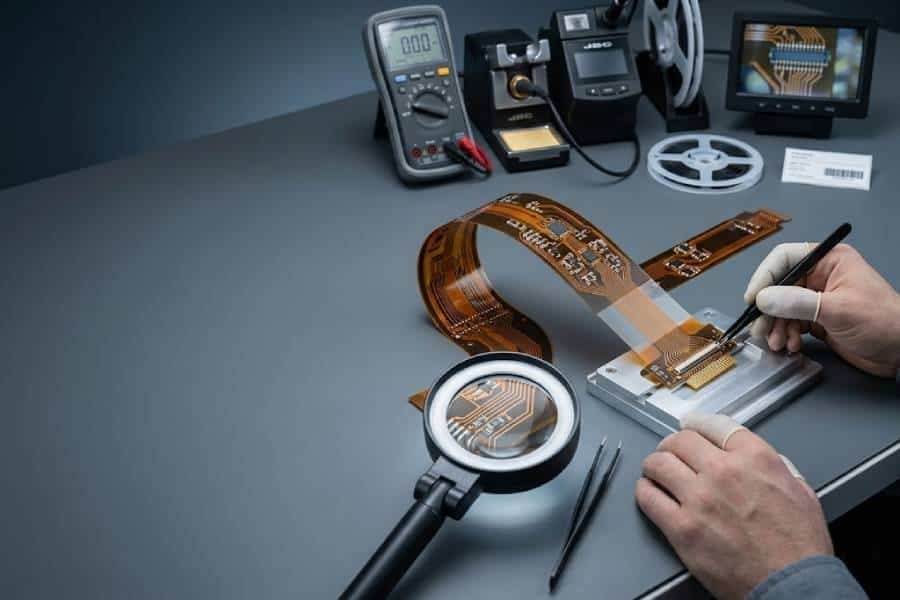
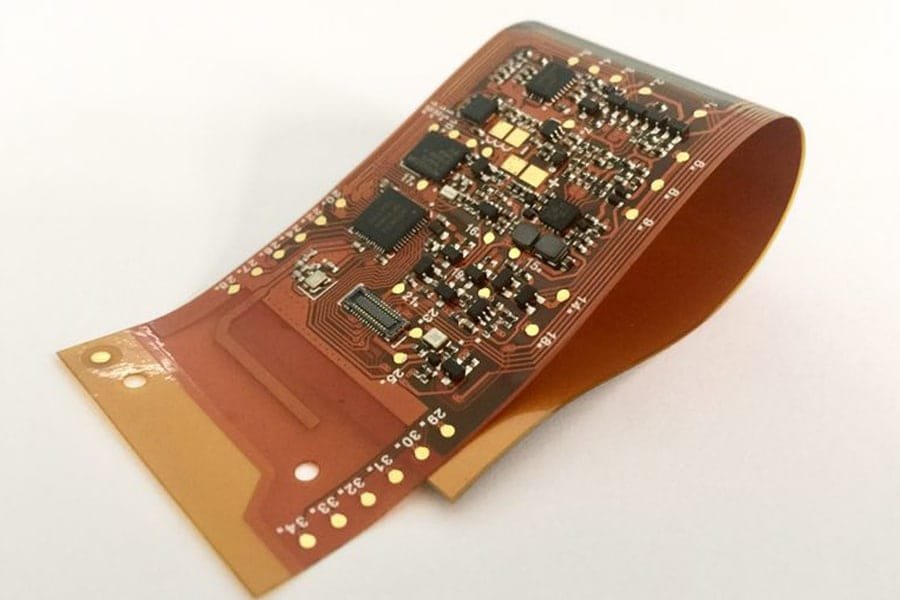
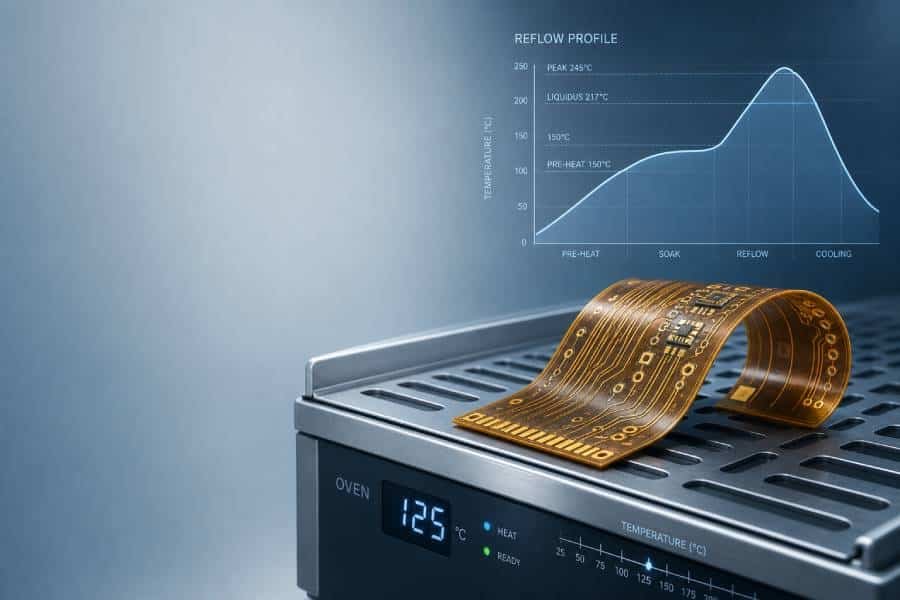
Flexible PCB assembly is especially sensitive to moisture and heat because the board is designed to bend, carry fine circuits, and survive multiple process steps without losing reliability. If a flex board absorbs moisture during storage or handling, that moisture can expand during soldering and create delamination, warpage, or weak joints.
That is why pre-bake and reflow control should be treated as a single reliability process, not two separate steps. A good baking strategy removes absorbed moisture, and a controlled reflow profile helps the board keep its shape and solder integrity through the heating cycle.
Why Pre-Bake Matters
Pre-bake is used to drive out moisture before the board sees soldering heat. Flexible materials can retain hidden moisture in the laminate, adhesive, or construction stack, and that moisture may flash into vapor during reflow.
When that happens, the result can be delamination, internal stress, or visible surface defects. Industry guidance consistently points to pre-baking flex and rigid-flex boards as a practical step to improve soldering reliability and reduce moisture-related failures.
When to Pre-Bake Flexible PCBs
Pre-bake is most important before SMT assembly, especially if the boards have been stored for a long time or exposed to ambient humidity. It is also worth considering when the boards are thick, built as rigid-flex, or expected to go through more than one thermal cycle.
A simple rule is to pre-bake whenever there is any doubt about moisture exposure. That is especially true for open-packed boards, boards that have been out of controlled storage, or flex assemblies with sensitive adhesive systems.
Pre-Bake Best Practices
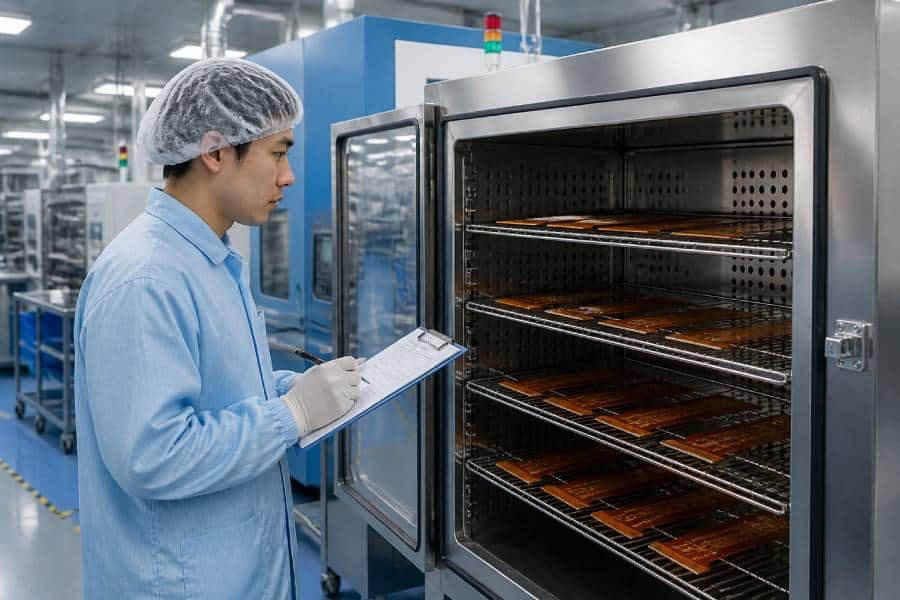
Use a controlled oven with stable airflow and accurate temperature management. The goal is to remove moisture without overheating the material or distorting the flexible structure.
Many references place flex pre-bake around 120°C, with duration adjusted by thickness, construction, and storage history. Some sources also recommend keeping the transfer from bake to assembly as short as possible, or moving the boards into dry storage if immediate assembly is not practical.
A few process habits make a big difference:
- Keep boards flat and well supported during baking.
- Avoid stacking boards in a way that traps heat or moisture.
- Use clean handling tools and gloves to prevent contamination.
- Minimize time between bake completion and reflow or dry storage
If the board must wait, store it in a dry cabinet or equivalent low-humidity environment. The main objective is to avoid letting the board reabsorb moisture after baking.
Reflow Best Practices for Flexible PCBs
Reflow on flexible circuits should be gentle and well supported. A fast thermal ramp can create stress in the laminate and increase the chance of warpage or layer separation, especially on thin or unsupported areas.
The safest approach is to use a controlled temperature profile that matches the solder paste and the material set. Keep the ramp-up gradual, limit thermal shock, and avoid pushing the peak temperature higher than necessary.
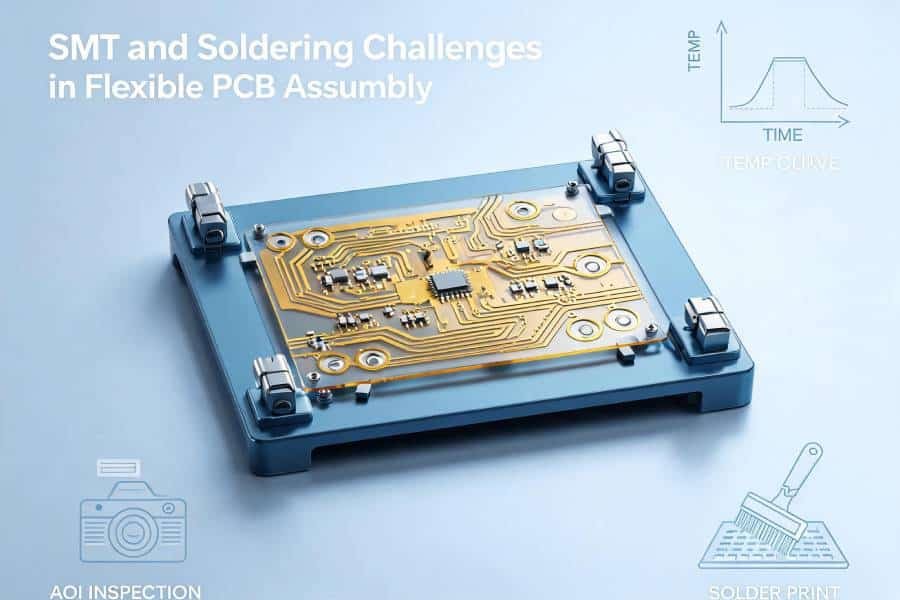
Support also matters. Thin flex boards often benefit from fixtures, pallets, or carriers that keep the assembly flat and prevent movement during paste melt and component self-alignment.
Common Defects to Watch For
The most common problems in this process are delamination, warpage, poor wetting, and component shift. These issues usually point to one of three root causes: too much moisture, too much thermal stress, or too little mechanical support.
Delamination is one of the biggest concerns because it can damage the internal structure of the board and may not be obvious until later inspection or field use. Warpage can also create placement issues and uneven solder joints, while poor wetting can weaken long-term reliability.
A useful way to think about these defects is:
- Moisture problems usually show up as delamination or blistering.
- Heat-profile problems often show up as warpage or weak joints.
- Handling and support problems often show up as shifting parts or uneven solder fillets.
Practical Production Checklist
Before production starts, confirm the storage condition of the flex PCB and decide whether pre-bake is needed. Then review the board construction, stackup, and any stiffener or rigid-flex features that may change thermal behavior.
During baking and assembly, keep the process tightly controlled:
- Inspect incoming boards and verify packaging condition.
- Pre-bake using the correct time and temperature for the construction.
- Transfer boards quickly to assembly or dry storage.
- Use fixturing or support for thin, long, or highly flexible sections.
- Run a controlled reflow profile with minimal thermal shock.
- Inspect solder joints, flatness, and visible delamination after reflow.
If defects appear repeatedly, the first places to review are storage humidity, bake timing, and the shape of the reflow curve. Those three factors solve a large share of flex assembly reliability problems.
Inspection and QA
Inspection should not stop at visual joint quality. Flex assemblies can pass a surface check and still have hidden damage from moisture or heat, so QA should also look for warpage, lifted areas, contamination, and any signs of separation in the laminate.
For more complex builds, combine visual inspection with your normal process checks and functional verification. This is especially useful on rigid-flex or high-value assemblies where a hidden defect can become a costly failure later.
FAQ
It depends on the board construction, thickness, and storage history. Many sources recommend adjusting bake time to the specific build rather than using a single universal number.
Yes, but they should move into assembly promptly or be kept in dry storage. The goal is to prevent the board from reabsorbing moisture after the bake cycle.
Moisture may expand during reflow and lead to delamination, warpage, or weaker solder joints. That risk is one of the main reasons pre-bake is so common in flex assembly.
Often yes. Rigid-flex stacks may respond differently because of their mixed materials, thickness changes, and thermal mass.
The most common issues are warpage, delamination, component shift, and poor wetting. These problems are usually tied to moisture, thermal stress, or insufficient support.
Conclusion
Pre-bake and reflow should be planned together if you want stable, reliable flexible PCB assembly. When moisture is controlled and the thermal profile is gentle, the board is far less likely to suffer delamination, warpage, or soldering defects.